
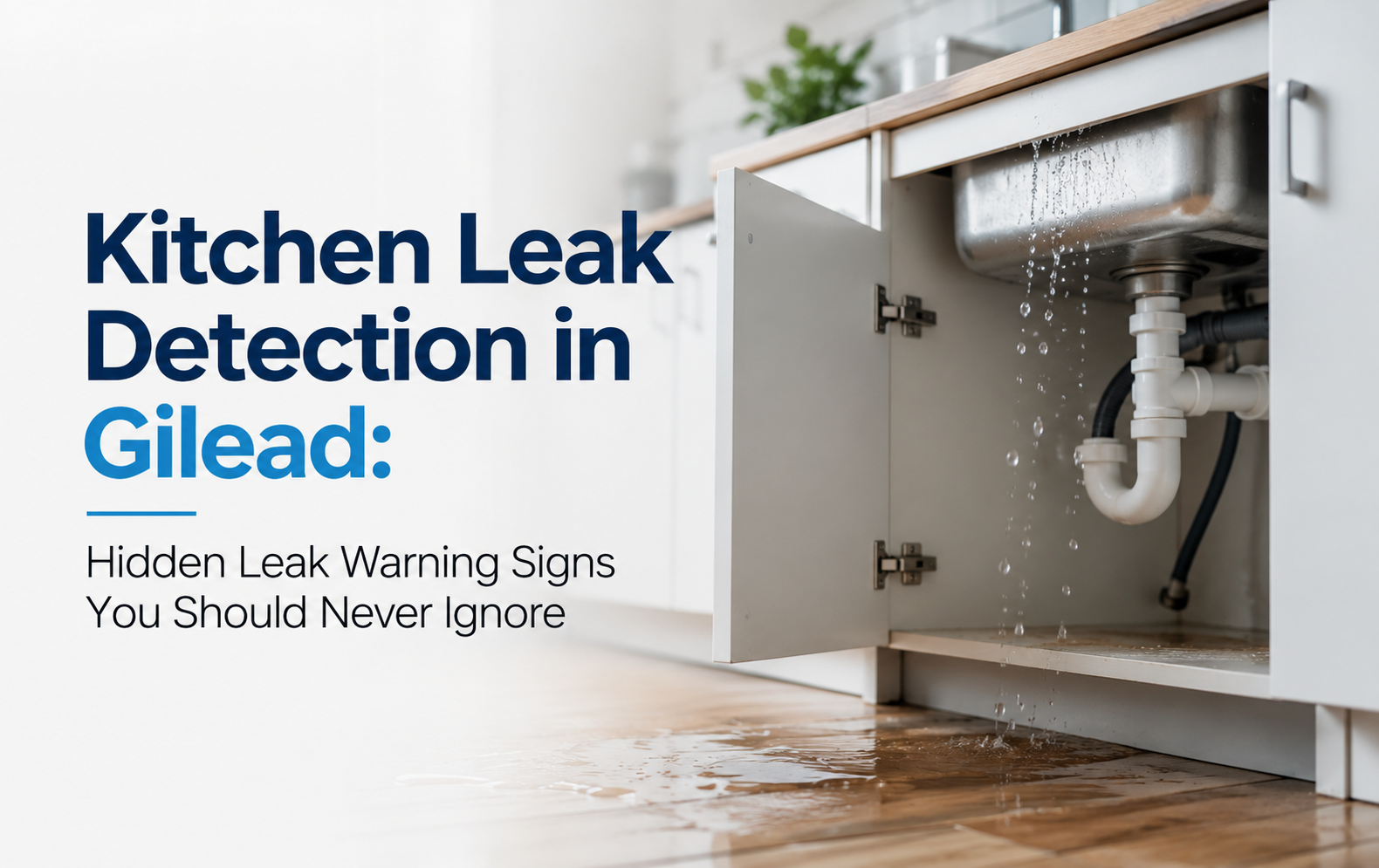
A hidden kitchen leak rarely announces itself with a burst pipe or a flooded floor. More often, it starts quietly behind cabinets, beneath sinks, or inside walls, causing damage long before you realise something is wrong.
For homeowners in Gilead, spotting these early warning signs can mean the difference between a simple repair and expensive water damage. If you’ve noticed unusual smells, damp patches, or an unexplained increase in your water bill, it may be time to arrange professional kitchen leak detection in Gilead before the problem gets worse.
Why Hidden Kitchen Leaks Are More Serious Than They Seem
The kitchen is one of the busiest rooms in any home. With water supply lines, drains, dishwashers, refrigerators, and sinks all working together daily, there are several places where leaks can develop unnoticed.
Because many kitchen pipes are concealed behind cabinetry or walls, even a small leak can continue for weeks or months before becoming obvious. During that time, moisture can damage timber, weaken cabinetry, encourage mould growth, and even affect nearby flooring.
Professional leak detection helps identify the exact source without unnecessary damage to your kitchen.
Common Warning Signs You Should Never Ignore
Not every leak leaves a visible puddle. Here are some of the most common indicators that water may be escaping somewhere in your kitchen.
An Unexpected Increase in Your Water Bill
If your household water usage hasn’t changed but your bill suddenly climbs, hidden plumbing leaks could be responsible.
Even a slow drip can waste hundreds of litres of water over time, making your water bills noticeably higher.
Damp or Swollen Kitchen Cabinets
Cabinet doors that no longer close properly or panels that appear swollen often point to moisture trapped inside the cabinetry.
Leaks under the sink or behind appliances frequently cause this type of damage.
Musty Smells That Don’t Go Away
A persistent damp smell is one of the earliest signs of hidden moisture.
If you’ve cleaned your kitchen thoroughly but the odour keeps returning, water may be collecting behind cupboards or inside wall cavities where mould can begin developing.
Stains or Bubbling Paint
Discoloured patches on walls or ceilings near the kitchen should never be ignored.
Water travelling through walls often causes:
- Yellow or brown stains
- Bubbling paint
- Peeling wallpaper
- Soft plasterboard
These cosmetic issues usually indicate a plumbing problem behind the surface.
Water Pooling Around Appliances
Dishwashers, refrigerators with water dispensers, and washing machines installed near kitchens can all develop leaking hoses or faulty connections.
Small puddles that repeatedly appear around these appliances deserve immediate inspection.
Less Obvious Signs That Often Go Unnoticed
Some hidden leaks don’t produce visible water at all.
Watch for signs such as:
- Reduced water pressure at the kitchen tap
- Mould appearing inside cupboards
- Cracks forming in flooring due to moisture movement
- Warm or cold spots on floors near concealed pipes
- The sound of running water when no taps are turned on
These subtle indicators often appear before significant damage becomes visible.
Where Kitchen Leaks Commonly Occur
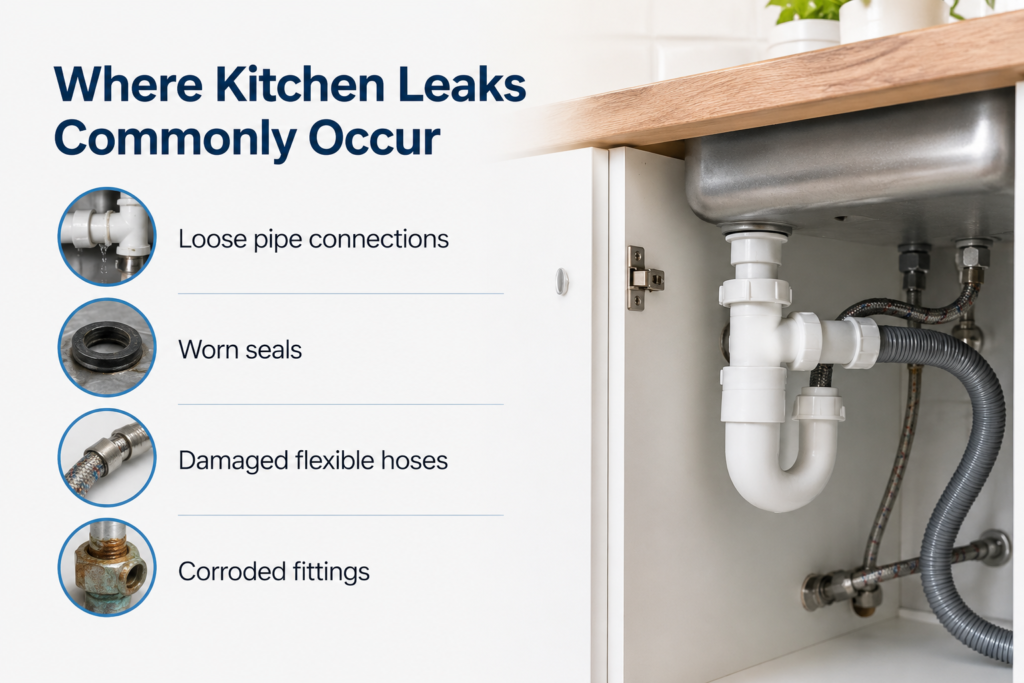
Understanding where leaks usually develop helps homeowners know what to monitor.
Under the Sink
This remains one of the most common leak locations.
Problems often include:
- Loose pipe connections
- Worn seals
- Damaged flexible hoses
- Corroded fittings
Behind Dishwashers
Dishwasher supply hoses and drain connections can slowly deteriorate over time.
Since these appliances sit against cabinetry, leaks often remain hidden until considerable damage has occurred.
Water Supply Pipes Inside Walls
Pipes hidden behind splashbacks or plasterboard may develop leaks from corrosion, movement, or ageing joints.
Without specialised equipment, locating these leaks accurately can be difficult.
Around Kitchen Islands
Modern kitchens frequently include sinks or appliances within island benches.
Leaks beneath these installations may spread under flooring before becoming visible.
Why DIY Leak Hunting Often Doesn’t Work
Many homeowners assume they can locate a leak simply by checking under the sink.
Unfortunately, hidden leaks are often much harder to find.
Attempting to remove cabinets or open walls without confirming the leak location can create unnecessary repair costs while still failing to solve the problem.
Professional plumbers use specialised leak detection equipment to identify hidden leaks accurately with minimal disruption to your home.
Why Early Leak Detection Saves Money
Acting quickly after noticing warning signs offers several advantages.
Early repairs can help you:
- Prevent costly cabinet replacements
- Protect flooring from water damage
- Reduce mould growth risks
- Lower ongoing water bills
- Avoid larger plumbing emergencies
The sooner the source is identified, the simpler and more affordable the repair is likely to be.
When Should You Call a Professional?
You don’t have to wait until water is pouring across your kitchen floor.
It’s time to arrange kitchen leak detection in Gilead if you notice:
- Repeated damp smells
- Rising water bills without explanation
- Water stains or bubbling paint
- Wet cabinetry
- Mould growth near plumbing fixtures
- Water sounds inside walls
Professional leak detection provides peace of mind and helps protect one of the most valuable areas of your home.
Protect Your Kitchen Before Minor Leaks Become Major Repairs
A hidden leak rarely fixes itself. Instead, it quietly damages cabinets, flooring, walls, and even your home’s structure while continuing to waste water every day.
If you’ve noticed any warning signs, Marvel Flow Plumbing provides reliable kitchen leak detection in Gilead, using modern detection methods to locate leaks quickly and accurately. Our experienced team can identify the problem, recommend the right solution, and help prevent further damage before repairs become significantly more expensive.
Reach out to our experts for plumbing assistance. Call now to explore the offers.
Frequently Asked Questions
How can I tell if I have a hidden kitchen leak?
Common signs include unusually high water bills, damp cupboards, mould, musty smells, bubbling paint, water stains, or hearing running water when no taps are in use.
Can a hidden kitchen leak cause mould?
Yes. Even a slow leak creates damp conditions that allow mould and mildew to develop behind cabinets, inside walls, and beneath flooring.
Is leak detection better than breaking open walls?
Yes. Professional leak detection equipment helps pinpoint the leak’s location, reducing unnecessary damage to walls, floors, and cabinetry.
How quickly should a hidden kitchen leak be repaired?
As soon as possible. Delaying repairs can lead to structural damage, mould growth, higher water bills, and more expensive restoration work.