
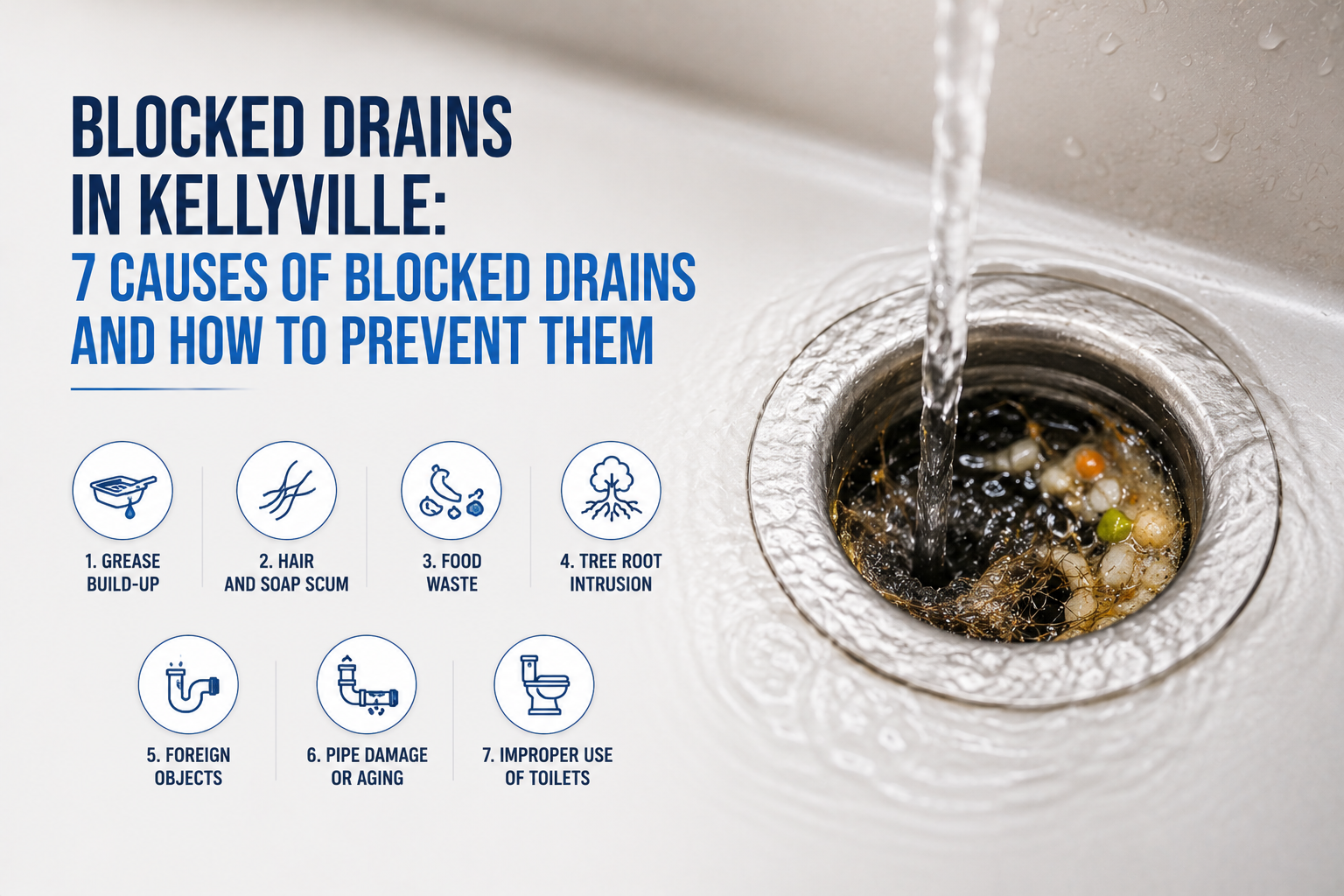
A blocked drain rarely starts as a major problem. It often begins with water draining a little more slowly than usual. You may notice a gurgling sound in the shower or a faint smell coming from the kitchen sink.
Ignore those early signs, and the obstruction can gradually become much harder to deal with.
Understanding what is going into your drainage system, and what may be happening inside your pipes, can help prevent repeated blockages. For homeowners dealing with blocked drains in Kellyville, here are seven common causes and practical ways to reduce the risk.
1. Hair collecting in bathroom drains
Hair is one of the most common contributors to shower and bathroom drain blockages.
Individual strands may seem harmless, but they can catch around the drain and combine with soap residue, dirt and other debris. Over time, the buildup becomes large enough to restrict water flow.
Prevention tip
Use a removable drain strainer in showers and baths. Empty it regularly instead of allowing hair to wash further into the pipe.
If the shower is already draining slowly, clearing the visible debris may help, but recurring problems can indicate a deeper obstruction.
2. Fats, oils and grease in kitchen pipes
Kitchen drainage systems have their own set of problems.
Cooking fats and oils can stick to the inside of pipes as they cool. Food scraps can then attach to the buildup, gradually narrowing the passage available for wastewater.
Pouring grease down the sink because it is still liquid is a common mistake.
A simple change
Collect used cooking oil and dispose of it appropriately rather than tipping it down the drain. Scrape plates into the bin before washing them.
NSW Government guidance also advises households to avoid putting fats, oils and grease down sinks because they can contribute to sewer blockages.
3. Food scraps entering the sink
Even with a kitchen strainer, small food particles can enter the drainage system.
Rice, pasta, coffee grounds and fibrous food waste can contribute to buildup, particularly when combined with grease.
A kitchen sink should not be treated as a food disposal system.
Better habit: scrape plates first and use the sink strainer to catch smaller particles before they enter the pipe.
4. Flushing unsuitable materials
Your toilet is connected to a drainage system, not a rubbish bin.
Items such as wipes, sanitary products, paper towels and other non-flushable materials can become lodged inside pipes. Even products marketed as flushable may contribute to problems depending on the plumbing system and circumstances.
The safest approach is straightforward: only flush human waste and toilet paper.
If a toilet repeatedly blocks despite careful use, the cause may be deeper in the drainage line.
5. Tree roots entering underground pipes
Outdoor drainage problems can have a very different cause.
Tree roots naturally seek moisture. If an underground pipe has a crack, damaged joint or other weakness, roots may enter through the opening. As they grow, they can restrict flow and trap additional debris.
Root intrusion can produce recurring blockages rather than one isolated incident.
What can help?
If a drain repeatedly blocks despite professional clearing, a CCTV drain inspection can help identify whether roots or pipe damage are involved.
Removing the roots may restore flow temporarily, but if the pipe itself is damaged, further repair may be necessary.
6. Damaged or deteriorating pipes
Sometimes homeowners focus entirely on the blockage and overlook the condition of the drainage pipe.
Cracks, collapsed sections, displaced joints and deteriorated pipework can interfere with normal wastewater flow. Debris can collect around damaged areas, creating a cycle of repeated blockages.
This is particularly worth investigating when:
- The same drain blocks repeatedly.
- Blockages return soon after clearing.
- Several fixtures are affected.
- There are unexplained sewage smells.
- Outdoor drains overflow.
A professional inspection can determine whether the obstruction is simply debris or a symptom of a damaged drainage system.
7. A blockage is developing further down the line
The point where water stops moving is not necessarily where the blockage is located.
A restriction further along a shared drainage line can affect multiple fixtures. You may notice the toilet gurgling when the washing machine drains, or water backing up in a shower when another fixture is used.
These signs suggest the problem may be larger than a single blocked sink or shower.
If several drains are affected, professional drain cleaning and inspection can help identify where the obstruction is actually located.
How to prevent blocked drains
You don’t need complicated plumbing knowledge to reduce the risk of drainage problems.
Around the kitchen
- Keep grease and cooking oil out of sinks.
- Scrape food waste into the bin.
- Clean sink strainers regularly.
- Avoid washing coffee grounds into the drain.
In the bathroom
- Install hair catchers in showers.
- Remove visible hair before it enters the drain.
- Don’t flush wipes or hygiene products.
- Pay attention to slow drainage.
Around the property
Keep outdoor drains free from leaves and debris. If you notice recurring problems after heavy rain or suspect underground pipe issues, have the drainage system inspected rather than repeatedly clearing surface debris.
Don’t ignore the first warning signs
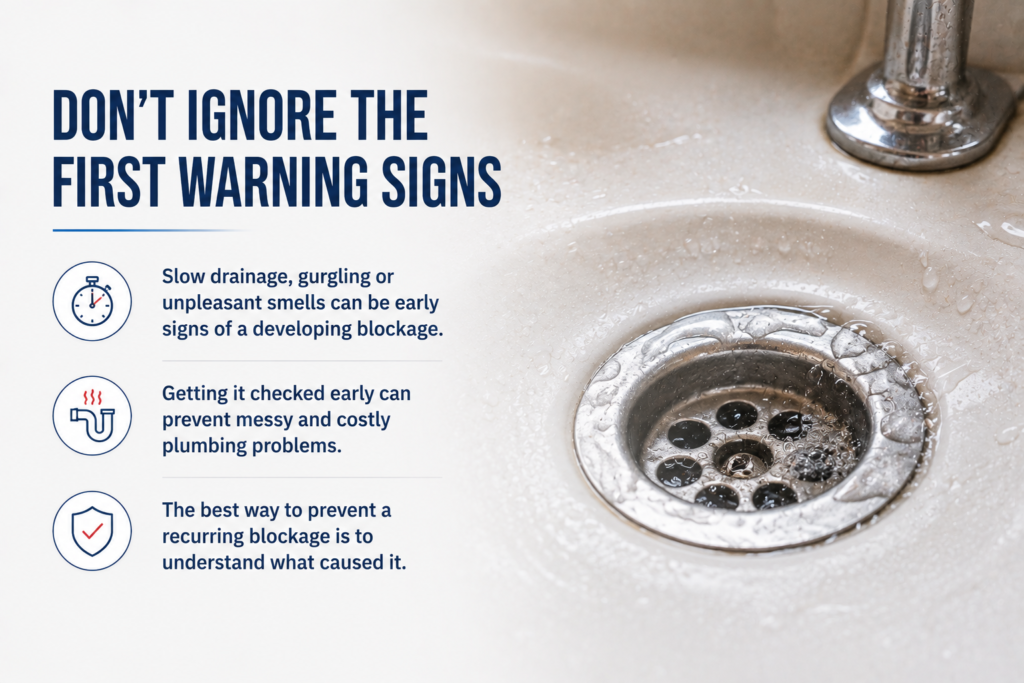
A drain that takes an extra few seconds to empty may not seem worth calling a plumber about. But recurring slow drainage, gurgling or unpleasant smells can be early signs of a developing blockage.
Getting the problem assessed before wastewater backs up can be far less disruptive than dealing with an overflowing drain later.
If you are already experiencing blocked drains in Kellyville, Marvel Flow Plumbing can investigate the cause and provide appropriate drain cleaning or plumbing repairs.
The best way to prevent a recurring blockage is not simply to clear it. It is to understand what caused it.
FAQs
What is the most common cause of blocked drains?
Common causes include hair, grease, food waste, unsuitable materials flushed down toilets and debris accumulating inside drainage pipes.
Can tree roots block household drains?
Yes. Roots can enter damaged or poorly sealed underground pipes and restrict wastewater flow. Recurring outdoor blockages may warrant a CCTV drain inspection.
How can I prevent my shower drain from blocking?
Use a hair catcher or drain strainer and clean it regularly. Avoid allowing large amounts of hair and other debris to enter the pipe.
When should I call a plumber for a blocked drain?
Contact a plumber when a blockage keeps returning, multiple fixtures are affected, wastewater backs up or DIY clearing methods fail to restore normal drainage.