
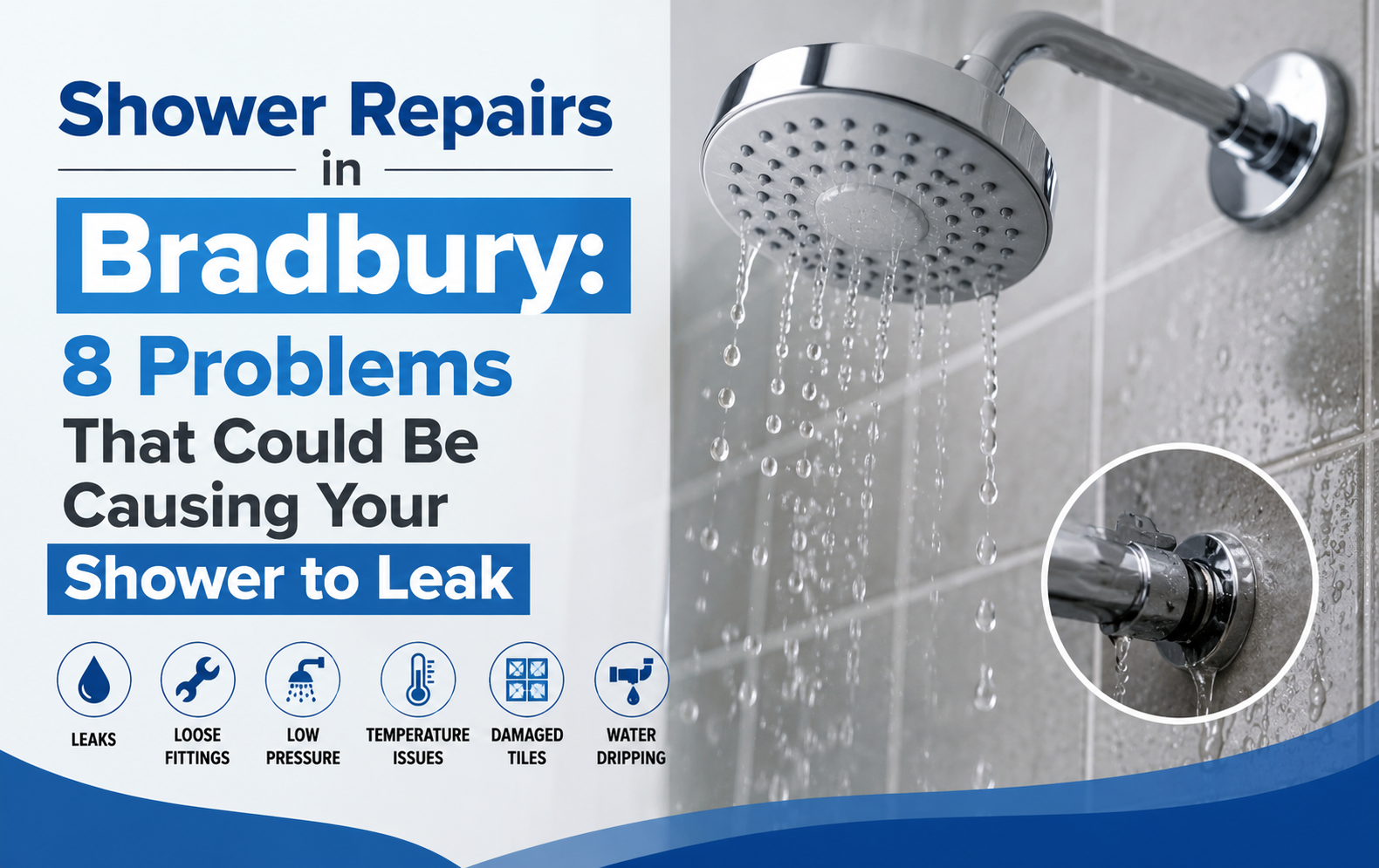
A leaking shower can be easy to dismiss, especially when the water appears to be coming from somewhere minor. You may notice a few drops around the shower screen, a damp patch on the floor or water continuing to drip after the shower has been turned off.
The problem is that not every shower leak comes from the obvious place. Water can escape through worn seals, damaged fittings, cracked grout or concealed plumbing and gradually affect areas behind the visible surface.
If you have noticed a recurring leak in your bathroom, understanding the possible causes can help you decide when professional attention is needed.
1. A worn shower tap cartridge
If your shower continues dripping after the tap has been turned off, the cartridge or internal valve components may be worn.
These components control water flow and temperature. Over time, seals can deteriorate or internal parts can become damaged, allowing water to pass through when the tap should be closed.
A persistent drip is more than an annoyance. Over time, it can waste water and indicate that the tap needs repair or replacement.
2. Damaged seals around the shower fittings
Small rubber seals and washers are used throughout shower plumbing connections. When these deteriorate, water can escape around the fitting.
You might notice moisture around:
- Shower taps
- Handheld shower connections
- Showerheads
- Flexible hoses
- Wall outlets
A fitting does not necessarily need to be visibly broken for its seal to fail. Age, repeated use and movement can gradually affect the connection.
Why small leaks should be investigated
A leak around a fitting may look insignificant, but water can travel behind wall surfaces before becoming visible. Repairing the source early can reduce the opportunity for hidden moisture damage.
3. The showerhead connection is leaking
Water dripping from the showerhead or connection after the shower has finished can point to a worn washer, loose connection or another fitting issue.
Before assuming the entire shower needs replacing, the connection should be inspected.
A professional plumber can determine whether the problem is a simple seal or fitting issue or whether there is a deeper plumbing fault.
4. Cracked or deteriorating grout is allowing water through
Not every shower leak is caused by a pipe.
Damaged grout between tiles can allow water to penetrate areas that are intended to remain dry. Cracked grout, missing sections and deteriorating joints can become particularly problematic when the shower is used regularly.
Look for:
- Cracks between tiles
- Missing grout
- Dark or damp areas that remain after use
- Mould around joints
- Loose tiles
Grout damage does not always mean there is a plumbing leak, but persistent moisture around damaged areas deserves investigation.
5. The shower screen or door is not sealing properly
Water escaping through a shower screen can create puddles outside the shower even when the plumbing itself is working correctly.
Possible causes include worn seals, gaps around the screen, poor alignment or damaged silicone.
This type of leak may appear only when the shower is being used, making it easier to identify than a concealed plumbing leak.
If resealing does not resolve the issue, the screen and surrounding area may need further assessment.
6. Silicone seals have deteriorated
Silicone is commonly used around shower areas to create a water-resistant seal between surfaces.
Over time, silicone can shrink, crack, peel away or develop gaps. Once the seal is compromised, water can move into areas that were previously protected.
Old silicone should not simply be covered with another layer. The damaged material generally needs appropriate removal and preparation before resealing.
Where failed silicone can cause trouble
Pay particular attention to joins around:
- Shower trays
- Wall and floor junctions
- Shower screens
- Corners
- Penetrations around fittings
7. A concealed pipe is leaking behind the wall
Sometimes the visible water is only the final clue.
A leak inside the wall may produce damp patches, peeling paint, mould or a musty smell around the bathroom. In some cases, there may be no obvious sign until the moisture has affected surrounding materials.
If water appears even when the shower has not been used, concealed pipework becomes more relevant.
This type of problem should not be investigated by randomly opening walls. A plumber can assess the symptoms and use appropriate leak detection methods where required.
8. The shower drain is partially blocked
A leaking shower is not always caused by water escaping through a pipe or seal. A partially blocked drain can cause water to accumulate around the shower floor and find its way through vulnerable joints.
Hair, soap residue and other debris can gradually restrict drainage.
If the shower is slow to drain and water remains on the floor after use, the drainage problem should be addressed alongside any suspected waterproofing or sealing issue.
How can you tell where the shower leak is coming from?
Start by observing when the water appears.
If it happens only while the shower is running, the issue may involve the screen, showerhead, fittings, seals or drainage. If moisture appears when the shower has not been used, a concealed plumbing leak becomes more likely.
Do not rely on appearance alone. Water can travel from its original source, making the visible wet area different from the actual fault.
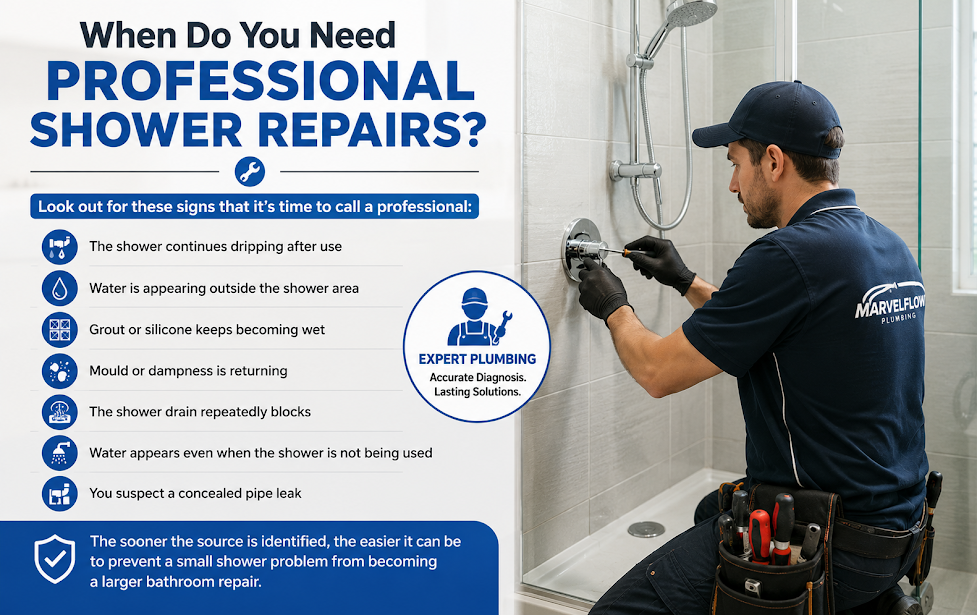
When do you need professional shower repairs?
A minor drip may not require emergency assistance, but recurring leaks should not be ignored.
Professional shower repairs in Bradbury may be appropriate when:
- The shower continues dripping after use
- Water is appearing outside the shower area
- Grout or silicone keeps becoming wet
- Mould or dampness is returning
- The shower drain repeatedly blocks
- Water appears even when the shower is not being used
- You suspect a concealed pipe leak
Marvel Flow Plumbing can assess the plumbing side of the problem and identify whether the issue involves fittings, pipework, drainage or another plumbing component.
The sooner the source is identified, the easier it can be to prevent a small shower problem from becoming a larger bathroom repair.
FAQs
Why is my shower leaking after I turn it off?
A worn cartridge, washer, valve or showerhead connection can allow water to continue escaping after the shower has been turned off. The exact cause depends on where the water is appearing.
Can cracked grout cause a shower leak?
Yes. Damaged grout can allow water to penetrate joints and surrounding areas. However, cracked grout does not necessarily mean the plumbing itself is leaking.
How do I know if a shower leak is behind the wall?
Persistent dampness, mould, peeling paint, musty smells or moisture appearing when the shower is not in use can indicate a concealed leak. Professional assessment may be needed to locate the source.
Should I repair a dripping shower tap?
Yes, particularly if the dripping is persistent. A worn internal component can waste water and may indicate that the tap needs repair or replacement.