
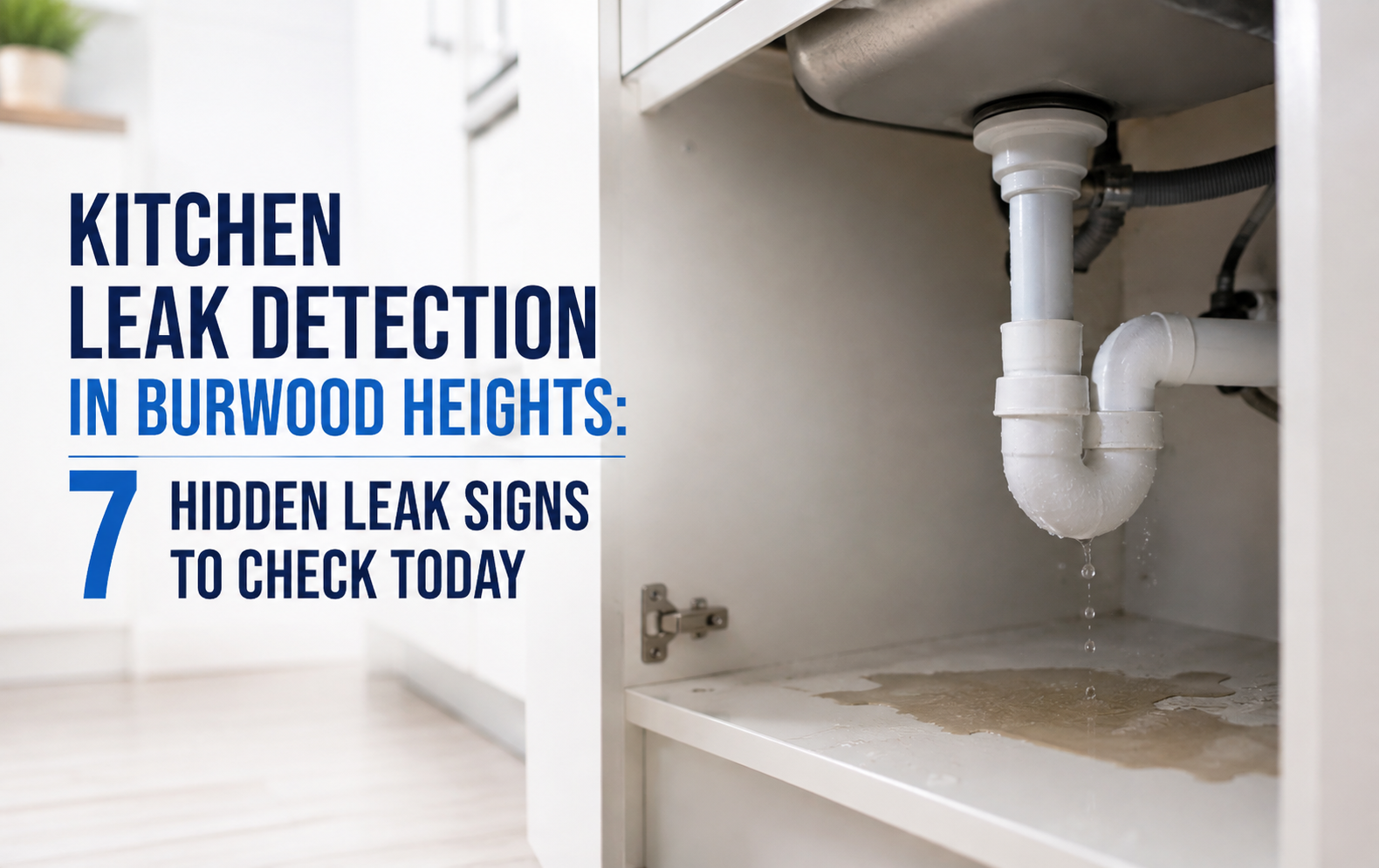
Kitchen leaks do not always announce themselves with a puddle under the sink. Some begin inside a cabinet, behind an appliance or around a pipe connection where water can remain hidden for days.
That makes kitchen leaks particularly easy to overlook. By the time a homeowner notices swollen cabinetry, mould or a musty smell, moisture may have already affected surrounding materials.
The good news is that your kitchen often provides small clues before a hidden leak becomes a major problem. If something seems different from normal, these seven signs are worth checking.
1. The cabinet under your sink feels damp
The area beneath the kitchen sink is one of the first places to inspect.
Open the cabinet and look for:
- Damp patches on the base
- Water stains around pipe connections
- Swollen or peeling cabinetry
- Mould or mildew
- A musty smell
- Small pools of water around stored items
A leak may only occur when the tap is running or when the sink is draining, so the cabinet can appear dry at other times.
Run the tap briefly while observing the pipework, but avoid touching damaged or electrical components. If moisture repeatedly appears, the source should be investigated.
2. Your kitchen tap is dripping after being turned off
A few drops immediately after using a tap may not indicate a serious leak. However, persistent dripping should not be ignored.
The problem may involve a worn washer, cartridge, seal or connection. Water can also escape around the base of the tap and travel underneath the benchtop where it is difficult to see.
Look beyond the visible drip
If the tap itself is not obviously leaking, check beneath the sink for moisture or water marks.
A small tap leak may be straightforward to repair, but ongoing moisture around the benchtop can gradually affect cabinetry and surrounding surfaces.
3. There is an unexplained increase in your water usage
A change in your water bill or meter readings can sometimes point to a hidden plumbing leak.
Kitchen appliances and fixtures can use water in different ways, so an increase does not automatically mean there is a leak. However, if household usage has remained relatively consistent and water consumption has increased unexpectedly, it is worth investigating.
Pay particular attention if the increase appears alongside other signs such as damp cabinets, running taps or unexplained moisture.
4. Your dishwasher area smells damp or musty
A dishwasher can hide plumbing leaks because the connections are often located behind or underneath the appliance.
A persistent musty smell, damp flooring or swollen cabinetry around the dishwasher may indicate that water is escaping from a hose, connection or drainage line.
You may also notice:
- Water appearing after a cycle
- Dampness beneath nearby cabinets
- Warped flooring
- Mould around joins
- A recurring unpleasant smell
Do not pull out a built-in appliance if doing so could damage connections or create a safety hazard. Professional assessment may be more appropriate.
5. Your kitchen cabinets are swelling or changing shape
Water damage is not always immediately visible as water.
Cabinet panels exposed to repeated moisture may swell, warp, soften or begin separating at the edges. The damage may appear around the sink, dishwasher or plumbing connections.
If one section of cabinetry looks different from the surrounding areas, consider whether moisture could be getting behind it.
Why cabinet damage matters
Replacing damaged cabinetry without fixing the source of the moisture may simply lead to the same problem again.
The leak needs to be identified first.
6. You notice mould or persistent condensation
Mould around plumbing areas can indicate ongoing moisture, particularly when it keeps returning after cleaning.
Not every patch of mould means there is a concealed pipe leak. Poor ventilation, condensation and general humidity can also contribute.
However, mould combined with damp cabinetry, water stains or unexplained odours is more significant.
If moisture seems to be coming from behind a wall, cabinet or fixed appliance, professional kitchen leak detection in Burwood Heights can help identify where further investigation is needed.
7. You hear water when no fixture is being used
A faint dripping, hissing or rushing sound in the kitchen when all taps and appliances are off can be a useful warning.
The source may be a leaking pipe, tap connection, appliance supply line or another plumbing component.
Do not assume that a hidden sound is harmless simply because you cannot see water. Water can travel inside walls, under cabinets and beneath flooring before appearing at an accessible point.
If the sound is persistent, arrange an inspection rather than waiting for visible damage.
Where can a kitchen leak hide?
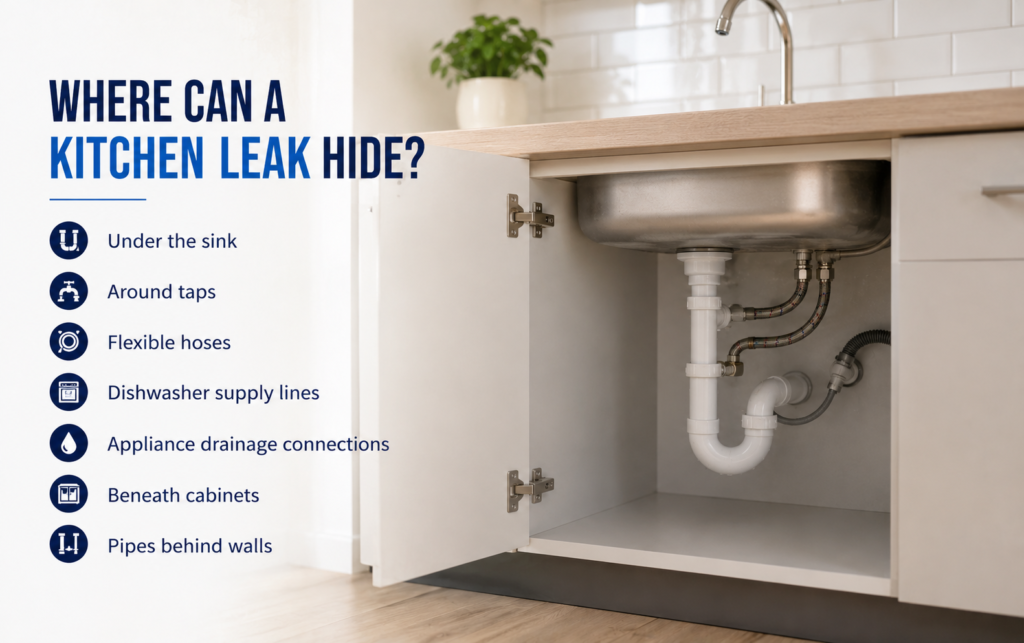
Kitchen leaks commonly develop around areas where water is supplied, used or discharged.
These include:
- Sink waste connections
- Tap connections
- Flexible hoses
- Dishwasher supply lines
- Appliance drainage connections
- Pipework beneath cabinets
- Pipes concealed behind walls
The visible location of moisture is not necessarily the location of the leak. Water can travel along surfaces and inside enclosed spaces.
This is why simply drying the wet area may not solve the problem.
What should you do if you suspect a kitchen leak?
Start by checking accessible areas without dismantling plumbing or built-in appliances.
If you find active leaking, use the relevant isolation valve where safe and appropriate. Remove items from a damp cabinet so they do not absorb moisture and avoid using affected appliances if there is a safety concern.
Do not cut into walls or cabinetry to search for concealed pipes yourself.
A professional plumber can assess the symptoms and determine whether the issue is likely to involve a fixture, connection, appliance or concealed pipe.
For homeowners needing kitchen leak detection in Burwood Heights, Marvel Flow Plumbing can help identify plumbing problems before ongoing moisture causes more extensive damage.
Why early leak detection matters
A hidden kitchen leak may begin with a few drops, but continued exposure can affect cabinetry, flooring and surrounding materials.
More importantly, the longer a leak continues, the harder it can be to know how far moisture has travelled.
Finding the source early gives you a better opportunity to address the plumbing fault before the visible damage becomes the main problem.
FAQs
How do I know if my kitchen sink is leaking?
Check underneath the sink for dampness, water stains, mould, swollen cabinetry or moisture around pipe connections. Run the tap and observe accessible connections for signs of leaking.
Can a dishwasher cause a hidden kitchen leak?
Yes. Supply hoses, drainage connections and fittings around a dishwasher can develop leaks. Damp flooring, musty smells or moisture around the appliance can indicate a problem.
Why are my kitchen cabinets swelling?
Repeated moisture exposure is a common cause. A leaking sink connection, tap, dishwasher hose or concealed pipe could be responsible, although other sources of moisture are also possible.
Is a hidden kitchen leak an emergency?
It depends on the amount and location of water. A significant active leak, rapidly spreading moisture or water near electrical equipment requires prompt attention. Smaller suspected leaks should still be investigated before they cause further damage.