

The leak under your sink may be bigger than the water you can see.
You notice a damp cleaning bottle under the sink. A musty smell appears every time you open the cabinet door. One of the cabinet panels looks slightly swollen, but it doesn’t seem serious enough to worry about. These small signs are easy to overlook, especially when there is no obvious puddle or visible plumbing problem.
The reality is that many kitchen leaks develop quietly behind cabinets, beneath flooring, or around hidden pipe connections. While the leak itself may seem minor, the moisture it creates can gradually damage cabinetry, flooring, and surrounding building materials. This guide explains how to identify hidden kitchen leaks, understand the damage they can cause, and know when professional leak detection may be necessary.
Why Kitchen Leaks Often Go Undetected
Kitchen leaks are rarely dramatic in the beginning. Most start as slow drips or minor seepage that develops over time.
The area beneath a kitchen sink is one of the least-inspected spaces in many homes. Cleaning products, bins, and household supplies often hide plumbing components from view, making it easy for small leaks to go unnoticed.
Many leaks are also intermittent. A loose fitting may only leak when the tap is running, while a worn seal may allow moisture to escape gradually throughout the day.
What makes the problem more challenging is that water often travels away from the source. By the time visible damage appears, moisture may have already spread well beyond the cabinet itself.
Many homeowners discover the damage long after the leak has started.
The Most Common Causes Of Hidden Kitchen Leaks
Kitchen plumbing includes multiple connections and components that can develop faults over time.
Loose Pipe Connections
Pipe fittings naturally experience movement and wear through daily use.
Even a slightly loose connection can allow small amounts of water to escape whenever the sink is used. Because the leak is often slow, homeowners may not notice it immediately.
Worn Seals Around Fixtures
Seals around taps, sink fixtures, and plumbing connections help prevent water from escaping.
Over time, these seals can deteriorate, crack, or shrink, creating opportunities for moisture to seep into surrounding cabinetry.
Damaged Water Supply Lines
Supply lines deliver pressurised water to taps, dishwashers, and filtration systems.
When these lines become damaged, they can create a hidden pipe leak that continuously releases water behind cabinets or appliances.
Sink Drain Leaks
Drain leaks can be difficult to identify because they only occur while water is flowing through the sink.
As a result, moisture may build up gradually without creating obvious warning signs.
Appliance Connection Leaks
Modern kitchens often have multiple water-connected appliances.
Common sources of an under-sink leak include:
- Dishwasher supply lines
- Water filtration systems
- Fridge water connections
- Ice maker lines
These hidden connections can leak for extended periods before anyone notices.
Most homeowners never see these plumbing faults developing. Instead, they notice the effects left behind by ongoing moisture.
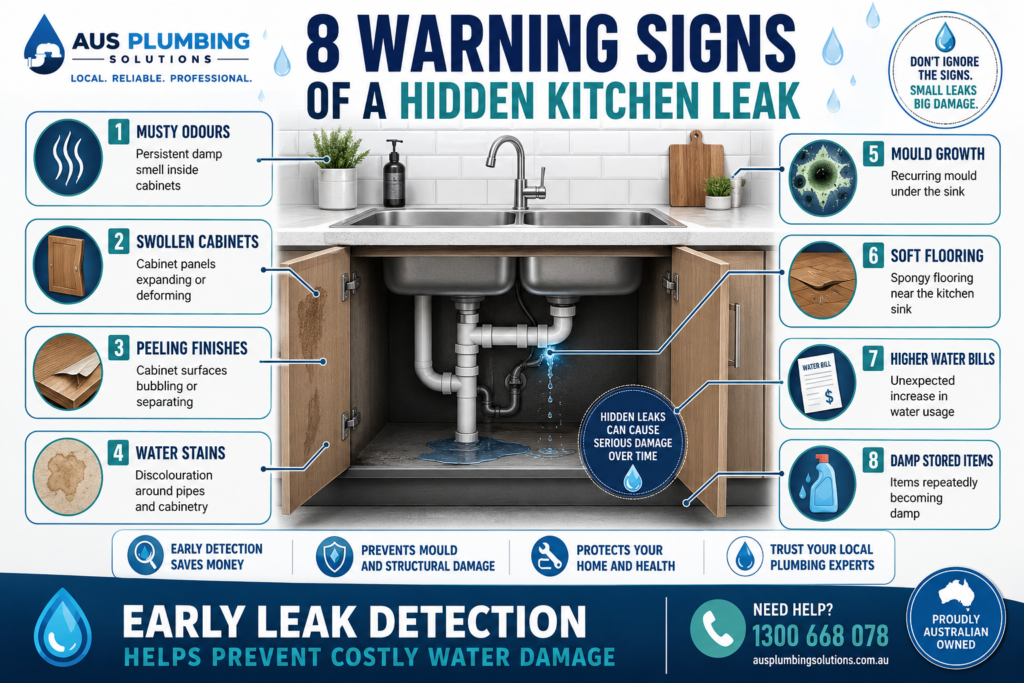
Signs You May Have A Hidden Kitchen Leak
1. Musty Odours Inside Cabinets
A persistent musty smell is often one of the earliest warning signs of hidden moisture.
Cabinets provide dark, enclosed environments with limited airflow. When moisture becomes trapped inside, odours can develop long before visible damage appears.
If the smell continues despite cleaning, further investigation is worthwhile.
2. Swollen Or Warped Cabinet Panels
Moisture exposure causes many cabinet materials to expand and lose their original shape.
Swollen edges, warped panels, or distorted cabinet doors often indicate ongoing water exposure.
Many homeowners assume this is normal ageing when it may actually be a plumbing issue.
3. Peeling Laminate Or Cabinet Finishes
Cabinet finishes rely on adhesives and protective coatings to maintain their appearance.
When moisture penetrates these surfaces, laminates can bubble, peel, or separate from the underlying material.
4. Water Stains Around Plumbing Areas
Discolouration around pipes, cabinet bases, or nearby walls may indicate repeated moisture exposure.
Even if the area appears dry, stains often reveal that water has been present for some time.
5. Mould Growth Around The Sink Cabinet
Mould growth thrives in damp, enclosed spaces.
The area beneath a kitchen sink creates ideal conditions when hidden moisture is present. While surface mould can be cleaned, recurring mould often indicates an unresolved plumbing problem.
Professional investigation is recommended when mould repeatedly returns.
6. Soft Flooring Near The Kitchen Sink
Water does not always remain inside the cabinet.
Over time, moisture can spread beneath flooring materials and affect adhesives, timber products, and subfloor structures.
Soft or spongy flooring near the sink may indicate hidden water damage.
7. Increased Water Bills
Unexpectedly high water bills are often one of the earliest signs of a concealed plumbing issue.
A small leak running continuously can waste a surprising amount of water over time. If your household water usage remains consistent but bills continue rising, hidden leaks may be contributing.
8. Persistent Dampness Under Stored Items
Many homeowners discover leaks while moving cleaning supplies or household products stored beneath the sink.
If items repeatedly feel damp or moisture continues returning after cleaning, a hidden leak may be present.
How Water Damage Spreads Beyond The Sink Cabinet
Many homeowners assume that if the leak is inside the cabinet, the damage will stay there too.
Unfortunately, water rarely follows those boundaries.
The Hidden Moisture Journey
Once moisture escapes from a leak, it can travel through surrounding materials in several ways:
- Beneath cabinet bases
- Behind splashbacks
- Under flooring
- Along wall framing
- Into neighbouring cabinets
This process occurs through moisture migration and capillary action. Building materials absorb water and transfer it to adjacent surfaces, often extending the affected area well beyond the original leak.
This is why cabinet water damage is often only one visible symptom of a much larger moisture problem.
By the time swelling or staining becomes obvious, nearby materials may already be affected.
Can A Small Leak Really Cause Major Damage?
This is one of the most common questions homeowners ask.
The answer is yes, but not because the leak is large.
The issue is continuous exposure.
A small drip may seem insignificant on any given day. However, when that drip continues for weeks or months, moisture accumulates steadily within surrounding materials.
Small drip × months of exposure = significant damage.
Over time, this can contribute to:
- Cabinet deterioration
- Flooring damage
- Delaminated surfaces
- Weakened joinery
- Mould development
- Moisture-related structural concerns
The leak itself is often the smallest part of the problem.
How Hidden Kitchen Leaks Affect Water Bills
Many homeowners investigate water bills before they investigate their plumbing.
Hidden leaks can release water continuously without creating visible signs, making them particularly expensive over time.
A concealed leak may cause:
- Continuous water loss
- Unnoticed consumption
- Increased utility costs
- Unexpected bill increases
In many cases, rising water bills reveal a hidden plumbing issue before visible damage appears inside the kitchen.
Professional Leak Detection Methods Used By Plumbers
Once a hidden leak is suspected, the next step is determining exactly where the moisture is coming from.
Professional leak detection Blacktown services use several non-invasive methods to identify problems accurately.
Visual Plumbing Inspections
A comprehensive plumbing inspection Blacktown service begins with examining visible plumbing components.
Connections, fittings, appliances, valves, and surrounding materials are assessed for signs of moisture or deterioration.
Moisture Testing
Moisture meters help identify water hidden inside cabinetry, flooring, and walls.
This allows plumbers to understand how far moisture has spread beyond visible damage.
Thermal Imaging
Thermal imaging cameras detect temperature variations caused by hidden moisture.
These tools help locate damp areas behind surfaces without unnecessary demolition.
Pressure Testing
Pressure testing evaluates the integrity of plumbing systems.
Unexpected pressure loss can indicate concealed leaks within water supply lines.
Together, these methods help identify leaks accurately while minimising disruption to the property.
What Happens After A Leak Is Found?
Finding the leak is only the first step.
Once the source is confirmed, plumbers typically:
- Identify the exact leak location
- Assess moisture-related damage
- Develop a repair plan
- Complete necessary plumbing repairs
- Conduct follow-up testing
Depending on the issue, water leak repair Blacktown services may involve replacing fittings, repairing pipework, or resolving appliance connection faults.
The goal is to address both the leak and its underlying cause.
Prevention Tips To Protect Your Kitchen From Hidden Water Damage
Preventative maintenance can significantly reduce the risk of major repairs.
Simple habits include:
- Inspect under-sink cabinets monthly
- Check appliance water connections regularly
- Monitor water bills for unusual increases
- Avoid overcrowding cabinet storage
- Investigate musty smells promptly
- Address small leaks immediately
- Schedule periodic plumbing inspections
Early action often prevents larger and more expensive repairs.
When Should You Call A Professional Plumber?
Professional assistance is recommended if you notice:
- Recurring moisture beneath the sink
- Persistent mould growth
- Rising water bills
- Swollen cabinetry
- Peeling finishes
- Soft flooring
- Suspected hidden leaks
Early investigation often prevents extensive damage and helps protect surrounding building materials.
How Marvel Flow Plumbing Detects And Repairs Kitchen Leaks
At Marvel Flow Plumbing, we understand that kitchen leaks are not always easy to find.
We provide leak detection services, plumbing inspections, moisture investigations, leak repairs, and preventative maintenance throughout Blacktown.
Our approach focuses on identifying the source of the problem rather than simply treating visible symptoms. Using modern detection methods and local experience, we help homeowners locate concealed leaks accurately and recommend practical repair solutions.
Whether the issue involves an appliance connection, a hidden pipe leak, or moisture spreading beyond the cabinet, our goal is to minimise disruption and protect your property.
Why Early Leak Detection Protects Your Kitchen Investment
A kitchen is one of the most valuable spaces in any home.
Protecting it involves more than maintaining appliances and cabinetry. It also means ensuring the plumbing behind those surfaces remains in good condition.
Early detection leads to:
- Smaller repairs
- Reduced cabinet damage
- Lower restoration costs
- Better protection of finishes
- Longer-lasting cabinetry and flooring
Protecting the plumbing system helps protect the kitchen itself.
Conclusion
Kitchen leaks often remain hidden during the early stages, making them easy to overlook. A musty smell, swollen cabinet panel, or rising water bill may seem minor on its own, but these signs often point to moisture that has been present for much longer than expected.
Remember that cabinet damage is often a symptom rather than the root problem. Professional leak detection helps identify hidden plumbing issues accurately, while early repairs help prevent more extensive water damage and costly restoration work.
If you notice signs of moisture, cabinet deterioration, or suspect a hidden kitchen leak, the team at Marvel Flow Plumbing can help investigate the issue and recommend the most effective solution.
Frequently Asked Questions
Why is there mould under my sink?
Mould under a sink is usually caused by excess moisture from a plumbing leak, condensation, or poor ventilation. If mould keeps returning after cleaning, there may be an underlying moisture source that requires professional inspection.
Can a small leak damage kitchen cabinets?
Yes. Even a slow drip can expose cabinetry to moisture for extended periods. Over time, this can cause swelling, warping, peeling finishes, weakened joinery, and other forms of water damage.
How do I know if I have a hidden kitchen leak?
Common warning signs include musty odours, swollen cabinet panels, mould growth, water stains, soft flooring, damp stored items, and unexpectedly high water bills. Professional leak detection can help confirm the source.
Will a hidden leak increase my water bill?
A hidden leak can increase water bills because water is being lost continuously without being noticed. Even minor leaks can contribute to higher utility costs over time.
When should I call a plumber for a leak?
You should contact a plumber if you notice recurring moisture, mould growth, cabinet damage, rising water bills, or suspect a hidden leak. Early investigation often helps prevent more extensive repairs and water damage.