
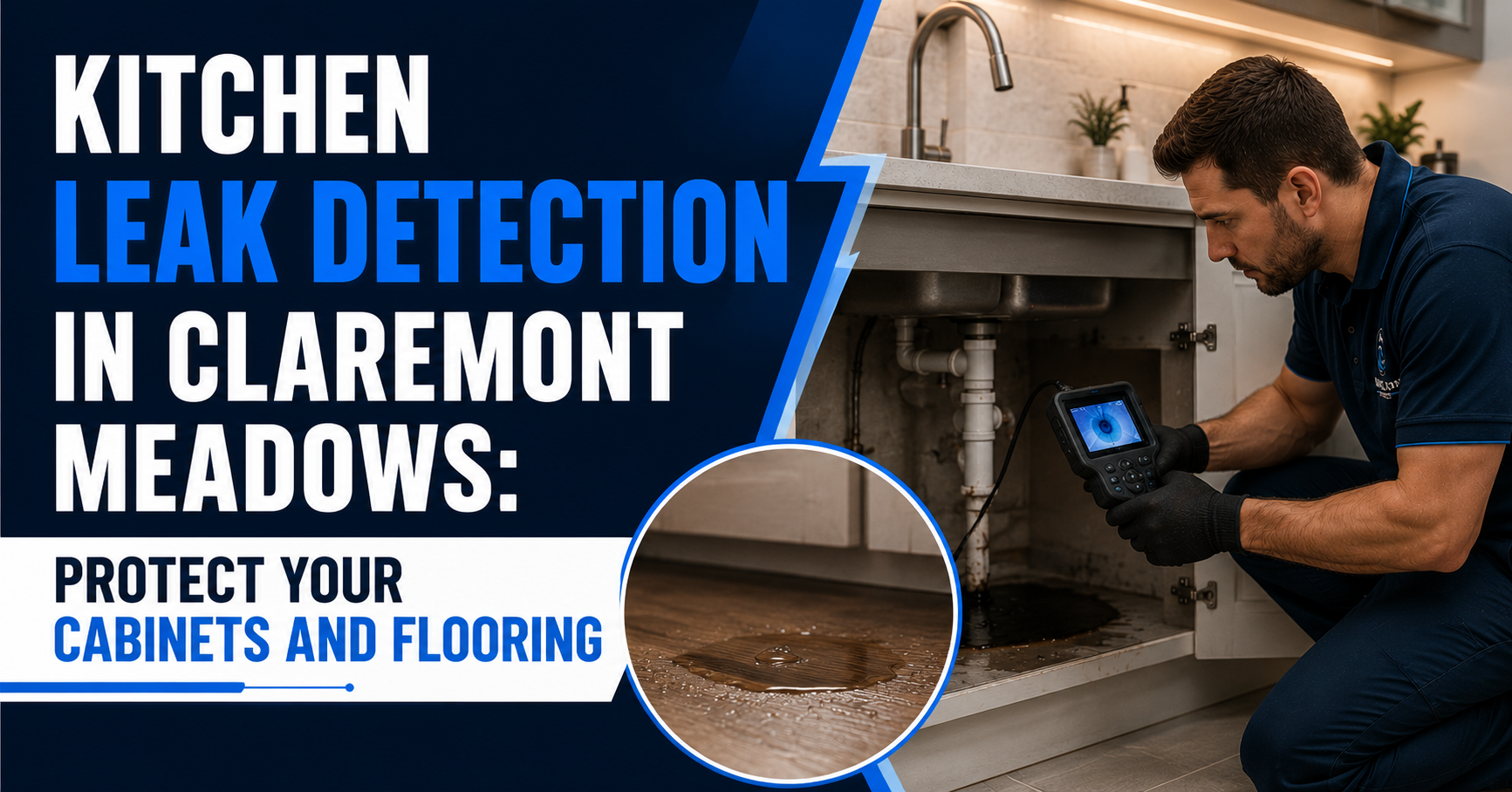
The kitchen is one of the few places in a home where water is constantly being used but rarely being watched.
A dishwasher runs while everyone sleeps. Pipes beneath the sink stay hidden behind stacked cleaning products. Small drips behind cabinetry continue quietly while daily life carries on around them. And because nothing looks dramatic at first, most leaks stay ignored far longer than they should.
Until the cabinet doors stop closing properly.
The flooring near the sink starts lifting slightly at the edges. A damp smell refuses to disappear no matter how much the kitchen is cleaned. Sometimes homeowners only discover the real problem after pulling something out from under the sink and finding swollen wood, mould spots, or trapped moisture that has already been sitting there for months.
That is what makes kitchen leaks so frustrating. The damage usually starts long before homeowners realise there is actually a plumbing problem.
This guide explains where kitchen leaks commonly develop, the warning signs homeowners often miss, how hidden moisture spreads through kitchens, and why early kitchen leak detection in Claremont Meadows can help prevent major restoration costs later.
Why Kitchen Leak Detection in Claremont Meadows Often Gets Delayed Due to Hidden Leaks
Kitchen plumbing is designed to stay out of sight.
Pipes sit behind cabinets, appliance connections remain tucked away, and under sink areas often become crowded storage spaces homeowners rarely inspect closely. Because of this, even active leaks can continue unnoticed for long periods.
An under sink leak may drip slowly behind stored cleaning supplies. Dishwasher hoses can leak beneath appliances where moisture stays trapped underneath flooring. Refrigerator water lines may develop small connection leaks that homeowners never see directly.
Unlike burst pipes, kitchen leaks often spread gradually without obvious flooding. Water quietly absorbs into cabinetry, flooring, and nearby structures while homeowners continue using the kitchen normally every day.
Many leaks are only discovered once visible cabinet damage or warped flooring finally appears.
The Most Common Kitchen Leak Points Homeowners Should Watch
Under Sink Pipe Connections
One of the most common kitchen leak areas is beneath the sink, where multiple pipe connections meet. Loose fittings, worn seals, or ageing plumbing joints can slowly drip water over time.
Dishwasher Hose Leaks
Dishwasher hoses and drainage connections experience constant pressure during use. Small leaks beneath the appliance often remain hidden until flooring damage develops nearby.
Sink Drain Leaks
Drain pipes beneath sinks can loosen, crack, or deteriorate with age. These leaks are often slow but continuous, allowing moisture to build up inside cabinets gradually.
Refrigerator Water Line Leaks
Fridges connected to water dispensers or ice makers may develop hidden line leaks behind the appliance, where homeowners rarely look.
Tap and Mixer Leaks
Small leaks around kitchen taps may seem harmless initially, but constant moisture exposure can eventually damage surrounding cabinetry and benchtops.
Garbage Disposal Leaks
Garbage disposal systems contain several connection points that may weaken over time, particularly in busy family kitchens with heavy daily use.
Water Filter Connections
Under-sink filtration systems can sometimes develop slow leaks around fittings or hoses, especially if components become loose or wear down with age.
Warning Signs Homeowners Commonly Miss
Kitchen leaks often reveal themselves through subtle changes long before major water damage appears.
Some of the most overlooked warning signs include:
- damp smells inside cabinets
- bubbling laminate surfaces
- swollen cabinetry
- warped flooring near appliances
- mould spots inside cupboards
- recurring moisture beneath the sink
- peeling cabinet finishes
- soft flooring near plumbing areas
Many homeowners initially dismiss these signs as normal ageing or minor kitchen wear. Unfortunately, trapped moisture usually continues spreading while the leak remains untreated.
The earlier these warning signs are investigated, the easier it becomes to prevent larger cabinet or flooring damage later.
How Hidden Kitchen Leaks Damage Cabinets and Flooring
Kitchen cabinetry absorbs moisture surprisingly quickly.
Even small hidden leaks can gradually soak into timber materials, causing swelling, warping, and structural weakening from the inside. Once moisture spreads beneath cabinetry or flooring, the damage often extends much further than homeowners first realise.
Cabinet damage caused by long-term leaks may include:
- swollen timber panels
- peeling laminate
- weakened shelving
- discoloured cabinetry
- deteriorating joins and edges
Flooring is equally vulnerable. Moisture trapped beneath vinyl, tiles, or timber flooring may slowly weaken adhesives and subfloor structures underneath.
Mould growth also becomes more likely when enclosed cabinet spaces remain damp for extended periods.
In many kitchens, the leak itself is relatively inexpensive to repair. The surrounding moisture damage is what becomes costly over time.
Can Small Kitchen Leaks Cause Mould Growth?
Yes, very easily.
Kitchen cabinets create dark, enclosed spaces where airflow is limited. When even small amounts of moisture remain trapped inside these areas, conditions quickly become ideal for mould growth.
Small leaks behind cabinetry or beneath sinks may continue unnoticed while mould slowly develops behind surfaces homeowners cannot easily see.
Over time, homeowners may notice:
- musty smells
- dark spots inside cupboards
- worsening dampness
- cabinet deterioration
- moisture around flooring edges
The earlier leaks are identified, the easier it becomes to prevent long-term mould problems from spreading through kitchen structures.
Why There Is Water Under Your Sink
Water beneath the sink is one of the most common warning signs homeowners encounter.
Some common causes include:
- loose pipe fittings
- leaking drain traps
- damaged seals
- slow pipe drips
- dishwasher hose leaks
- water filter connection problems
- condensation confusion
Many homeowners wipe away the moisture repeatedly without investigating the actual source. The problem is that even small recurring leaks may continue soaking nearby cabinetry every single day.
Water under the sink should never be ignored simply because it appears minor.
How Professional Plumbers Detect Hidden Kitchen Leaks

Professional leak detection involves much more than checking for visible drips.
At Marvel Flow Plumbing, we use several methods to identify hidden kitchen leaks and surrounding moisture spread, including:
- moisture testing
- pressure testing
- leak tracing
- appliance connection inspections
- flooring moisture detection
- under cabinet plumbing assessments
These inspections help identify hidden moisture problems before major cabinet or flooring damage develops.
We regularly assist homeowners requiring kitchen leak detection in Gilead and surrounding Sydney suburbs, where ageing plumbing systems and busy family kitchens often create hidden moisture risks.
Repair Options for Kitchen Leaks
Kitchen leak repairs depend on the location and severity of the issue.
Common repair solutions may include:
- replacing worn fittings
- resealing pipe joints
- repairing sink drains
- replacing appliance hoses
- upgrading damaged plumbing connections
- repairing leaking pipe sections
- preventing ongoing moisture spread
In many situations, catching the leak early keeps repairs relatively simple and prevents larger restoration work later.
Why Fast Leak Repairs Protect Your Kitchen Long-Term
The longer moisture remains trapped inside a kitchen, the more expensive the damage usually becomes.
Fast repairs help:
- reduce cabinet damage
- protect flooring
- lower restoration costs
- reduce mould risks
- improve plumbing reliability
- extend kitchen longevity
Small plumbing repairs are almost always more affordable than replacing damaged cabinetry, flooring, or subfloor structures later.
Early kitchen leak detection also helps homeowners avoid disruptions that often come with larger kitchen restoration projects.
How Marvel Flow Plumbing Helps Homeowners Prevent Kitchen Water Damage
At Marvel Flow Plumbing, we help homeowners identify hidden kitchen leaks before they create major household damage.
Our team provides:
- kitchen leak inspections
- hidden moisture detection
- under sink plumbing repairs
- appliance connection inspections
- preventative plumbing advice
- leak tracing services
We understand how expensive kitchen repairs and cabinetry replacement can become once moisture damage spreads through enclosed areas.
That is why our focus is always on helping homeowners detect and repair leaks early before the damage escalates further.
Conclusion
Kitchen leaks rarely begin with dramatic flooding.
Most start quietly behind cabinets, beneath sinks, or around appliances where moisture slowly spreads unnoticed through some of the most expensive areas of the home.
That is what makes hidden kitchen leaks so damaging. Homeowners often continue using the kitchen normally while water quietly weakens cabinetry, flooring, and surrounding structures every single day.
Small warning signs like damp cabinet smells, recurring moisture under the sink, swollen cabinetry, or warped flooring should never be ignored.
Early kitchen leak detection in Claremont Meadows can help homeowners protect their kitchen, reduce repair costs, prevent mould growth, and avoid far larger restoration problems later.
If moisture keeps appearing in your kitchen for no clear reason, it is usually worth investigating before the damage spreads further.
FAQs
What are the most common kitchen leak spots?
The most common kitchen leak areas include under sink pipe connections, dishwasher hoses, sink drains, refrigerator water lines, tap fittings, and water filter connections. These leaks often stay hidden behind cabinets or beneath appliances where moisture slowly spreads unnoticed.
Can leaks damage kitchen cabinets quickly?
Yes. Kitchen cabinets absorb moisture very quickly, especially timber or laminate materials. Even small hidden leaks can gradually cause swelling, peeling finishes, weakened shelving, and structural cabinet damage if moisture remains trapped inside enclosed spaces for too long.
Why is there water under my sink?
Water beneath the sink may come from loose fittings, leaking drain pipes, damaged seals, slow drips, dishwasher hose leaks, or even faulty water filter connections. Recurring moisture under the sink should always be inspected because small leaks often worsen over time.
Can mould grow from small leaks?
Yes. Small leaks create damp, enclosed conditions where mould can develop surprisingly quickly, especially inside dark cabinets with limited airflow. Hidden mould often spreads behind cabinetry before homeowners notice visible signs or strong musty odours inside the kitchen.
How do plumbers fix kitchen leaks?
Professional plumbers identify the leak source first using moisture testing, pressure checks, and plumbing inspections. Repairs may involve replacing worn fittings, repairing drains, resealing joints, replacing appliance hoses, or fixing damaged pipe sections before moisture damage spreads further.
Should I fix leaks immediately?
Yes. Even minor kitchen leaks should be repaired early because trapped moisture can quickly damage cabinets, flooring, and surrounding structures. Fast repairs usually cost far less than replacing water-damaged kitchen materials or dealing with long-term mould problems later.