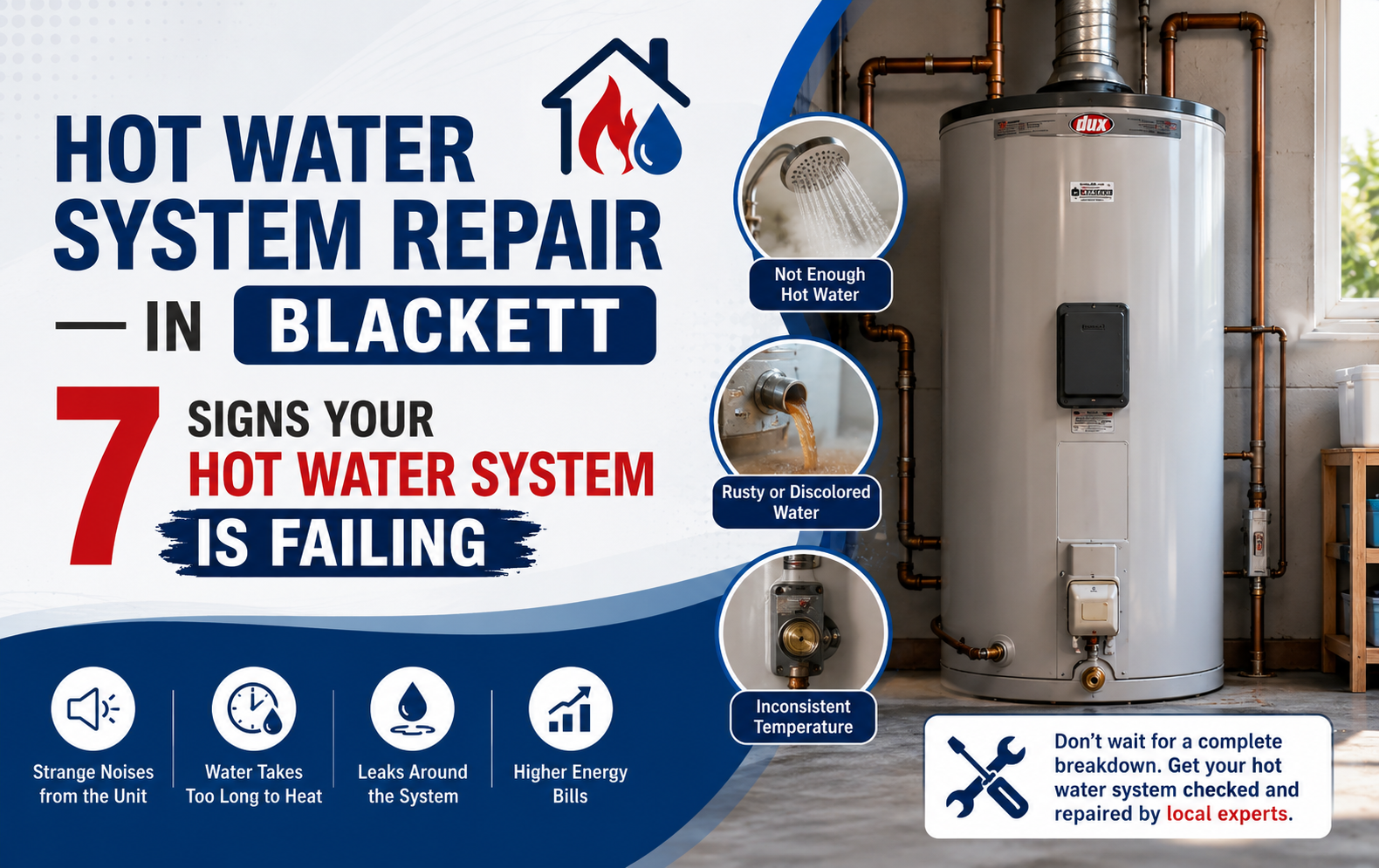
Most people do not think about their hot water system until something changes. The water may take longer to heat, the shower temperature may fluctuate, or an unfamiliar noise may suddenly come from the unit.
These changes are often early clues rather than isolated inconveniences. A hot water system can continue operating while a component is deteriorating, giving homeowners a window to have the problem assessed before the system fails completely.
If your system is showing any of the following signs, it may be time to arrange professional attention.
1. Your hot water supply is becoming less reliable
One day there is plenty of hot water. The next, it runs out halfway through a shower.
If household usage has not changed, a reduction in hot water availability can point towards a developing fault. The heating element, thermostat or other components may not be operating correctly.
For storage systems, sediment accumulation can also affect performance over time.
A gradual change is particularly worth noticing because it gives you an opportunity to investigate the issue before complete failure.
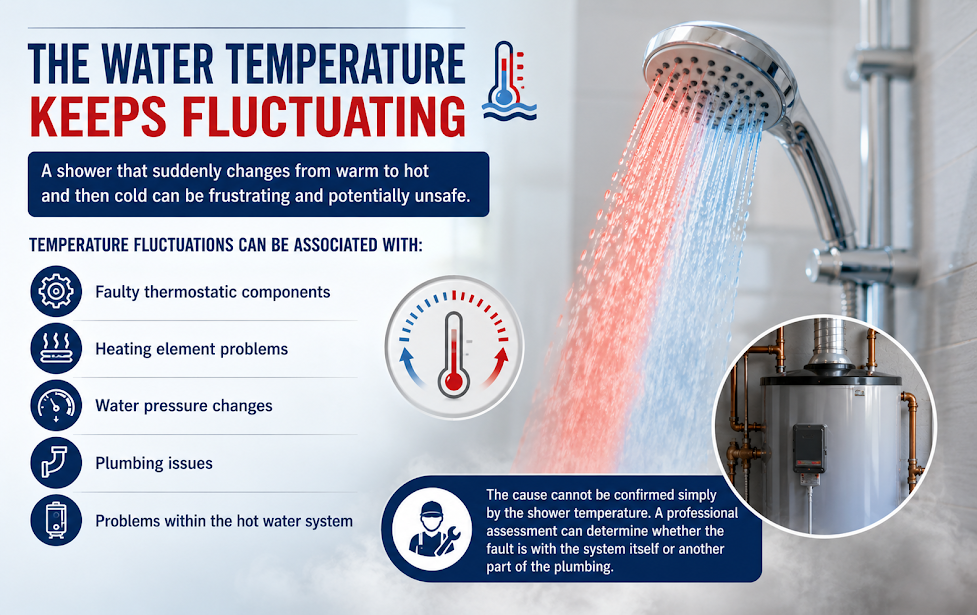
2. The water temperature keeps fluctuating
A shower that suddenly changes from warm to hot and then cold can be frustrating and potentially unsafe.
Temperature fluctuations can be associated with:
- Faulty thermostatic components
- Heating element problems
- Water pressure changes
- Plumbing issues
- Problems within the hot water system
The cause cannot be confirmed simply by the shower temperature. A professional assessment can determine whether the fault is with the system itself or another part of the plumbing.
When temperature changes become concerning
Occasional changes caused by simultaneous water use may be normal in some properties. Persistent or unexpected fluctuations are different.
If the problem keeps happening, it is better to investigate rather than repeatedly adjusting the tap and hoping it settles.
3. You notice water around the unit
A hot water system should not be surrounded by unexplained pools of water.
The source may be a valve, connection, pipe or component. In storage systems, corrosion or tank deterioration can also result in leakage.
Even a small leak deserves attention because it may worsen over time.
If you notice water around the unit, avoid touching hot components and arrange an inspection. Where appropriate and safe, the system’s water supply can be isolated while waiting for professional assistance.
4. Strange noises are coming from the system
A system that has suddenly become noisy is giving you useful information.
Popping, rumbling, banging or hissing sounds can be associated with sediment, pressure issues or component problems. The significance depends on the system type and what has changed.
Do not assume that a loud noise is simply what happens when an older water heater operates.
A change in sound is the important clue
You may not need to know exactly what the sound means. If a previously quiet system starts making unusual noises, tell the plumber what you have noticed.
That information can help guide the initial assessment.
5. Your hot water pressure has dropped
If the cold water pressure remains normal but the hot water comes out noticeably weaker, the hot water system or associated pipework may need investigation.
Possible causes can include restrictions, valves, sediment, pipework problems or system components.
Low pressure can also make a system appear less effective because it changes how quickly hot water reaches the fixture.
A sudden change is more significant than pressure that has always been relatively low.
6. The water is discoloured
Brown, rusty or unusual-looking hot water can be a sign of corrosion within the system or connected pipework.
A brief change in water colour may have another explanation, but recurring discolouration should not be ignored.
If the hot water repeatedly looks different from the cold supply, arrange a professional inspection to determine where the issue originates.
Corrosion can affect the performance and reliability of older hot water equipment, and identifying it early gives homeowners more information when deciding between repair and replacement.
7. The system keeps tripping or stops heating
An electric hot water system that repeatedly trips a circuit breaker or stops heating requires professional attention.
Do not repeatedly reset the breaker in an attempt to restore hot water. A recurring trip can indicate an electrical or component fault that needs investigation.
Gas hot water systems have their own warning signs and should also be assessed by an appropriately licensed professional when they stop operating correctly.
Complete loss of hot water is particularly disruptive, but repeated system faults can be equally important because they may signal a component approaching failure.
Repair or replacement: which makes sense?
A failing hot water system does not automatically need to be replaced.
The right option depends on several factors:
| Consideration | Why it matters |
| System age | Older units may have more frequent faults |
| Type of failure | Some components can be repaired |
| Tank condition | Corrosion may affect repair viability |
| Repair history | Repeated failures can increase long-term costs |
| Efficiency | Newer systems may offer different operating costs |
| Household demand | A replacement may need different capacity |
A professional diagnosis allows you to understand the actual condition of the system rather than making a decision based solely on its age.
What should you do if your system is failing?
Do not wait for a complete breakdown if warning signs are already appearing.
Keep track of changes in temperature, pressure, noise and water supply. If you see a leak or notice an electrical issue, treat it with greater urgency and avoid attempting repairs yourself.
For homeowners looking for hot water system repair in Blackett, Marvel Flow Plumbing can assess the problem and recommend the appropriate repair or next step.
Timely attention can be particularly valuable when a hot water fault is developing gradually. Addressing the issue before total failure can mean less disruption to your household.
FAQs
How do I know my hot water system is failing?
Common signs include inconsistent temperature, reduced hot water supply, unusual noises, leaking, low hot water pressure, discoloured water and repeated electrical trips.
Is a leaking hot water system dangerous?
A leak can cause property damage and may indicate a failing component or tank. If water is near electrical equipment or the leak is substantial, treat the situation as urgent.
Should I repair or replace an old hot water system?
Age is only one consideration. The system’s condition, repair history, efficiency, type of fault and replacement costs should all be considered before deciding.
Why does my electric hot water system keep tripping?
Repeated circuit breaker trips can indicate an electrical or component fault. Avoid repeatedly resetting the breaker and arrange professional assessment.