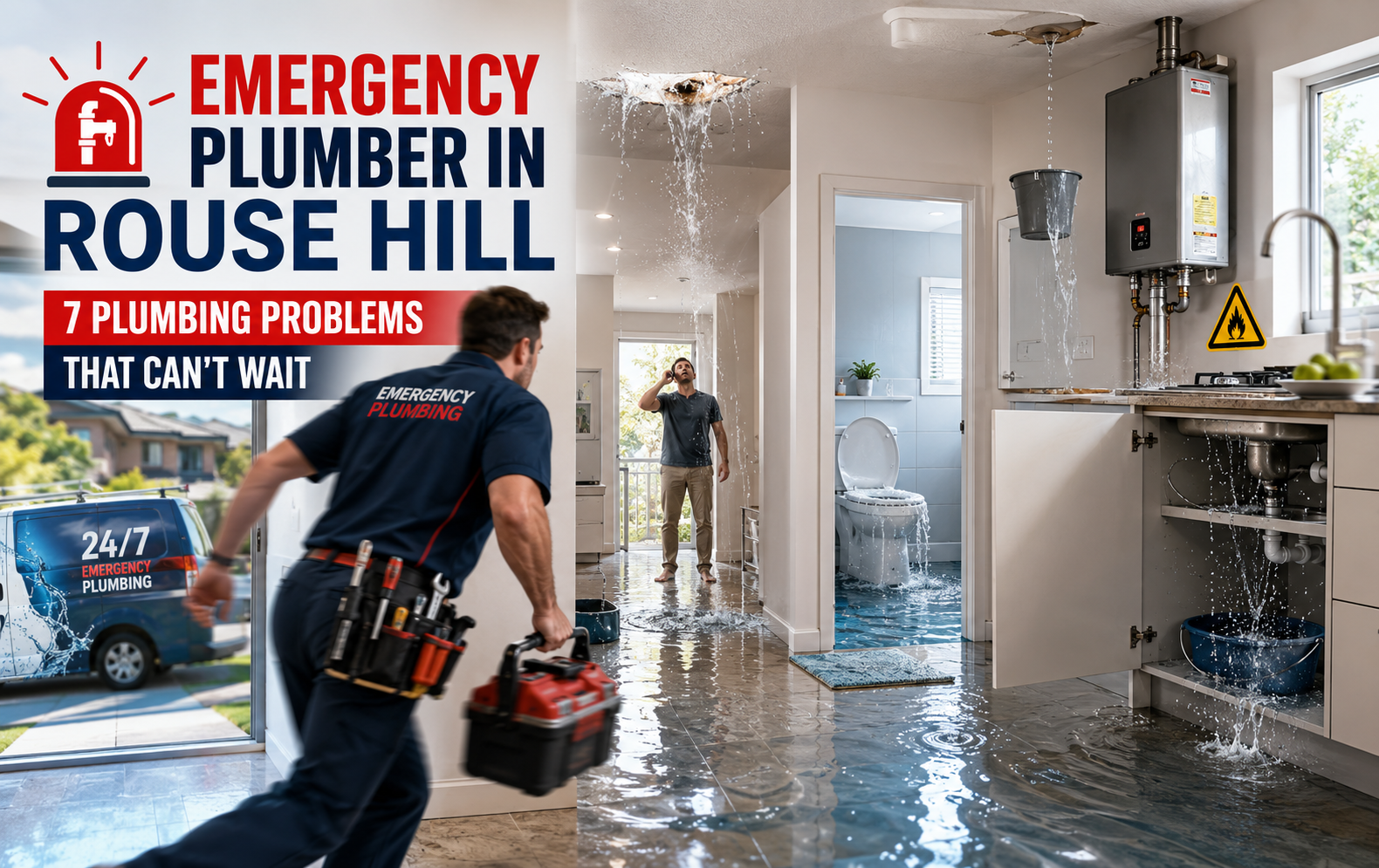
Imagine waking up to the sound of running water when every tap in the house is turned off. Or discovering a puddle spreading across your floor just before bed. Maybe you notice an unusual smell of gas while preparing dinner, or your toilet starts overflowing moments before guests arrive.
In stressful moments like these, most homeowners ask the same question: Can this wait until tomorrow?
The answer depends on the problem. While some plumbing issues are inconvenient but manageable, others can quickly affect your property’s safety, comfort, and functionality. Knowing the difference helps you act confidently and avoid unnecessary damage.
This guide explains seven plumbing problems that usually require immediate attention, how to assess the level of urgency, and what you should do before professional help arrives.
What Makes A Plumbing Problem An Emergency?
Not every plumbing issue needs an after-hours callout.
A plumbing problem generally becomes an emergency when delaying repairs significantly increases the risk of:
- Property damage
- Water loss
- Safety hazards
- Sanitation concerns
- Business or household disruption
This is where urgent plumbing repairs become important. The goal is not simply fixing the problem quickly. It is preventing a manageable issue from becoming a much larger one.
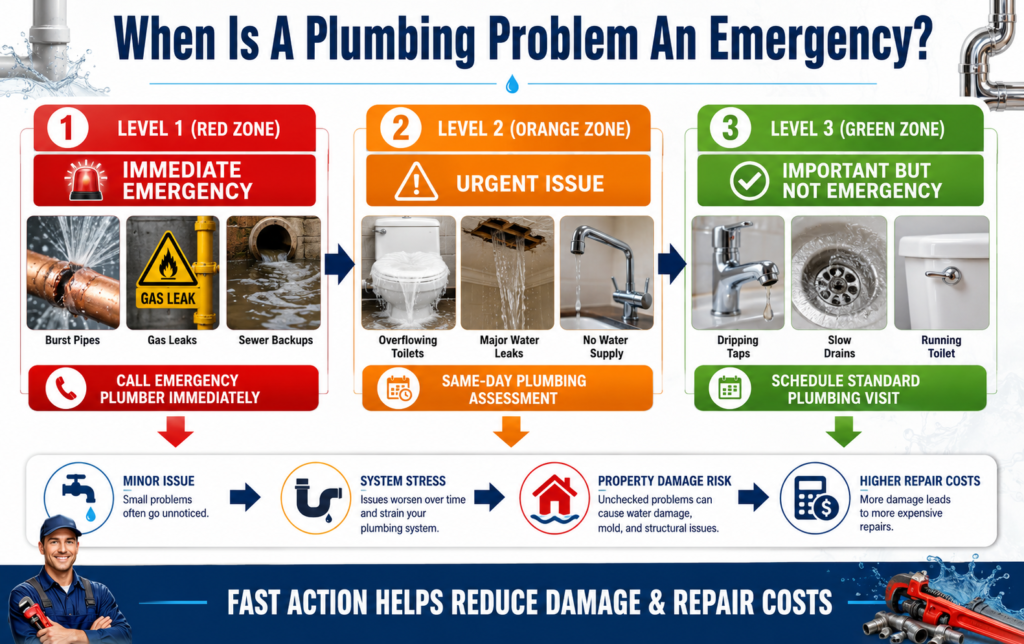
Emergency Severity Framework
Before looking at specific problems, it helps to understand how plumbers often assess urgency.
| Severity Level | Typical Issues | Action Required |
| Level 1: Immediate Emergency | Gas leaks, burst pipes, sewer backups | Immediate professional assistance |
| Level 2: Urgent Issue | Overflowing toilets, major leaks, no water supply | Same-day assessment recommended |
| Level 3: Important But Not Emergency | Dripping taps, minor leaks, slow drains | Schedule a standard plumbing visit |
This framework helps homeowners make informed decisions rather than reacting out of panic.
The 7 Plumbing Problems That Require Immediate Attention
1. Burst Pipes
A burst pipe emergency is one of the most urgent plumbing situations a homeowner can face.
Even a small pipe rupture can release large amounts of water in a surprisingly short time. Water can spread through flooring, walls, cabinetry, and nearby belongings before the problem is fully noticed.
What Can Happen If Ignored?
- Water damage spreads rapidly
- Structural materials absorb moisture
- Repair costs may increase
What Should You Do?
- Shut off the main water supply
- Move valuables away from affected areas
- Contact a professional for burst pipe repair Rouse Hill
Fast action often makes a significant difference.
2. Major Water Leaks
Not all serious leaks involve burst pipes.
Water leaking through ceilings, walls, or under flooring can indicate a hidden plumbing failure requiring urgent attention.
What Can Happen If Ignored?
The longer water escapes, the more opportunity it has to spread into surrounding materials.
What Should You Do?
- Identify the source if possible
- Isolate the water supply
- Document visible damage
- Arrange immediate assessment
3. Overflowing Toilets
An overflowing toilet is more than an inconvenience.
When water repeatedly rises after flushing, it often indicates a significant blockage somewhere within the drainage system.
What Can Happen If Ignored?
- Water damage
- Hygiene concerns
- Increased blockage severity
What Should You Do?
- Stop using the fixture
- Turn off the toilet’s water supply valve
- Contact a plumber promptly
4. Sewer Backups
A sewer backup affects far more than one fixture.
These problems can impact multiple drains throughout the property and often indicate a blockage within the main sewer line.
What Can Happen If Ignored?
- Wastewater overflow
- Drainage disruption
- Increasing sanitation concerns
What Should You Do?
Avoid using sinks, toilets, and showers until the system has been professionally assessed.
5. Gas Leaks
A suspected gas leak should always be treated as a serious safety issue.
Unlike many plumbing problems, gas-related emergencies involve risks beyond property damage.
What Can Happen If Ignored?
Gas leaks can affect the safety of everyone inside the property.
What Should You Do?
- Leave the affected area if necessary
- Avoid electrical switches
- Contact appropriate emergency services where required
- Arrange professional gas fitting assistance
6. No Water Supply Throughout The Property
Losing access to water can significantly disrupt household activities.
If the entire property suddenly loses water without explanation, there may be a plumbing system failure that requires urgent investigation.
What Can Happen If Ignored?
- Household disruption
- Potential hidden infrastructure issues
- Extended inconvenience
What Should You Do?
Confirm the issue is not related to external utility interruptions before contacting a plumber.
7. Hot Water System Failures Causing Leaks
A leaking hot water system is often more urgent than people realise.
Beyond losing hot water, leaks can indicate pressure-related issues or component failures.
What Can Happen If Ignored?
- Ongoing water damage
- Reduced system performance
- Larger repair requirements
What Should You Do?
Arrange professional inspection as soon as possible.
Could This Wait Until Tomorrow?
One of the most useful questions homeowners can ask is whether immediate action is genuinely required.
Usually Cannot Wait
These situations generally require immediate assistance:
- Burst pipes
- Gas leaks
- Active flooding
- Sewer backups
- Major ceiling leaks
Often Less Urgent
These problems may be suitable for a standard appointment:
- Dripping taps
- Minor fixture leaks
- Isolated slow drains
- Running toilets without overflow
- Small water pressure issues
The key difference is whether delaying repairs substantially increases risk.
What To Do Before Help Arrives
Knowing what to do in the first few minutes can help reduce damage and improve safety.
Shut Off The Water Supply If Safe
This is often the most effective way to limit further water damage.
Turn Off Relevant Appliances
Water heaters, washing machines, and dishwashers may need to be isolated depending on the issue.
Move Valuable Items Away
Protect electronics, furniture, documents, and personal belongings from affected areas.
Contain Water Where Possible
Use towels, containers, and buckets to reduce water spread.
Document Visible Damage
Photographs can assist with insurance claims and repair planning.
Avoid Risky DIY Repairs
Temporary fixes may create additional complications or conceal the underlying issue.
Why Delaying Emergency Plumbing Repairs Is Risky
This is not about creating urgency. It is about understanding how plumbing problems typically progress.
The Cost Of Waiting Framework
A small problem rarely remains exactly the same.
Instead, the progression often looks like this:
Minor issue → Continued operation → Increased stress on the system → Larger affected area → More extensive repair requirements
The earlier the issue is addressed, the easier it is usually to manage.
How Quickly Can Plumbing Damage Spread?
Many homeowners underestimate how quickly water moves through a property.
Within a relatively short period, moisture can travel into:
- Flooring materials
- Wall cavities
- Ceiling spaces
- Cabinetry
- Insulation
The visible leak is often only a small part of the overall impact.
Plumbing Damage Timeline
| Time After Leak Begins | Possible Impact |
| First Hour | Water spreads across nearby surfaces |
| Several Hours | Flooring and cabinetry begin absorbing moisture |
| 24 Hours+ | Moisture reaches hidden building materials |
| Multiple Days | Repair complexity may increase |
The exact timeline varies, but early intervention consistently helps reduce disruption.
What Happens During An Emergency Plumbing Callout?
Understanding the process helps reduce uncertainty.
Most emergency callouts follow a similar sequence:
- Initial assessment of the issue
- Safety evaluation
- Damage containment
- Diagnosis of the cause
- Repair recommendations
- Emergency repair work where possible
The priority is making the property safe while limiting further damage.
How Emergency Plumbers Prioritise Callouts
An emergency plumber in Rouse Hill does not simply work through calls in the order they arrive.
Priority is typically based on:
- Safety risks
- Active flooding
- Gas-related concerns
- Severity of property damage
- Impact on essential services
This helps ensure the most urgent situations receive attention first.
How Marvel Flow Plumbing Responds To Urgent Plumbing Emergencies
At Marvel Flow Plumbing, we understand that plumbing emergencies rarely happen at convenient times.
We assist homeowners, landlords, tenants, and businesses with emergency plumbing issues, including burst pipes, major leaks, sewer problems, leak detection, and after-hours callouts.
Our approach focuses on rapid assessment, practical solutions, and clear communication so customers understand exactly what is happening and what needs to be done next.
Why Fast Action Protects Both Your Home And Budget
Emergency plumbing is not simply about speed.
It is about reducing the impact of the problem before it affects a larger area of your property.
The benefits often follow a simple chain:
Fast response → Reduced damage → Smaller repairs → Lower costs → Less disruption
Acting early is often the most practical and cost-effective decision homeowners can make.
Conclusion
Not every plumbing issue requires emergency assistance, but certain problems should never be ignored. Burst pipes, gas leaks, sewer backups, major leaks, and overflowing toilets can all benefit from immediate professional attention.
Understanding the difference between urgent and non-urgent issues helps homeowners make confident decisions during stressful situations. Quick action often limits damage, improves safety, and helps restore normal household operations faster.
If you are facing an urgent plumbing problem, contact Marvel Flow Plumbing for professional assistance and reliable emergency support throughout Rouse Hill.
Frequently Asked Questions
What plumbing issues are considered emergencies?
Plumbing emergencies are generally problems that create safety risks, sanitation concerns, active flooding, or significant property damage. Examples include burst pipes, gas leaks, sewer backups, major leaks, and overflowing toilets that cannot be controlled safely.
Is a blocked toilet an emergency?
It depends on the situation. If a toilet is overflowing, causing water damage, or is the only functioning toilet in the property, it may require urgent attention. Minor blockages without overflow are often less critical.
Should I turn off my water supply?
Yes, if it is safe to do so. Shutting off the water supply is often the quickest way to limit damage from burst pipes, major leaks, and other plumbing emergencies while waiting for professional assistance.
Can emergencies happen after hours?
Absolutely. Plumbing systems operate continuously, which means leaks, burst pipes, and drainage issues can occur at any time of the day or night. This is why after-hours plumbing services are available.
How quickly can a plumber arrive?
Response times depend on factors such as location, traffic conditions, weather, and the severity of other active emergencies. High-priority issues involving safety concerns or active flooding are typically attended to first.