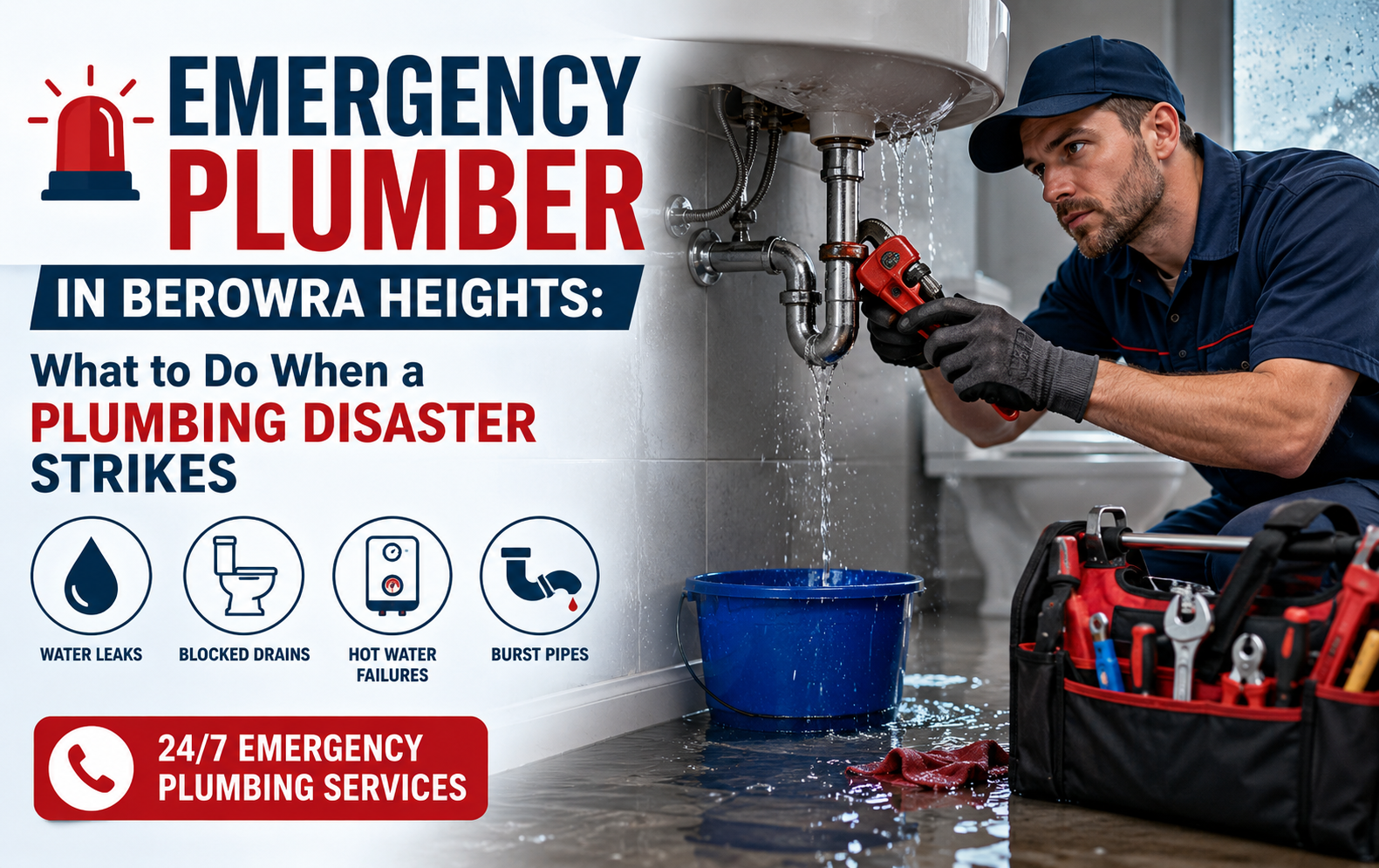
A plumbing disaster rarely happens at a convenient time. A pipe can burst overnight, a toilet can overflow when guests are arriving, or a blocked drain can suddenly send wastewater back into the home.
When water is spreading quickly or wastewater is entering your property, the first few minutes matter. Trying random DIY fixes can sometimes make the situation worse, particularly when the problem involves pressurised pipes, gas or electrical equipment.
Knowing what to do before a plumber arrives can help limit damage and keep everyone in the property safer.
First, identify whether it is a genuine plumbing emergency
Not every plumbing problem requires an emergency callout. A dripping tap or slow drain may be suitable for a scheduled appointment.
The situation becomes more urgent when there is a risk of:
- Significant water damage
- Sewage contamination
- A rapidly worsening leak
- Loss of essential water services
- Gas-related danger
- Water coming into contact with electrical equipment
If the problem is actively damaging the property or creating a safety concern, prompt professional assistance is appropriate.
Step 1: Stop the water if you can do so safely
If a pipe has burst or water is flowing uncontrollably, shutting off the water supply can reduce the amount of damage.
For a major leak, locate the property’s main water shut-off point and turn it off if you can reach it safely. Individual fixtures may also have isolation valves that can stop water to a toilet, basin or appliance.
Once the water has been isolated, avoid turning it back on simply to check whether the leak has stopped. Leave the repair and testing to a qualified plumber.
What if you cannot find the shut-off valve?
Do not waste valuable time searching through walls or attempting to access difficult areas. Tell the plumber what you can see and describe where the water is coming from.
Knowing the property’s main water isolation point in advance is useful, particularly for homeowners in older properties where plumbing layouts may not be immediately obvious.
Step 2: Stop using affected fixtures
A blocked toilet, sink or shower can become much worse when more water is introduced into the drainage system.
If wastewater is backing up:
- Stop flushing toilets
- Avoid running taps
- Do not use the washing machine or dishwasher
- Keep showers and baths unused
- Keep people away from contaminated water
If multiple fixtures are affected at the same time, there may be a larger drainage or sewer problem rather than a blockage isolated to one fixture.
Step 3: Treat sewage backups as a serious problem
Sewage entering a bathroom, laundry or other part of the home should never be treated as an ordinary blockage.
Sewage can contain harmful contaminants, and contact with affected water should be avoided. Keep children and pets away from the area and avoid spreading contaminated water into other parts of the property.
Do not attempt to clean a significant sewage overflow before the plumbing issue has been addressed. The immediate priority is stopping the source and having the drainage problem professionally assessed.
Step 4: Be particularly careful around electrical equipment
Water and electricity create a serious safety hazard.
If flooding has reached power points, appliances, switches, electrical equipment or areas containing electrical wiring, do not enter the affected area or touch electrical equipment while standing in water.
If it can be done safely, power to the affected area should be isolated. If there is any doubt, stay away and contact the appropriate electrical emergency service.
A plumber can deal with the plumbing fault, but electrical hazards require a licensed electrician.
Step 5: Do not attempt gas plumbing repairs
A suspected gas leak requires a different level of caution.
If you smell gas or suspect a gas leak, move away from the area and avoid flames, smoking and anything that could create an ignition source. Do not attempt to locate the leak yourself.
Gasfitting work in Australia must be carried out by appropriately licensed professionals. If there is an immediate danger, contact the relevant emergency service before arranging plumbing assistance.
Step 6: Protect your belongings where possible
Once the immediate water supply has been isolated and the area is safe to enter, move furniture, electronics, documents and other valuables away from standing water.
Do not put yourself at risk to save possessions. If water is coming through a ceiling, for example, stay away from the affected area if there is a possibility of structural or electrical danger.
Take photographs of visible damage before cleaning or moving extensively if it is safe to do so. These records may be useful when discussing the incident with your insurer.
What information should you give the plumber?
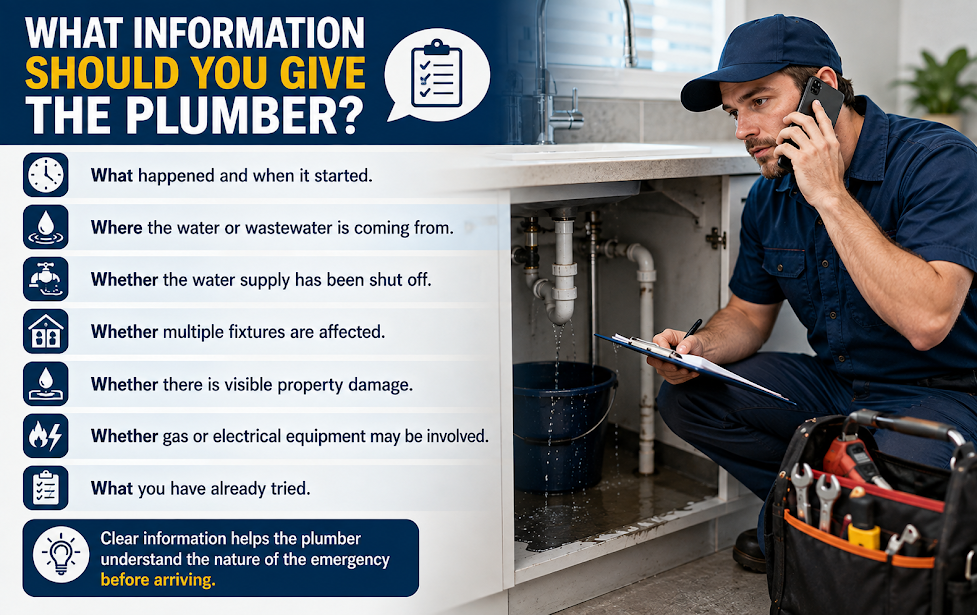
When contacting an emergency plumber in Berowra Heights, give as much practical information as possible.
Explain:
- What happened and when it started.
- Where the water or wastewater is coming from.
- Whether the water supply has been shut off.
- Whether multiple fixtures are affected.
- Whether there is visible property damage.
- Whether gas or electrical equipment may be involved.
- What you have already tried.
Clear information helps the plumber understand the nature of the emergency before arriving.
Common plumbing disasters that need urgent attention
Some of the most common situations include burst or severely leaking pipes, overflowing toilets, sewage backups, major blocked drains and serious hot water system leaks.
A plumbing emergency can also begin as a smaller problem. A slow drain, for example, may gradually become completely blocked. A minor leak may eventually damage flooring or cabinetry.
Paying attention to early warning signs can reduce the likelihood of reaching crisis point.
When should you call an emergency plumber?
If water cannot be controlled, sewage is backing up, a major leak is causing damage or there is an immediate plumbing-related safety concern, waiting for a routine appointment may not be appropriate.
Marvel Flow Plumbing provides professional plumbing assistance for urgent plumbing problems. Acting quickly, isolating the problem where safe and getting professional help can significantly reduce the disruption caused by a plumbing disaster.
The goal during an emergency is not to fix everything yourself. It is to control the immediate risk, protect the property and get the right professional involved quickly.
FAQs
What should I do first when a pipe bursts?
If it is safe, turn off the main water supply or the relevant isolation valve. Move away from any electrical hazards and contact a qualified plumber as soon as possible.
Is an overflowing toilet considered a plumbing emergency?
It can be, particularly if the water cannot be stopped, wastewater is involved or other fixtures are backing up. Stop flushing and avoid using nearby plumbing until the cause is assessed.
Should I try to unblock a drain during an emergency?
Avoid repeated DIY attempts when a drain is completely blocked or wastewater is backing up. Using more water can increase the overflow and make the situation worse.
What should I do if I smell gas?
Move away from the suspected leak, avoid flames and potential ignition sources, and seek appropriate emergency assistance. Do not attempt to repair or locate the gas leak yourself.