
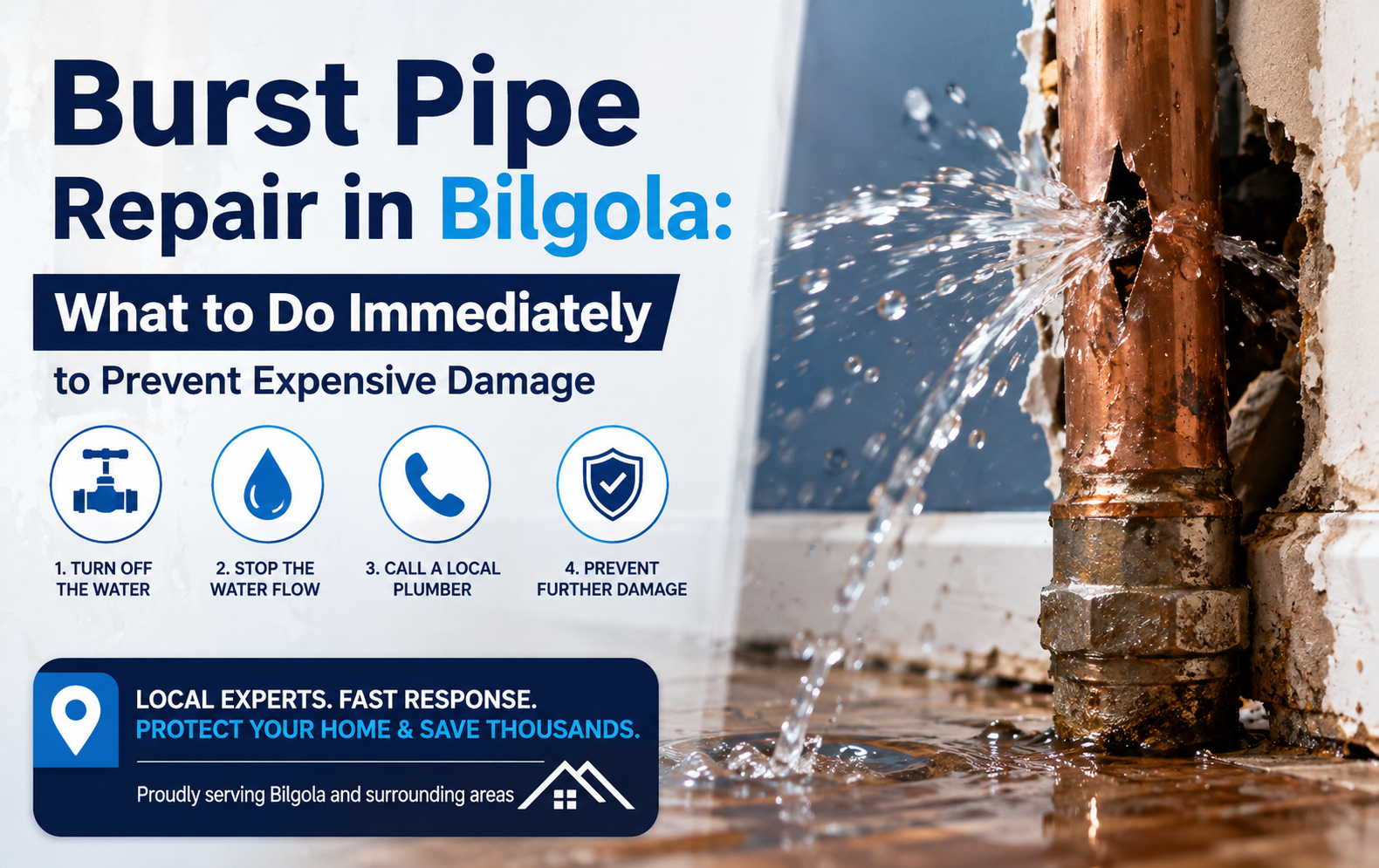
A burst pipe does not give you much time to think. One minute everything is normal, and the next you may be dealing with water pouring from a wall, ceiling or damaged section of pipe.
The amount of damage caused by a burst pipe depends partly on how quickly the water is controlled. Flooring, plasterboard, cabinetry, insulation and personal belongings can all be affected when water continues flowing through a property.
If a pipe bursts in your Bilgola home, knowing what to do immediately can reduce the impact while professional help is arranged.
Step 1: Shut off the water supply
Your first priority is to stop the flow of water.
If you can safely reach the property’s main water isolation valve, turn it off. If the leak is connected to an individual fixture and there is a nearby isolation valve, that may be enough to stop the flow.
Once the water has been shut off, open a tap briefly to release residual pressure from the pipework.
Do not turn the main supply back on to test the pipe. Leave the system isolated until the damaged section has been inspected.
Why acting quickly matters
A pressurised water pipe can release a surprising amount of water. Even a short delay can allow water to spread beneath flooring, behind walls or into lower levels of a property.
Step 2: Keep away from electrical hazards
Water leaking near power points, appliances, light fittings or electrical equipment creates a serious safety risk.
If water has reached electrical areas, do not touch switches or equipment while standing in water.
If you can safely isolate electricity without entering a wet or dangerous area, do so. Otherwise, stay away and seek assistance from a licensed electrician.
A plumbing emergency should never become an electrical emergency because someone attempted to reach a switch in a flooded area.
Step 3: Identify where the water is coming from
Once the water supply is isolated and the area is safe, try to identify the general location of the leak.
Common signs include:
- Water spraying from an exposed pipe
- Damp patches appearing on walls
- Water coming through a ceiling
- Bubbling or swollen paint
- Wet flooring without an obvious surface leak
- Unexplained sounds of rushing water
You do not need to determine the exact cause yourself. A hidden pipe can leak behind a wall or beneath a floor, making the visible point of water entry different from the actual break.
Step 4: Protect furniture and belongings
If the affected area is safe to enter, move furniture, rugs, electronics and other valuables away from the water.
Use towels, buckets or other suitable items to contain small amounts of residual water where practical.
Do not climb into unsafe areas or attempt to remove ceiling panels. If a ceiling is visibly bulging from trapped water, keep people away from it and arrange professional assistance.
What about the water already inside the property?
Once the leak has been stopped, removing standing water promptly can help limit secondary damage. Ventilation may also help affected areas dry, provided it is safe to use electrical equipment.
For substantial flooding, professional water damage restoration may also be required after the plumbing repair.
Step 5: Do not attempt a permanent DIY pipe repair
It can be tempting to wrap the damaged section with tape or use a temporary clamp and assume the problem is solved.
A temporary measure may sometimes reduce a minor leak, but a burst pipe requires proper assessment and repair.
The plumber needs to determine:
- Why the pipe failed
- Whether other sections are damaged
- What type of pipe is involved
- Whether fittings or connections have failed
- Whether the repair needs to be isolated or more extensive
For urgent burst pipe repair in Bilgola, professional diagnosis matters because simply repairing the visible break may not address the underlying issue.
Step 6: Look for signs of hidden water damage
Not all damage is immediately visible.
After a burst pipe, check for:
| Sign | Possible concern |
| Swollen flooring | Moisture beneath or within flooring |
| Bubbling paint | Water trapped behind a wall surface |
| Musty smell | Persistent moisture |
| Damp cabinetry | Water entering joinery |
| Ceiling staining | Leak from an upper level |
| Soft plasterboard | Prolonged water exposure |
These signs can develop after the initial leak has stopped. If moisture has entered enclosed spaces, drying and further inspection may be needed.
What causes pipes to burst?
Pipe failure can have several causes, and the reason is not always obvious from the break itself.
Ageing pipework, corrosion, excessive pressure, damaged fittings, physical impact and deteriorating connections can all contribute. Outdoor pipes can also be vulnerable to environmental conditions and accidental damage.
If a relatively new pipe has failed unexpectedly, it is particularly important to identify why rather than simply replacing the broken section.
How can you reduce the risk of another burst pipe?
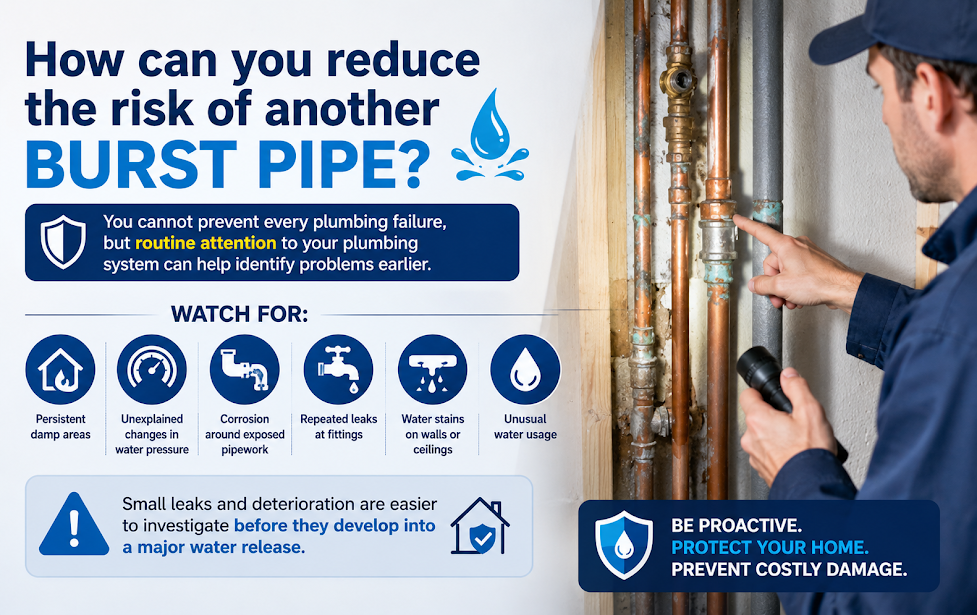
You cannot prevent every plumbing failure, but routine attention to your plumbing system can help identify problems earlier.
Watch for:
- Persistent damp areas
- Unexplained changes in water pressure
- Corrosion around exposed pipework
- Repeated leaks at fittings
- Water stains on walls or ceilings
- Unusual water usage
Small leaks and deterioration are easier to investigate before they develop into a major water release.
When should you call a plumber?
A burst pipe is not a wait-and-see plumbing problem. If water is actively escaping, the supply should be isolated where safe and professional assistance arranged promptly.
Marvel Flow Plumbing can assess the damaged pipe, identify the likely cause and carry out the appropriate repair.
For homeowners searching for burst pipe repairs in Bilgola, acting quickly is often one of the most practical ways to limit water damage and avoid turning a plumbing fault into a major property problem.
FAQs
What should I do first if a pipe bursts?
Turn off the main water supply or the appropriate isolation valve if it is safe to do so. Then stay away from electrical hazards and contact a qualified plumber.
Can I temporarily fix a burst pipe myself?
A temporary clamp or similar measure may sometimes reduce a leak, but it should not be treated as a permanent repair. A plumber should inspect the pipe and determine why it failed.
How do I know if a burst pipe is hidden?
Damp walls, ceiling stains, unexplained water pooling, bubbling paint, musty smells and sounds of water behind walls can indicate a concealed leak.
Will a burst pipe always require replacing the whole pipe?
Not necessarily. The repair depends on the location, condition and cause of the failure. A plumber can determine whether a section, fitting or larger part of the pipework needs replacement.