
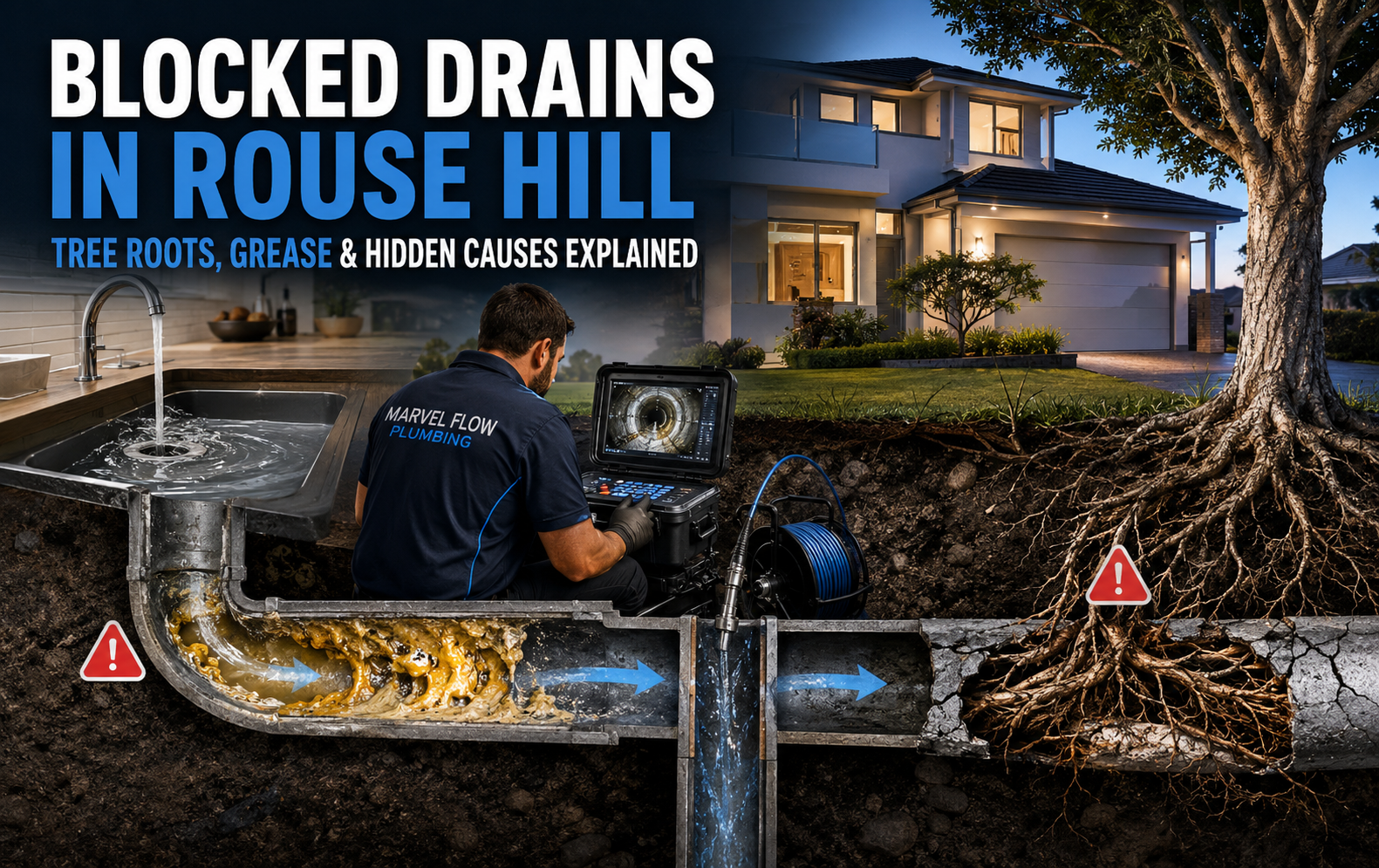
You clear the kitchen sink, and it works perfectly for a few weeks. Then the water starts draining slowly again.
The shower drain is unblocked, but a month later you’re standing in ankle-deep water. The unpleasant smell that disappeared after a quick drain treatment somehow returns.
If this sounds familiar, you’re not alone.
Many homeowners assume a blocked drain is a one-time issue. In reality, recurring drainage problems often point to an underlying cause that has never been properly identified. The blockage you see is often just the symptom. The real problem may be hidden deep within the drainage system.
This guide explores the common and lesser-known causes of blocked drains in Rouse Hill, explains why blockages keep returning, and shows how professional diagnosis can help solve the problem for good.
Why Blocked Drains Often Return
Many drain problems are treated temporarily rather than permanently.
A sink may be cleared, water starts flowing again, and everything appears normal. However, if the original cause remains inside the system, the problem often returns.
This is particularly common with recurring drain blockage issues where debris, roots, damaged pipes, or structural defects continue affecting water flow.
Think of it like treating a symptom without addressing the cause. The relief may be immediate, but it is often short-lived.
That is why professional plumbers focus not only on clearing the blockage but also on understanding why it formed in the first place.
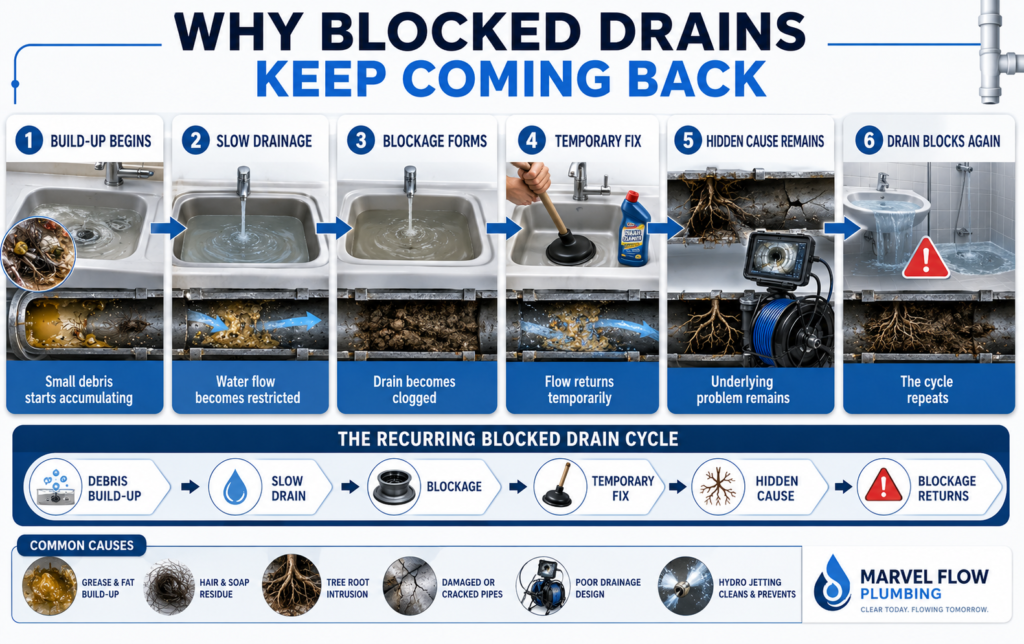
The Recurring Blockage Cycle Most Homeowners Don’t Realise
One reason recurring drainage problems can be frustrating is that they often follow a predictable pattern.
Stage 1: Debris Starts Building Up
Small amounts of grease, soap residue, hair, food waste, or sediment begin collecting inside the pipe.
At this stage, everything still appears to work normally.
Stage 2: Water Flow Slows
As build-up increases, water moves less efficiently through the drain.
The changes are often subtle and easy to overlook.
Stage 3: A Blockage Forms
Eventually, enough material accumulates to restrict water flow significantly.
This is usually when homeowners first notice a problem.
Stage 4: Temporary Clearing Provides Relief
A plunger, drain cleaner, or quick service visit removes part of the obstruction.
Water begins flowing again.
Stage 5: The Real Cause Remains
The underlying issue remains unresolved.
This may include root growth, pipe damage, grease accumulation, or poor drainage conditions.
Stage 6: The Drain Blocks Again
The cycle repeats.
Without identifying the cause, many blocked drains simply return weeks or months later.
The Most Common Causes Of Blocked Drains
Not all drain blockages develop for the same reason.
Some are caused by daily household habits, while others stem from hidden infrastructure problems.
Tree Root Intrusion
One of the most common causes of recurring drainage issues is root intrusion.
Tree roots naturally seek moisture. Even a tiny crack in a drain pipe can attract roots looking for a reliable water source.
Once roots enter the pipe, they continue growing and trapping debris that would normally flow through the system.
Over time, this can significantly reduce drainage capacity and increase the likelihood of repeated blockages.
This is particularly relevant in established Rouse Hill neighbourhoods where mature trees are often located close to underground drainage systems.
Grease And Fat Build-Up
Many kitchen drain problems start with cooking grease.
While grease may appear harmless when poured down the sink in liquid form, it cools and hardens inside pipes.
Over time, additional debris sticks to these deposits and gradually narrows the available space for water flow.
The process happens slowly, which is why many homeowners do not notice the issue until a blockage develops.
Hair And Soap Residue
Bathroom drains frequently suffer from a combination of hair and soap build-up.
Hair becomes trapped inside the drain while soap residue creates a sticky surface that catches additional debris.
The result is a gradually expanding blockage that restricts water flow.
Foreign Objects In Drains
Many recurring blockages can be traced back to items that should never enter the drainage system.
Common examples include:
- Wet wipes
- Sanitary products
- Paper towels
- Excess food waste
- Cotton buds
Even products marketed as “flushable” can contribute to drainage problems.
Pipe Damage And Cracks
Cracked or damaged pipes often create ideal conditions for recurring blockages.
Debris can become trapped around damaged sections, restricting flow and encouraging further accumulation.
The blockage may be cleared repeatedly without addressing the structural issue causing it.
Ageing Drain Infrastructure
Older drainage systems naturally experience wear over time.
Pipe deterioration, joint failures, and material degradation can all contribute to recurring drainage issues.
As infrastructure ages, professional assessment becomes increasingly important.
The Hidden Causes Most Homeowners Never Consider
Many drainage issues originate from problems that cannot be seen from the surface.
Pipe Collapse
In severe cases, sections of pipe may partially collapse.
This creates a physical obstruction that repeatedly interferes with water flow.
Pipe Misalignment
Ground movement, ageing infrastructure, and installation issues can cause sections of pipe to shift.
Even slight misalignment may create areas where debris accumulates.
Scale Deposits
Mineral build-up can gradually reduce the internal diameter of certain pipes.
Although less visible than other causes, scale accumulation can significantly affect performance.
Poor Drainage Design
Some drainage systems were not designed to handle current usage patterns.
In growing households, increased demand may expose limitations that contribute to recurring problems.
Construction Debris
During renovations or building work, debris can sometimes enter drainage systems.
This material may remain hidden until blockages begin developing.
Installation Issues
Improper gradients, poorly connected joints, and other installation defects can create long-term drainage challenges.
Many of these issues cannot be identified without specialised equipment.
Why DIY Drain Fixes Often Fail
DIY methods certainly have their place.
For minor blockages, simple solutions may restore water flow temporarily.
The challenge is that most household methods only address the symptom.
A plunger might remove part of a blockage. A chemical cleaner may create a temporary opening. Hot water may improve flow for a short period.
However, if roots, pipe damage, or deeper build-up remain present, the problem often returns.
This is why recurring drainage issues usually require diagnosis rather than repeated symptom treatment.
How CCTV Drain Inspections Identify The Real Problem
A CCTV inspection is one of the most effective ways to investigate recurring drainage issues.
Rather than guessing, plumbers use specialised cameras to view the inside of the drainage system.
This process helps identify:
- Exact blockage locations
- Root intrusion
- Pipe damage
- Cracks and fractures
- Misaligned sections
- Accumulated debris
The biggest advantage is accuracy.
Instead of treating symptoms, plumbers can identify the actual cause and recommend appropriate solutions.
This diagnostic-first approach often saves homeowners time, money, and repeated callouts.
How Professional Drain Cleaning Solves Recurring Problems
Professional drain cleaning Rouse Hill services go beyond simply restoring water flow.
The goal is to remove the material contributing to recurring blockages while assessing the overall condition of the system.
Depending on the cause, solutions may include:
- Root removal
- Debris extraction
- Pipe cleaning
- Preventative maintenance
- Sewer repair recommendations
Addressing the cause usually produces longer-lasting results than repeatedly clearing symptoms.
Is Hydro Jetting Effective For Blocked Drains?
Yes, particularly when build-up is the primary issue.
How Hydro Jetting Works
Hydro jetting uses highly pressurised water to clean the internal surfaces of drain pipes.
Rather than creating a small opening through the blockage, it removes accumulated material along the pipe walls.
When Is It Most Effective?
Hydro jetting is commonly used for:
- Grease build-up
- Sediment accumulation
- Organic debris
- General pipe cleaning
Why It Is Different
Traditional clearing methods often restore flow by punching a pathway through the obstruction.
Hydro jetting focuses on thoroughly cleaning the pipe, helping reduce the likelihood of rapid reoccurrence.
Prevention Tips To Reduce Future Drain Blockages
Small preventative habits often make a significant difference.
Consider the following:
- Dispose of grease in household waste rather than sinks
- Use drain strainers in kitchens and bathrooms
- Avoid flushing wipes and hygiene products
- Respond quickly to slow drainage
- Arrange routine inspections if blockages recur
- Schedule preventative maintenance for older properties
Prevention is generally easier than dealing with recurring repairs.
When Should You Call A Professional Plumber?
Professional assessment is worth considering when you experience:
- Repeated blockages
- Multiple affected drains
- Persistent odours
- Outdoor drainage issues
- Recurring slow drainage
- Gurgling sounds from pipes
If the same problem keeps returning, there is usually a reason.
Identifying that reason is often the key to resolving the issue permanently.
How Marvel Flow Plumbing Helps Rouse Hill Homeowners Resolve Persistent Drain Problems
At Marvel Flow Plumbing, we help homeowners investigate the causes behind recurring drainage issues.
Our team provides blocked drain services, CCTV diagnostics, hydro jetting, drain cleaning, preventative maintenance, and drainage assessments throughout Rouse Hill and surrounding areas.
Rather than focusing solely on the blockage itself, we aim to understand what is causing the problem so the most appropriate solution can be applied.
Why Solving The Cause Matters More Than Clearing The Symptom
The most effective drainage solutions start with accurate diagnosis.
When the cause is identified:
Accurate diagnosis → Targeted repair → Fewer recurring blockages → Lower maintenance costs → Healthier plumbing systems
This approach reduces guesswork and provides homeowners with greater confidence that the issue has been properly addressed.
Conclusion
Most blocked drains in Rouse Hill are not random one-time events. They often develop because of underlying issues such as tree roots, grease build-up, damaged pipes, ageing infrastructure, or hidden structural problems.
Recurring blockages should never be ignored simply because the drain temporarily starts working again. Professional inspections can identify the real cause, while preventative maintenance helps reduce future disruptions.
If you are experiencing recurring drainage issues, slow drains, or signs of a developing blockage, contact Marvel Flow Plumbing for professional diagnosis and practical long-term solutions.
Frequently Asked Questions
Can tree roots block drains?
Yes. Tree roots naturally seek moisture and can enter drains through small cracks or pipe joints. Once inside, they continue growing and trapping debris, which can eventually restrict water flow and create recurring blockages.
Why do drains keep blocking?
Repeated blockages often indicate an unresolved issue. Common causes include grease build-up, root intrusion, damaged pipes, foreign objects, or poor drainage conditions. Clearing the blockage without addressing the cause usually leads to the problem returning.
How do plumbers remove tree roots?
Plumbers use specialised equipment to cut and remove roots from inside pipes. Depending on the severity of the intrusion, additional repairs or pipe rehabilitation may also be recommended to prevent roots from returning.
Is hydro jetting effective?
Yes. Hydro jetting is highly effective for removing grease, sludge, debris, and other build-up from drain walls. It cleans the pipe more thoroughly than many traditional clearing methods and can help reduce recurring blockages.
How can I prevent future blockages?
Avoid disposing of grease, wipes, and unsuitable materials down drains. Use drain strainers, respond quickly to slow drainage, and arrange professional inspections if you experience recurring problems. Preventative maintenance often helps identify issues before major blockages develop.