

A kitchen sink that takes a few extra seconds to empty. A strange bubbling noise after flushing the toilet. A faint smell that comes and goes near the bathroom drain.
Most people do not associate these small annoyances with serious plumbing issues.
The truth is that blocked drains in Kellyville rarely happen overnight. In many cases, your drainage system gives multiple warning signs before a complete blockage develops. The challenge is that these signs often seem too minor to worry about.
This guide will help you recognise the subtle clues that indicate a developing drain problem, understand how blockages progress over time, and know when it is worth calling a professional before a small issue becomes a major disruption.
Why Blocked Drains Rarely Happen Overnight
Think of a drain blockage like cholesterol building up inside an artery.
A complete blockage does not appear instantly. It develops gradually as debris accumulates and water flow becomes increasingly restricted.
Inside residential drains, everyday materials slowly attach themselves to pipe walls:
- Grease
- Soap residue
- Hair
- Food particles
- Tree root intrusion
- Foreign objects
At first, the impact is barely noticeable. Over time, however, water flow becomes restricted and drainage performance begins to change.
This gradual progression is why most homeowners experience warning signs long before a complete blockage occurs.
The Drain Health Score: How Blockages Typically Progress
Many plumbers see the same pattern repeatedly.
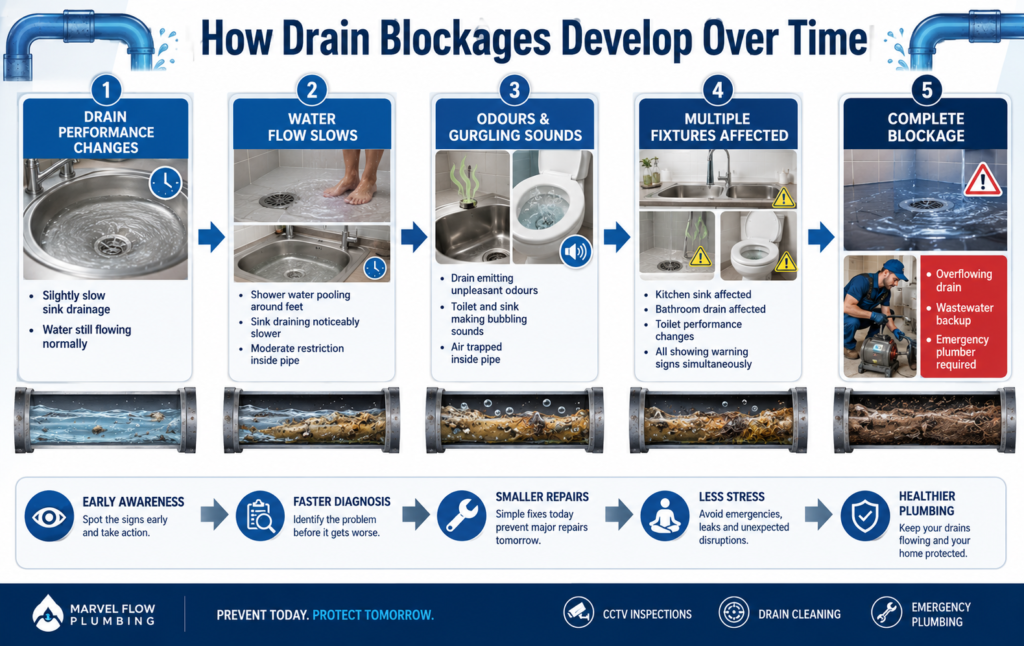
The chart below illustrates how drain performance tends to decline as a blockage develops.
Stage 1: Drain Performance Starts Changing
At this stage, drainage still appears normal most of the time.
You may occasionally notice water draining slightly slower than usual, but the change is easy to dismiss.
Stage 2: Water Flow Becomes Noticeably Slower
This is when slow drains become more consistent.
The sink takes longer to empty. Shower water lingers around your feet. Small pools of water remain near drainage points.
Many homeowners simply assume this is normal wear and tear.
Stage 3: Odours And Pipe Noises Appear
As debris accumulates further, airflow inside the drainage system changes.
This can lead to:
- Persistent drain smells
- Intermittent odours
- Unusual gurgling pipes
- Bubbling sounds after flushing
These symptoms often appear before any visible backup occurs.
Stage 4: Multiple Fixtures Begin Showing Symptoms
The problem begins extending beyond a single drain.
You may notice:
- Slow bathroom drainage
- Kitchen sink issues
- Toilet performance changes
When multiple fixtures are affected, the blockage may be developing deeper within the system.
Stage 5: Complete Blockage Develops
Water can no longer move freely through the drain.
This often results in:
- Drain overflows
- Wastewater backups
- Standing water
- Emergency plumbing callouts
By this point, what could have been a minor maintenance issue has become a significant inconvenience.
Early Warning Signs Homeowners Often Miss
The earliest symptoms are usually the easiest to ignore.
1. Slow-Draining Sinks
A sink that drains slightly slower each week rarely grabs attention.
Many homeowners adjust to the change without realising performance is gradually declining.
2. Water Pooling Around Drains
Small amounts of standing water may indicate restricted flow beneath the surface.
If pooling becomes recurring, further investigation is worthwhile.
3. Unpleasant Drain Odours
Odours often develop when organic material begins accumulating inside pipes.
Because smells can come and go, many people assume the issue has resolved itself.
4. Gurgling Sounds From Pipes
Strange noises usually indicate trapped air struggling to move through partially restricted pipes.
These sounds often appear before visible drainage issues.
5. Intermittent Backups
A temporary backup that disappears on its own is often viewed as a one-off event.
In reality, it may indicate a developing blockage.
6. Toilet Water Level Changes
Unusual fluctuations inside the toilet bowl can signal airflow or drainage restrictions within the system.
7. Multiple Drains Slowing At Once
This is one of the clearest indicators of a larger drainage issue.
The more fixtures affected, the greater the need for professional assessment.
8. Outdoor Drainage Issues
Pooling water, slow external drains, or soggy areas in the yard can sometimes indicate underground drainage restrictions.
Hidden Signs Homeowners Ignore Most Often
Interestingly, the most overlooked warning signs are not the dramatic ones.
Homeowners frequently ignore:
- A smell that only appears occasionally
- One noisy drain in the middle of the night
- A slow sink that still eventually empties
- Water that briefly pools before disappearing
Because these symptoms are inconsistent, they often seem unimportant.
However, many serious drain problems begin exactly this way.
What Causes Blocked Drains In Residential Properties?
Grease And Food Waste
Kitchen drains frequently accumulate grease that solidifies along pipe walls.
Over time, debris attaches to these deposits and narrows the pipe.
Hair And Soap Build-Up
Bathroom drains commonly suffer from gradual accumulation of hair and soap residue.
This combination forms stubborn restrictions.
Tree Root Intrusion
Tree roots naturally seek moisture and can enter small cracks in underground drains.
Once inside, they continue expanding.
Foreign Objects In Pipes
Wet wipes, sanitary products, paper towels, and other unsuitable items remain common causes of blockages.
Ageing Drain Infrastructure
Older drainage systems may develop cracks, misaligned joints, or deteriorated sections that restrict flow.
Could A Minor Drain Issue Indicate A Sewer Blockage?
Sometimes, yes.
A local drain issue generally affects a single fixture.
A developing sewer blockage often creates symptoms across multiple areas of the property.
Common indicators include:
- Several drains slowing simultaneously
- Multiple gurgling fixtures
- Recurring wastewater backups
- Toilet and sink issues occurring together
Because the main sewer line connects numerous fixtures, problems there tend to affect larger portions of the home.
Drain Symptoms Vs Drain Emergencies
Not every drainage issue requires urgent intervention.
Warning Signs
Monitor these symptoms:
- Occasional slow drainage
- Mild odours
- Isolated gurgling
- Minor pooling
Emergency Signs
Seek immediate assistance if you notice:
- Sewage backups
- Overflowing drains
- Multiple blocked fixtures
- Wastewater entering living spaces
Understanding this distinction helps homeowners make informed decisions.
Risks Of Waiting Too Long To Address Drain Problems
Ignoring drainage issues rarely makes them disappear.
Instead, blockages often continue developing behind the scenes.
Potential consequences include:
- More extensive blockages
- Increased repair complexity
- Drain overflows
- Greater household disruption
Addressing issues earlier usually provides more straightforward solutions.
Can Blocked Drains Damage Pipes?
Yes, particularly when restrictions remain unresolved for extended periods.
Blocked drains can contribute to:
- Increased pressure inside pipes
- Repeated stress on joints
- Accelerated wear
- Root intrusion expansion
Drainage problems affect more than convenience. They can also impact the long-term health of the plumbing system itself.
Prevention Tips To Keep Drains Flowing Properly
Small habits often make the biggest difference.
Consider:
- Disposing of grease in bins rather than sinks
- Using drain strainers
- Monitoring recurring drainage changes
- Scheduling periodic drain cleaning
- Arranging professional inspections when symptoms persist
Prevention is typically far simpler than emergency repair.
When Should You Call A Professional Plumber?
Monitor The Situation
Occasional minor drainage changes can often be observed initially.
Schedule A Plumbing Inspection
If symptoms keep returning, professional investigation becomes worthwhile.
Seek Immediate Assistance
Contact a professional, such as a blocked drain plumber Blacktown, when you experience:
- Sewage backups
- Overflowing drains
- Multiple blocked fixtures
- Significant drainage disruptions
How Professional Drain Inspections Identify Problems Early
Professional inspections focus on identifying developing issues before major disruptions occur.
Modern techniques may include:
- CCTV drain inspections
- Drain condition assessments
- Blockage location services
- Preventative maintenance recommendations
This allows plumbers to understand the root cause rather than simply treating symptoms.
How Marvel Flow Plumbing Helps Kellyville Homeowners Prevent Drain Emergencies
At Marvel Flow Plumbing, we help homeowners identify drainage issues before they become major problems.
Our team provides blocked drain services, CCTV diagnostics, preventative maintenance, drain inspections, and emergency support throughout Kellyville and surrounding areas.
We believe prevention is one of the most effective ways to protect your plumbing system and reduce unexpected disruptions.
Why Acting Early Saves Time, Stress, And Money
Most major drain emergencies can be traced back to warning signs that appeared weeks or even months earlier.
Recognising these signals early often leads to:
Early awareness → Faster diagnosis → Smaller repairs → Less disruption → Healthier plumbing systems
The earlier a developing blockage is identified, the easier it is to manage.
Conclusion
Most blocked drains in Kellyville begin as small restrictions that gradually worsen over time. Slow drainage, odours, unusual pipe noises, and recurring symptoms should never be ignored simply because they seem minor.
Understanding the warning signs helps homeowners act before a blockage becomes a larger problem. If you have noticed recurring drainage issues, Marvel Flow Plumbing can help identify the cause and recommend practical solutions before an emergency develops.
Frequently Asked Questions
Why do my drains smell bad?
Drain odours often develop when food particles, grease, soap residue, or other organic material accumulate inside pipes. While occasional smells may seem harmless, recurring odours can indicate a developing blockage that deserves professional assessment.
What causes slow-draining sinks?
Slow drainage is commonly caused by grease, hair, soap build-up, food waste, or other debris restricting water flow. The problem usually develops gradually and often serves as one of the earliest warning signs of a blockage.
Are gurgling pipes a problem?
Yes, they can be. Gurgling sounds often indicate trapped air caused by partial blockages or drainage restrictions. While not always an emergency, persistent noises should be investigated if they continue occurring.
Can blocked drains damage pipes?
Over time, blocked drains may contribute to pressure build-up, recurring stress, and increased wear within the plumbing system. Addressing drainage issues early helps reduce the risk of more extensive plumbing problems.
When should I call a plumber?
If drainage issues keep returning, multiple fixtures are affected, or you notice sewage backups or overflows, professional assistance is recommended. Early intervention often prevents larger and more disruptive repairs.