
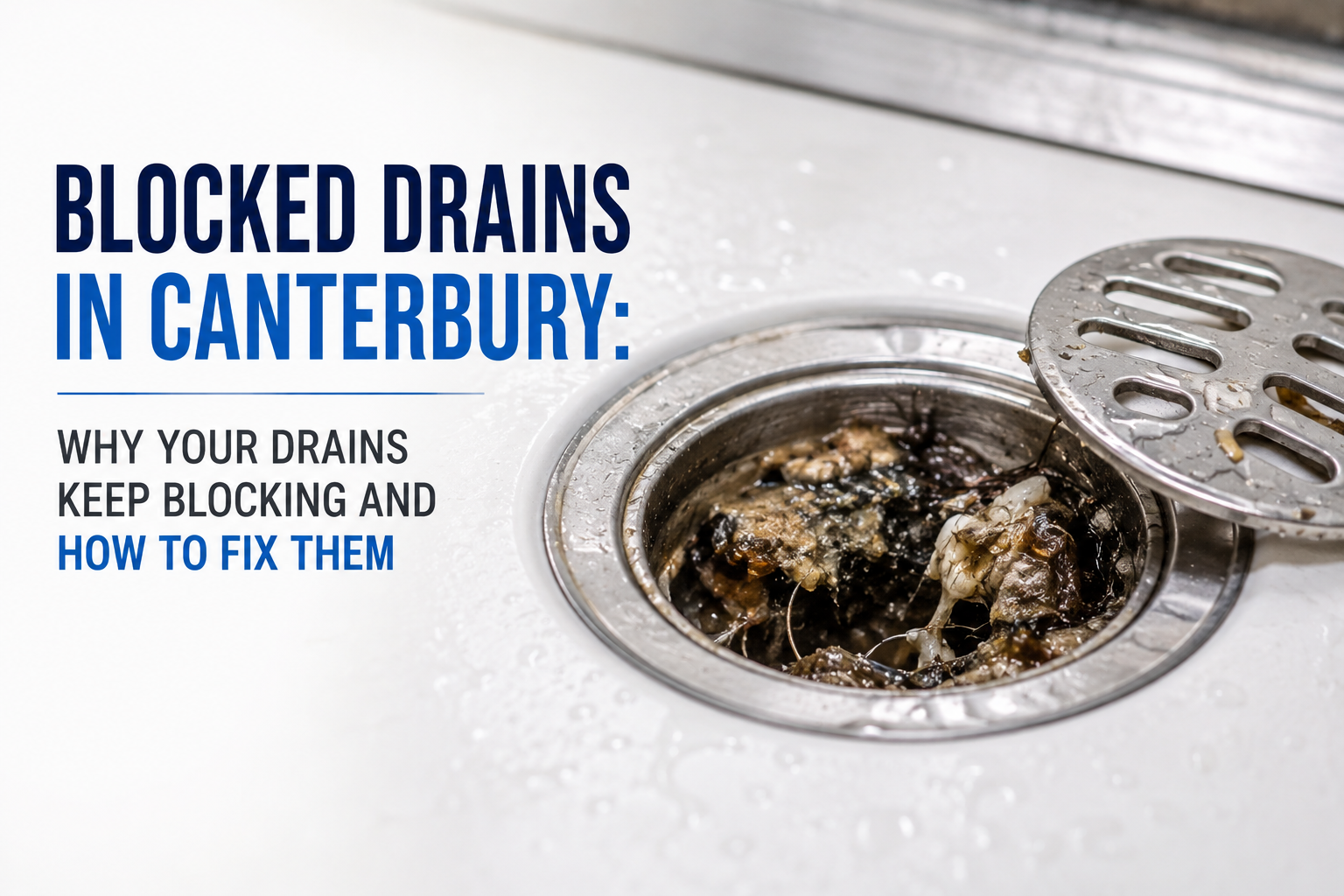
A drain that blocks once can be frustrating. A drain that keeps blocking is telling you that something deeper may be wrong.
You may clear the kitchen sink on Monday, only to find it draining slowly again a few days later. A shower may appear fine after cleaning the waste, then start pooling water during the next week. Repeated blockages are rarely something to keep treating with quick fixes.
The important question is not only how to clear the blockage, but why it keeps coming back.
Why do drains keep blocking?
Drainage problems can develop for several different reasons. The cause often depends on the location of the affected drain, the age of the plumbing and what enters the system.
1. Grease and food waste are building up
Kitchen drains are particularly vulnerable to grease, fats and food particles.
Liquid grease may flow down the sink while warm, but it can cool inside the pipe and stick to the internal surface. Over time, other debris can attach to the buildup and progressively restrict the passage.
Using hot water may move some grease temporarily, but it does not necessarily remove the material already coating the pipe.
A better approach is to avoid putting fats, oils and food scraps down the sink in the first place.
2. Hair and soap are restricting bathroom drains
Bathroom drains have a different problem.
Hair can combine with soap residue, skin particles and other debris to create a stubborn mass. The result is usually gradual rather than immediate.
You may first notice:
- Water taking longer to drain
- Water pooling around your feet in the shower
- Gurgling from the waste
- A musty or unpleasant drain smell
Removing visible hair from the waste cover can help with surface buildup, but recurring blockages may require deeper cleaning.
3. Tree roots are entering damaged pipes
Outdoor drainage lines can be affected by tree roots.
Roots naturally seek moisture, and a damaged or poorly sealed underground pipe can provide an entry point. Once inside, roots can continue growing and trap other debris.
A root-related blockage often returns after a basic clearing because the underlying intrusion remains.
If an outdoor drain repeatedly blocks despite previous cleaning, professional investigation may be necessary.
4. The pipe itself is damaged or deteriorating
Sometimes the blockage is a symptom of a pipe problem.
Cracks, displaced joints, corrosion, collapsed sections or other structural issues can interfere with normal wastewater flow. Debris may then collect around the damaged area.
In this situation, repeatedly clearing the blockage is unlikely to provide a lasting solution.
A plumber may need to inspect the drainage line to determine whether repair or replacement is required.
5. Too much is being flushed down the toilet
Toilets are designed for human waste and toilet paper, not household rubbish.
Items such as wipes, paper towels, sanitary products, cotton products and other unsuitable materials can contribute to blockages.
Even products marketed as flushable may not behave like toilet paper once they enter the drainage system.
If a toilet blocks repeatedly, consider what is being flushed and whether there may also be an issue further along the pipe.
6. The drainage system has poor flow or an underlying design issue
Some recurring blockages are related to how a drainage system is installed or how wastewater moves through it.
Incorrect pipe gradients, insufficient flow, poorly positioned connections or other installation issues can contribute to repeated restrictions.
This is one reason why a drain that has always been problematic may require a different approach from a drain that suddenly blocks for the first time.
Why DIY drain clearing often does not solve recurring blockages
A plunger can be useful for some minor blockages. However, repeated plunging does not necessarily remove the material causing the problem.
Similarly, chemical drain products may provide temporary relief without identifying why the blockage developed.
If a drain clears and then blocks again shortly afterwards, the priority should shift from repeatedly treating the symptom to finding the cause.
For persistent blocked drains in Canterbury, professional assessment can help determine whether the issue involves buildup, roots, damaged pipework or another drainage problem.
How a plumber can identify the underlying problem
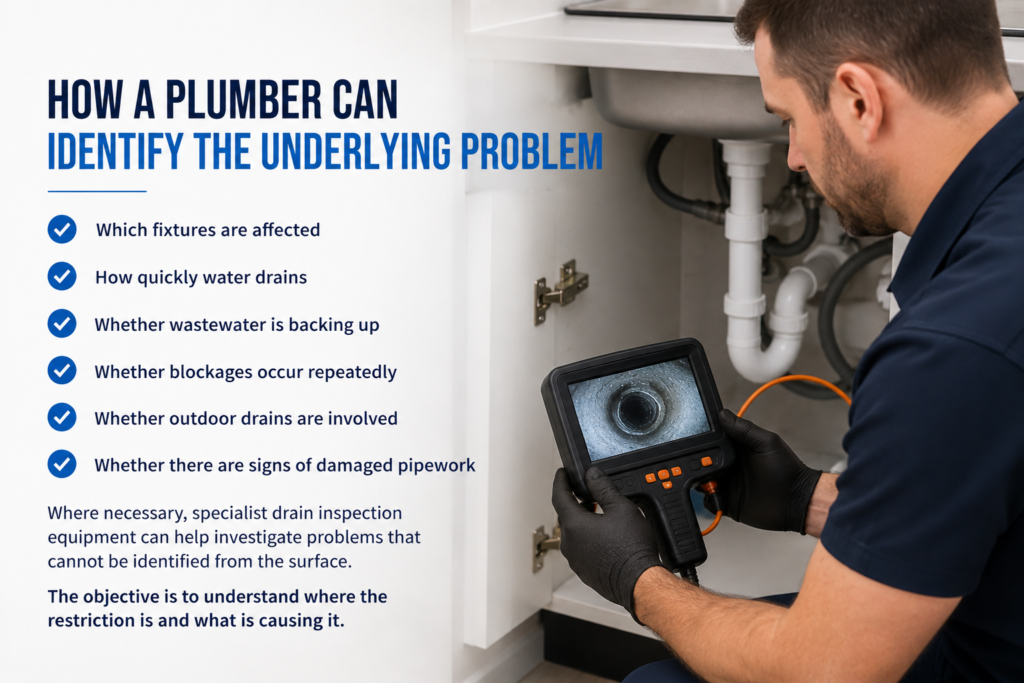
The appropriate method depends on the symptoms.
A plumber may assess:
- Which fixtures are affected
- How quickly water drains
- Whether wastewater is backing up
- Whether blockages occur repeatedly
- Whether outdoor drains are involved
- Whether there are signs of damaged pipework
Where necessary, specialist drain inspection equipment can help investigate problems that cannot be identified from the surface.
The objective is to understand where the restriction is and what is causing it.
How can you prevent recurring drain blockages?
Prevention starts with changing what enters the drainage system.
In the kitchen
Avoid pouring oils, fats and grease into the sink. Scrape food scraps into the bin and use a suitable sink strainer.
In the bathroom
Remove hair from shower wastes regularly and avoid allowing large amounts of soap residue to accumulate.
Around the property
Keep leaves and debris away from outdoor drains and pay attention to recurring problems after heavy rain.
In the toilet
Only flush human waste and toilet paper. Keep wipes and other household products out of the toilet.
Small habits can reduce the amount of material entering your pipes.
When should you call a plumber?
A single minor blockage may clear with a simple solution. Repeated blockages are different.
Professional help is particularly appropriate when:
- The same drain blocks repeatedly
- Several fixtures are affected
- Wastewater is backing up
- There is a strong sewage smell
- Outdoor drains overflow
- DIY clearing only works temporarily
- You suspect tree roots or damaged pipes
Marvel Flow Plumbing can assess persistent drainage issues and identify the likely cause before recommending the appropriate repair or clearing method.
If you are dealing with blocked drain problems in Canterbury, addressing the reason behind the blockage can save you from repeatedly dealing with the same frustrating problem.
FAQs
Why does my drain keep blocking after I clear it?
The blockage may only be partially removed, or there may be an underlying issue such as grease buildup, tree roots, damaged pipework or poor drainage flow.
Are chemical drain cleaners good for recurring blockages?
They may provide temporary relief for some minor blockages, but they do not necessarily address the underlying cause. Persistent problems are better assessed professionally.
Can tree roots cause blocked drains?
Yes. Tree roots can enter damaged or poorly sealed underground pipes and trap debris, restricting wastewater flow and causing recurring blockages.
How can I stop my kitchen drain from blocking?
Avoid pouring fats, oils and grease into the sink, scrape food into the bin and use a sink strainer to prevent food particles entering the drain.