
You clear the drain, the water starts flowing again, and you think the problem is over. Then, a few days or weeks later, the sink starts draining slowly, the shower backs up or an unpleasant smell returns.
That pattern is a sign worth paying attention to.
A recurring blockage usually means the original cause has not been dealt with. It could be grease and debris building up inside the pipe, tree root intrusion, a damaged section of pipe or a deeper sewer problem. NSW councils identify tree roots, inappropriate waste, damaged pipes, debris and poor pipe conditions among the common causes of recurring sewer blockages.
So, why does your blocked drain keep coming back?
1. The blockage was only partially cleared
Sometimes getting water moving again is mistaken for fixing the drain.
A plunger, drain snake or similar method may create a temporary opening through the obstruction without removing everything inside the pipe. Water flows for a while, but remaining grease, hair, food particles or other debris gives the next blockage something to attach to.
This is one reason repeated drain clearing can become frustrating and expensive.
The warning sign
If the same drain becomes slow again shortly after it has been cleared, don’t simply repeat the same treatment. The pipe needs to be investigated.
2. Tree roots are growing inside the pipe
Blacktown has established residential areas with mature landscaping, so tree root intrusion can be a genuine concern where underground pipes are old or damaged.
Roots generally take advantage of existing weaknesses such as cracked pipes, failed joints or deteriorated seals. Once inside, they can trap waste and restrict the flow of wastewater.
If roots are cut away but the damaged pipe remains, the problem can return.
A recurring blockage caused by roots may therefore require more than another drain clearing. Depending on the condition of the pipe, repairs, relining or replacement may be considered.
3. Grease keeps building up
Kitchen drains are particularly vulnerable to fats, oils and grease.
Even if a large amount of grease does not create an immediate blockage, it can stick to the inside of the pipe. Food particles and other debris can then accumulate around it, gradually reducing the available space for water to pass.
NSW Government advice specifically warns that fats, oils and grease can harden in pipes and contribute to blockages.
If your kitchen sink repeatedly slows down, the issue may be inside the drainage line rather than at the plughole itself.
4. Something is going down the drain that shouldn’t
A drain can only handle what it was designed to carry.
In bathrooms, hair, wipes and hygiene products can contribute to blockages. In kitchens, food scraps, cooking fats and grease can create problems. In toilets, only human waste and toilet paper should be flushed.
If the same unsuitable materials continue entering the plumbing system, even a professionally cleared drain can become blocked again.
5. Your pipe may be damaged
This is the cause many homeowners don’t consider.
A recurring blockage can sometimes be a symptom of a cracked, collapsed, displaced or deteriorating pipe. Older pipework can develop problems at joints or sections that have shifted due to ground movement or age.
A damaged pipe can also create conditions that allow tree roots to enter and waste to collect.
At this point, repeatedly clearing the obstruction is treating the symptom rather than the plumbing problem.
6. The blockage is deeper than you think
Not every blockage sits directly beneath the sink, shower or toilet.
If several fixtures are affected at the same time, the obstruction may be further along the property’s main drainage line. You might notice:
- Multiple drains becoming slow
- Gurgling sounds from toilets or sinks
- Water backing up in another fixture
- Bad sewage smells
- A yard gully overflowing
These signs can indicate a larger drainage issue rather than an isolated household clog.
A professional blocked drain plumber in Blacktown can investigate where the restriction is located instead of repeatedly treating the visible symptom.
7. Nobody has identified the actual cause
This is often the biggest reason recurring blockages remain recurring.
Modern plumbing diagnostics can go beyond simply putting a tool down the drain. A CCTV drain inspection can allow a plumber to see what is happening inside the pipe and identify issues such as root intrusion, cracks, heavy buildup or other structural problems. Australian plumbing guidance also recommends CCTV inspection where tree roots or sewer pipe damage are suspected.
Once the cause is known, the appropriate solution becomes much clearer.
What can actually stop the cycle?
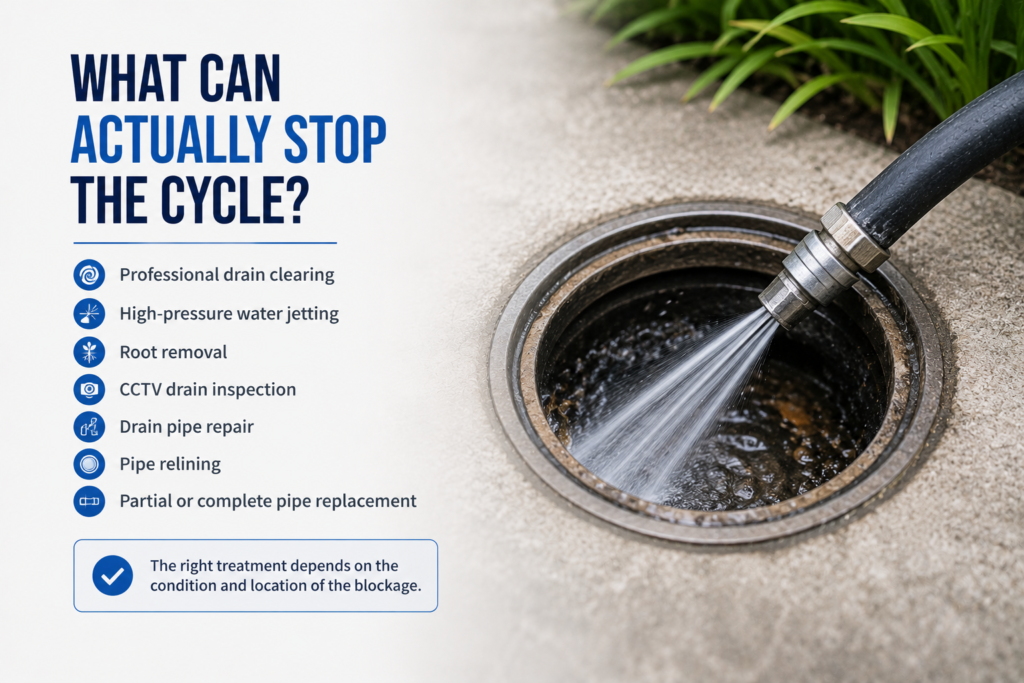
Depending on what the inspection reveals, the solution may involve:
- Professional drain clearing
- High-pressure water jetting
- Root removal
- CCTV drain inspection
- Drain pipe repair
- Pipe relining
- Partial or complete pipe replacement
The right treatment depends on the condition and location of the blockage.
When should you call a blocked drain plumber?
One blocked drain does not always mean a major plumbing failure. But repeated blockages deserve investigation.
If you have cleared the same drain several times, multiple fixtures are affected, wastewater is backing up or you notice sewage odours, don’t keep relying on temporary fixes.
For Blacktown homeowners, getting the underlying cause diagnosed can prevent a recurring nuisance from becoming a flooded bathroom, damaged property or costly drainage repair.
Need help with a recurring blocked drain in Blacktown?
Marvel Flow Plumbing can investigate persistent drainage problems and identify whether the issue is caused by buildup, roots, damaged pipework or another obstruction.
When a blocked drain keeps returning, the goal should not simply be to clear it again. The goal is to find out why it keeps happening.
FAQs
Why does my drain keep blocking after a plumber clears it?
The blockage may have only been partially removed, or there could be an underlying issue such as tree roots, pipe damage or heavy buildup further along the drainage line.
How do I know if tree roots are blocking my drain?
Recurring blockages, slow drainage, gurgling sounds and sewage odours can be warning signs. A CCTV drain inspection can help confirm whether roots have entered the pipe.
Can grease cause repeated kitchen drain blockages?
Yes. Fats, oils and grease can accumulate and harden inside pipes, creating a surface that traps additional debris and gradually restricts water flow.
Is a recurring blocked drain an emergency?
Not every recurring blockage is an emergency, but sewage backing up, overflowing wastewater or multiple affected fixtures should be treated promptly. Continuing to use the plumbing can make the situation worse.