A plumbing problem can go from inconvenient to damaging much faster than most homeowners expect. A small leak may leave a damp patch today and become a serious water damage issue tomorrow. A blocked toilet can also become a sewage backup when the underlying obstruction is more severe.
The challenge is knowing which problems can wait for a standard appointment and which ones need attention now.
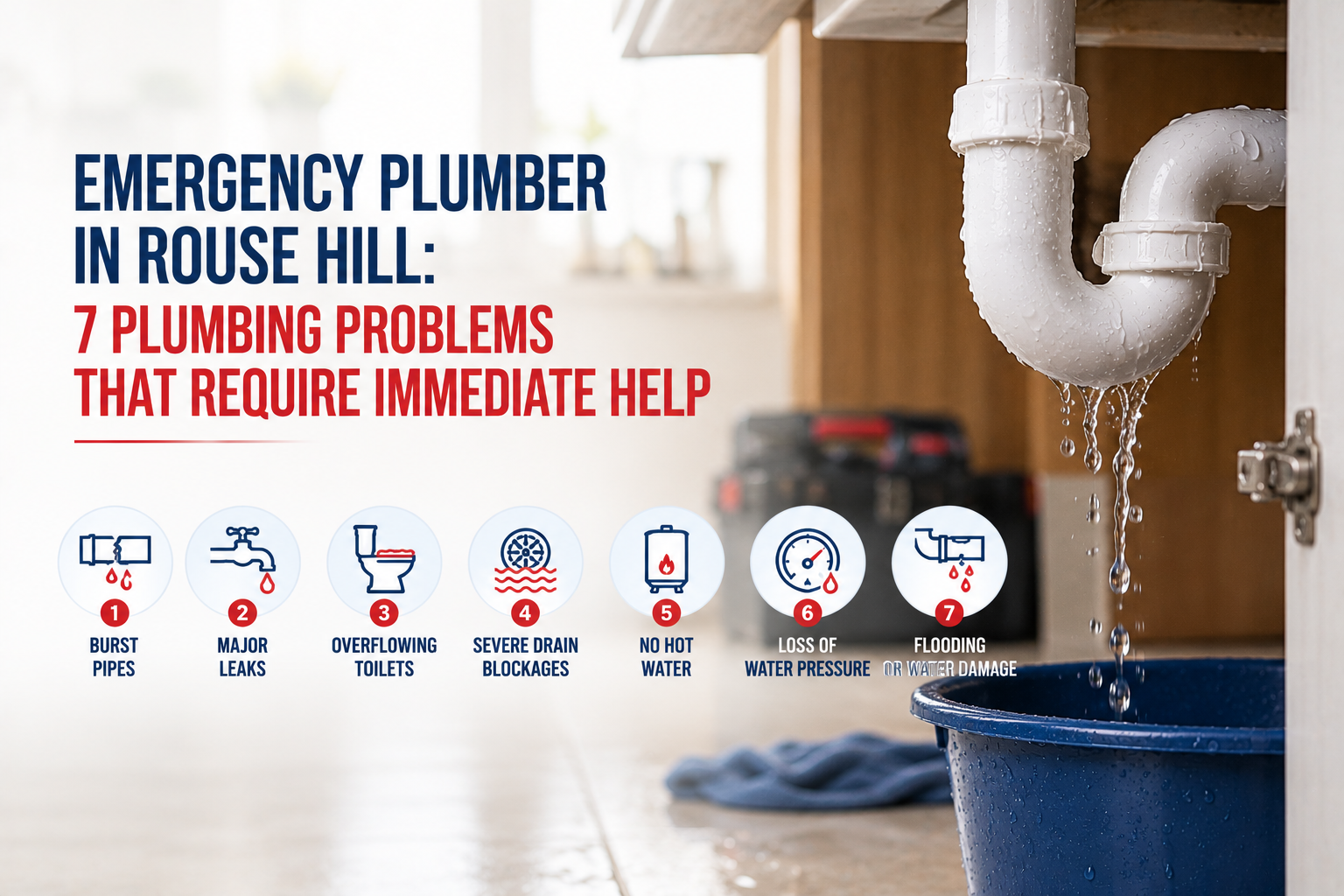
If you are unsure whether you need an emergency plumber in Rouse Hill, these seven situations are worth taking seriously.
How urgent is your plumbing problem?
Not every plumbing fault requires the same response. This quick guide shows the potential urgency of some common situations.
| Plumbing problem | Urgency | Why it needs attention |
| Burst pipe | Very high | Can release large amounts of water quickly |
| Sewer backup | Very high | Can introduce contaminated wastewater |
| Major water leak | Very high | May cause hidden or structural water damage |
| Overflowing toilet | High | Can spread wastewater across flooring |
| Multiple blocked drains | High | May indicate a main drainage blockage |
| Leaking hot water system | High | Can cause water damage and equipment hazards |
| Sudden loss of water | Moderate | May indicate a serious supply or plumbing fault |
Quick rule: if water is actively spreading, sewage is backing up, or there is a safety risk, don’t wait for the situation to become worse.
1. A pipe has suddenly burst
Few plumbing problems are as time-sensitive as a burst pipe.
A failed pipe can release a significant amount of water into your home, particularly when the damaged section is connected directly to the mains supply. If the pipe is behind a wall or above a ceiling, you may not immediately see the full extent of the leak.
Signs can include:
- Sudden water pressure loss
- Water pooling on floors
- Damp ceiling or wall patches
- Sounds of running water when taps are off
- Rapidly spreading moisture
If you can safely access your main water isolation valve, turn off the supply and call a plumber.
Do not wait to see if the leak slows down.
2. Wastewater is backing up into your property
A sewer backup is more than a blocked drain.
When wastewater begins coming back through toilets, showers or floor drains, there may be a substantial obstruction in the drainage system.
The presence of sewage also introduces contamination concerns.
Stop using your plumbing
If wastewater is backing up, avoid using toilets, showers, sinks and washing machines until the issue has been assessed.
Using additional fixtures can send more water towards the blockage and potentially increase the backup.
Keep children and pets away from affected areas and arrange professional plumbing assistance as quickly as possible.
3. You have a major leak but cannot find the source
A leak does not always announce itself with a visible burst pipe.
Water appearing on a ceiling, dampness inside a wall or unexplained moisture around flooring can indicate a concealed plumbing leak.
Other warning signs include:
- Musty smells
- Peeling or bubbling paint
- Swollen skirting boards
- Warped flooring
- Unexplained water usage
- Damp areas that continue returning
The longer a hidden leak continues, the more opportunity there is for water to affect surrounding materials.
Professional leak detection can help locate concealed pipework problems without unnecessarily opening large areas of the property.
4. Your toilet will not stop overflowing
An overflowing toilet can become a serious problem within minutes.
If the bowl is rising, don’t flush it again. If you can safely reach the toilet’s isolation valve, turn off the water supply.
If the overflow contains wastewater, keep people away from the affected area.
An overflowing toilet can sometimes be caused by a local blockage. However, if other drains are also slow or backing up, the obstruction may be located further along the property’s drainage system.
That distinction matters because simply plunging the toilet may not solve the underlying problem.
5. Several drains are blocked at once
One slow drain does not necessarily mean a plumbing emergency.
But when several fixtures begin behaving strangely at the same time, pay attention.
For example, you may notice the:
- Shower draining slowly
- Toilet gurgling
- Laundry drain backing up
- Kitchen sink draining poorly
This can indicate a blockage in a shared or main drainage line.
Continuing to use the affected fixtures can add more wastewater to the system and increase the chance of a backup.
A professional drain inspection can help identify where the obstruction is located and what type of clearing method is appropriate.
6. Your hot water system is leaking heavily
A hot water problem is usually associated with cold showers, but a significant leak creates a different concern.
Water escaping from the system can damage nearby flooring, walls and belongings. The risk can be greater when the unit is installed close to electrical equipment or other sensitive areas.
Do not dismantle a gas or electrical hot water system yourself.
If water is actively escaping, isolate the water supply where appropriate and contact a qualified plumber. If you notice a gas smell or another immediate safety hazard, move away from the area and seek the appropriate emergency assistance.
7. Your property suddenly has no water
A sudden loss of water can be caused by something outside your property, such as an interruption to the local supply.
However, if surrounding homes still have water, your property may have an internal plumbing issue.
Possible causes can include problems with:
- Internal supply pipework
- Isolation valves
- Water service connections
- Damaged pipes
- Plumbing equipment
The situation becomes more concerning if the loss of water occurs alongside flooding, unusual pipe noises or visible plumbing damage.
What should you do while waiting for help?
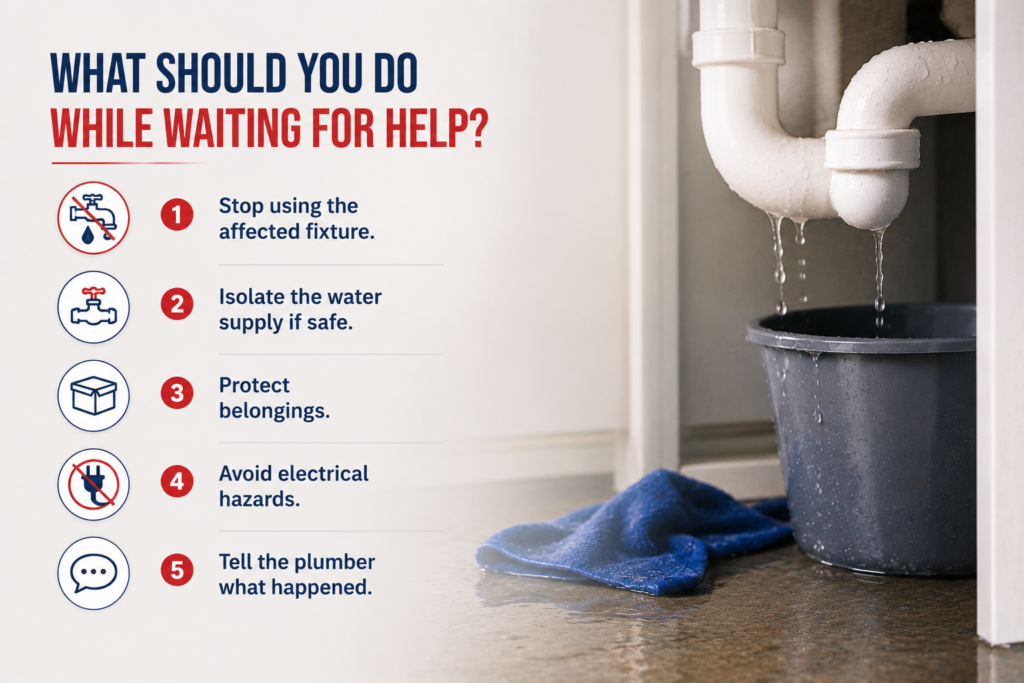
When a plumbing emergency happens, homeowners often focus on finding the exact cause. Your first priority should actually be controlling the situation.
Follow these five steps
1. Stop using the affected fixture.
Don’t keep flushing, running taps or using appliances connected to the affected drainage system.
2. Isolate the water supply if safe.
Turning off the main water supply can reduce the amount of water released during certain emergencies.
3. Protect belongings.
Move furniture, electronics, documents and other valuables away from water.
4. Avoid electrical hazards.
Never handle electrical equipment while standing in water or when water has reached electrical fittings.
5. Tell the plumber what happened.
Explain where the problem started, whether water is still flowing and whether other fixtures are affected.
Emergency or routine plumbing?
A useful way to think about it is to consider damage, spread and safety.
A dripping tap may be inconvenient but can usually be scheduled for repair.
A burst pipe that is flooding your floor is different.
Likewise, a shower that drains slowly may not require an emergency call, while wastewater coming back through the shower drain is a much more urgent situation.
If the problem is actively causing damage or creating a hygiene or safety concern, contacting an emergency plumber in Rouse Hill is the sensible next step.
Get urgent plumbing help when you need it
Plumbing emergencies can be stressful, but the right response is often straightforward: stop the water if it is safe, keep people away from hazards and call a qualified professional.
Marvel Flow Plumbing can help Rouse Hill homeowners with urgent plumbing issues including burst pipes, serious leaks, blocked drains, overflowing toilets and other plumbing problems that cannot reasonably wait.
The earlier an active plumbing problem is addressed, the better the opportunity to limit unnecessary damage.
FAQs
What is considered a plumbing emergency?
Burst pipes, major water leaks, sewage backups, overflowing toilets and serious drainage failures can require urgent plumbing assistance, particularly when they are actively damaging the property.
Should I turn off the main water supply?
If water is actively leaking and you can safely reach the main isolation valve, turning off the supply can help limit further damage. Never put yourself at risk to access it.
Are multiple blocked drains an emergency?
They can be. When several fixtures are blocked or backing up at the same time, the issue may involve a deeper obstruction in the main drainage system.
What should I do if my toilet is overflowing?
Stop flushing immediately. If safe, turn off the toilet’s water supply and keep people away from contaminated water. Contact a plumber if the blockage does not resolve or other fixtures are affected.