
You clear the kitchen sink. A few weeks later, it starts draining slowly again. Then the bathroom begins gurgling, or water takes longer than usual to disappear from the shower.
Recurring drainage problems are frustrating because they often point to something happening further inside the plumbing system. Simply clearing the visible blockage may restore the flow temporarily, but it does not always address the reason the obstruction formed in the first place.
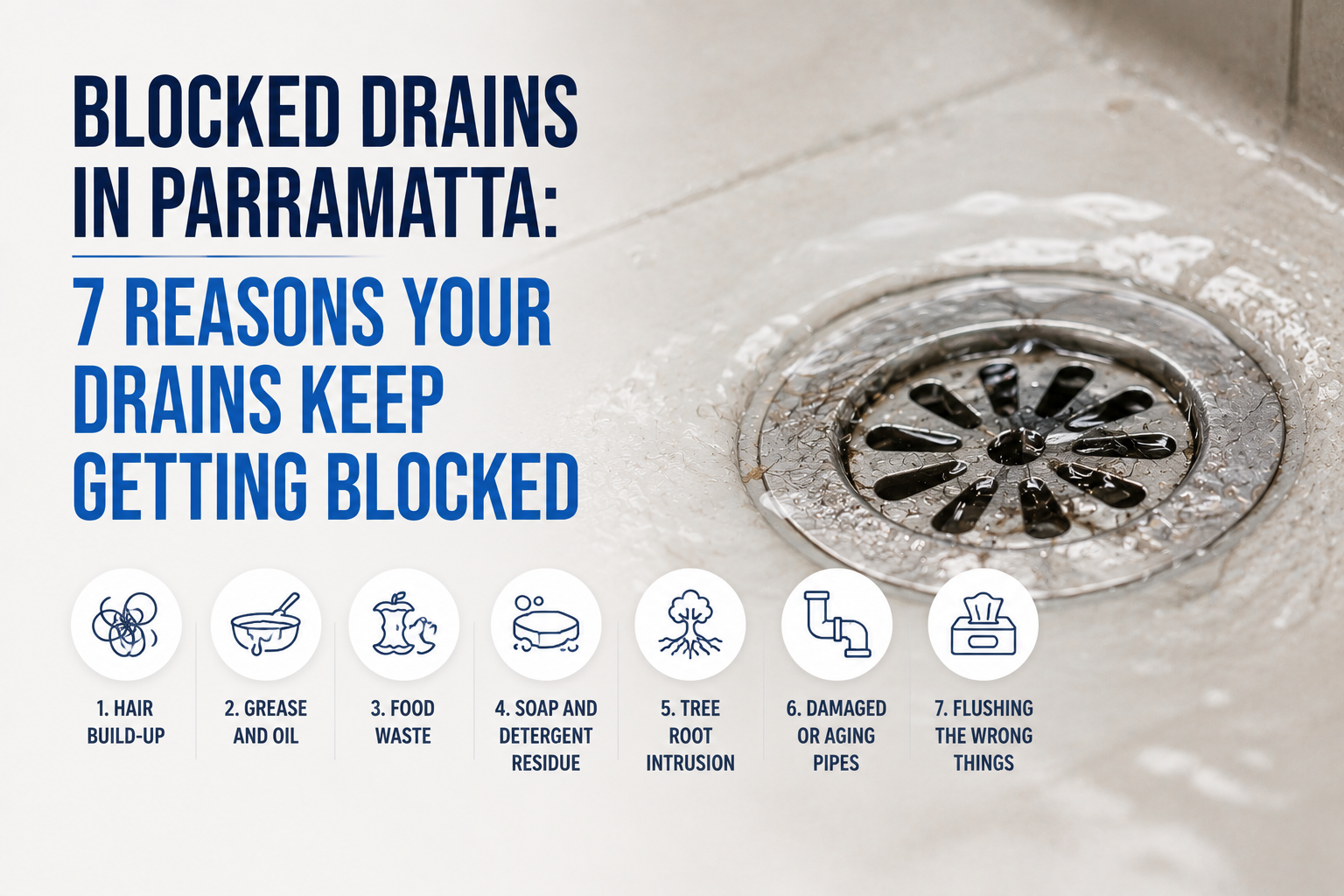
If you are dealing with blocked drains in Parramatta, here are seven common causes worth knowing about.
1. Too much grease going down the kitchen sink
Fats, oils and grease are some of the biggest contributors to kitchen drain problems.
They may be liquid when they enter the sink, but they can cool and stick to the internal walls of the pipe. Food particles and other debris can then collect around the buildup, gradually reducing the space available for water to flow.
This is why pouring hot water down the sink is not a reliable solution for a recurring grease problem.
A better kitchen habit
Let cooking oil and grease cool before putting them in the rubbish. Scrape food scraps from plates into the bin rather than washing them down the sink.
Small changes can reduce what enters your drainage system in the first place.
2. Hair and soap scum are building up
Bathroom drains face a different problem.
Hair can become caught around the drain opening or further down the pipe. Soap residue can combine with hair and other debris, creating a stubborn mass that gradually restricts water flow.
A shower that drains slowly is often an early warning sign.
If the problem keeps returning after basic cleaning, the obstruction may be further inside the pipe and require professional drain clearing.
3. Tree roots have entered the pipe
Tree roots can cause serious drainage problems when they find an opening or weakness in underground pipework.
They may enter through damaged joints, cracks or deteriorated sections and continue growing inside the pipe. Once there, roots can restrict wastewater flow and trap other debris.
Recurring blockages, particularly in outdoor drainage lines, can therefore be a reason to investigate the condition of the underground pipe.
How plumbers investigate root intrusion
A CCTV drain inspection can provide a view inside the pipe and help identify root growth, cracks, heavy buildup or other issues that cannot be seen from the surface.
4. The wrong things are being flushed
Toilets are designed for human waste and toilet paper. Items such as wipes, sanitary products, paper towels and other household materials can cause blockages because they do not break down in the same way.
The problem may not appear immediately. An item can become lodged further along the pipe and gradually collect additional material.
If your toilet repeatedly blocks, think about what has been flushed as well as what has happened inside the pipe.
5. Your drainage pipe is damaged
Sometimes the blockage is not really the main problem.
Cracked, collapsed, displaced or deteriorating pipes can interfere with normal wastewater flow. They can also create areas where debris collects or roots gain access.
This is particularly relevant when the same drain continues blocking despite repeated professional clearing.
Instead of treating the blockage again and again, it may be time to investigate the condition of the drainage pipe itself.
6. There is a deeper obstruction in the main line
A blockage does not necessarily occur directly beneath the fixture where you notice it.
For example, if the kitchen sink, shower and toilet all begin draining slowly around the same time, there may be a restriction in a shared drainage line.
Other warning signs include:
- Gurgling from multiple fixtures
- Water backing up into another drain
- Strong sewage smells
- Slow drainage throughout the property
- An overflowing outdoor gully
These symptoms can indicate a more extensive drainage issue that needs professional assessment.
7. Previous blockages were only temporarily treated
A drain can appear fixed while an obstruction remains inside the pipe.
For example, a basic drain-clearing method may create a small passage through a buildup without removing the material surrounding it. The water flows again, but the remaining debris eventually restricts the pipe once more.
This creates the familiar cycle:
Slow drain → blockage → temporary clearing → normal flow → blockage again.
Breaking that cycle requires finding the underlying cause rather than repeatedly treating the symptom.
What should you do when a drain starts slowing down?
Don’t wait until wastewater is backing up across your bathroom floor.
Early signs such as slow drainage, bubbling or unpleasant smells can give you an opportunity to investigate before the situation becomes more disruptive.
Avoid pouring harsh chemicals into the plumbing as a first response. Some drain cleaners can damage certain plumbing components, and they do not address structural problems such as damaged pipes or root intrusion.
Instead, consider professional drain inspection and clearing if the problem is persistent.
When professional drain cleaning makes sense
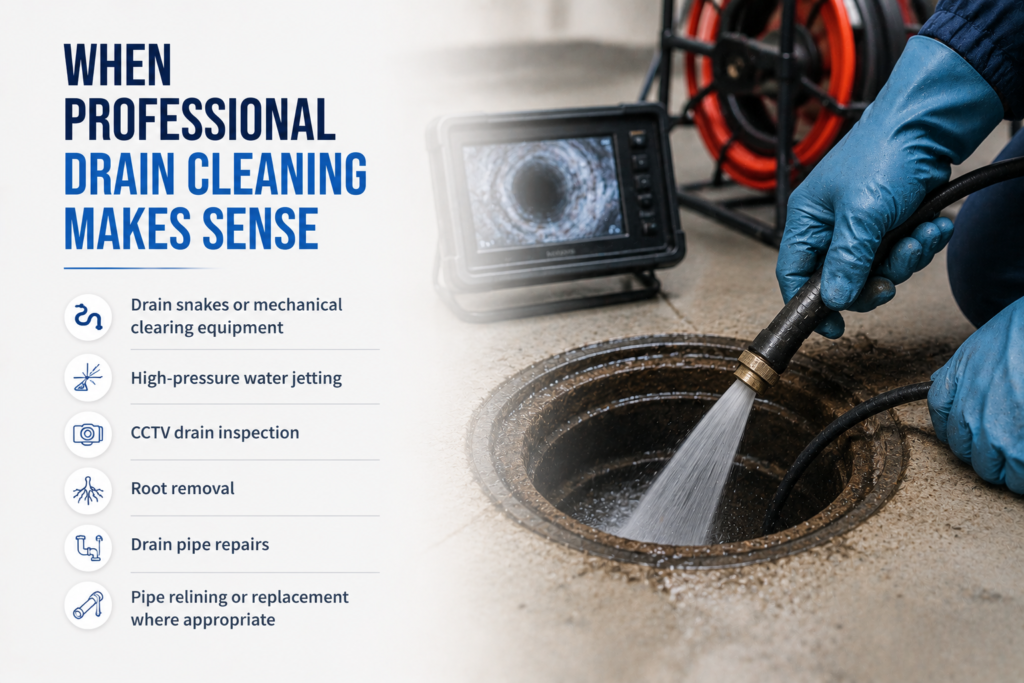
A plumber may use different methods depending on the cause and location of the obstruction, including:
- Drain snakes or mechanical clearing equipment
- High-pressure water jetting
- CCTV drain inspection
- Root removal
- Drain pipe repairs
- Pipe relining or replacement where appropriate
The right method depends on what is actually blocking or damaging the drainage system.
Don’t let a recurring blockage become a bigger plumbing problem
A blocked drain is easy to ignore when the water eventually disappears. But repeated slowdowns are your plumbing system giving you a warning.
If you are regularly dealing with blocked drains in Parramatta, professional investigation can help determine whether you are facing grease buildup, hair, tree roots, a damaged pipe or a deeper main-line obstruction.
Marvel Flow Plumbing can assess persistent drainage problems and recommend a practical solution based on the condition of your plumbing.
The goal is not simply to get the water moving again. It is to stop the blockage from coming back.
FAQs
What causes drains to keep blocking?
Common causes include grease, hair, food debris, unsuitable materials, tree roots, damaged pipes and deeper obstructions in shared drainage lines.
Are chemical drain cleaners safe to use?
They are not a reliable solution for recurring blockages. They may fail to address deeper plumbing problems and some products can damage plumbing components if used incorrectly.
How can I tell if tree roots are blocking my drain?
Recurring outdoor drainage blockages, slow flow and other repeated symptoms may indicate root intrusion. A CCTV drain inspection can help confirm what is happening inside the pipe.
When should I call a blocked drain plumber?
Call a professional when the blockage repeatedly returns, several fixtures are affected, wastewater backs up, sewage smells develop or basic clearing methods no longer solve the problem.