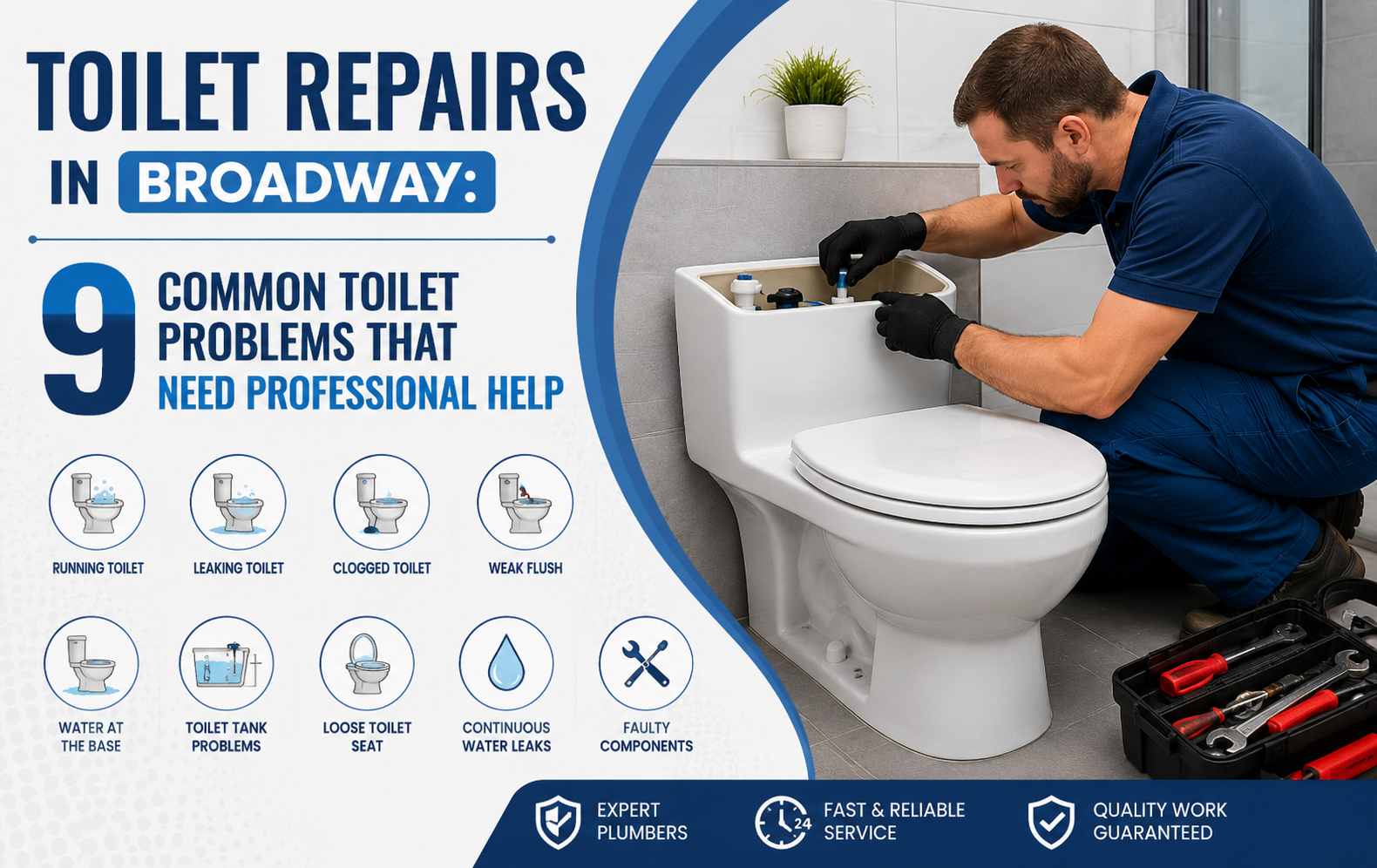
A toilet that does not flush properly can quickly become a daily frustration. Sometimes the problem is obvious, such as water spilling onto the bathroom floor. In other cases, the warning signs are subtle, with a toilet that takes longer to refill, makes unusual sounds or needs repeated repairs.
Although some minor toilet issues have simple causes, repeatedly adjusting parts without finding the underlying fault can leave the problem unresolved.
For homes and businesses in Broadway, recognising when a toilet problem needs professional attention can help prevent water wastage, bathroom damage and more disruptive plumbing failures.
1. The toilet keeps running
A toilet that continues running after a flush is one of the most common plumbing problems.
The cause may be a worn inlet valve, damaged seal, faulty flush valve or an incorrectly adjusted component inside the cistern.
The constant flow may seem insignificant, but a toilet that runs throughout the day can waste a considerable amount of water.
If adjusting the handle or checking the cistern does not resolve the issue, professional assessment can identify the failed component.
2. The toilet will not flush properly
A weak or incomplete flush can make the toilet difficult to use and may leave waste behind.
Possible causes include:
- Low water level in the cistern
- Faulty flush mechanism
- Partial blockage
- Mineral buildup
- Problems with the water supply
A weak flush does not always mean the toilet needs replacing. The cause should be identified before deciding whether repair or replacement is appropriate.
3. The toilet is constantly blocked
Occasional blockages can happen, but a toilet that repeatedly blocks is telling you something.
The problem may be an obstruction within the toilet, an issue further along the drainage pipe or unsuitable items being flushed.
Repeated plunging may restore flow temporarily without addressing the underlying cause.
When recurring blockages become a concern
If the toilet blocks again shortly after being cleared, or several bathroom fixtures are experiencing drainage problems, the issue may extend beyond the toilet itself.
A plumber can investigate the drainage system and determine whether there is a deeper obstruction.
4. Water is leaking around the base
Water around the bottom of a toilet should not be ignored.
A leak may come from a damaged seal, connection, pipe or another component. If water repeatedly appears after flushing, the source should be identified rather than simply mopped up.
Persistent moisture around the base can affect flooring and surrounding materials, particularly if the leak continues unnoticed.
For homeowners needing toilet repairs in Broadway, addressing a base leak early can help prevent a relatively small plumbing problem from becoming a larger repair.
5. The cistern keeps refilling
A toilet cistern should refill after flushing and then stop.
If it keeps refilling or periodically starts running when nobody has used the toilet, water may be escaping through the flush valve or another internal component.
This can happen even when the toilet appears to function normally.
Listening for occasional unexplained refilling is useful because the problem may otherwise go unnoticed.
6. The toilet rocks or moves
A toilet should sit firmly in position.
If the pan rocks when someone sits down or shifts when pushed lightly, there may be an issue with the fixings, installation or connection to the floor.
A loose toilet can place stress on seals and pipe connections. Continued movement may eventually contribute to leaks.
Do not simply wedge something underneath the toilet to stop the movement. The underlying cause needs to be assessed properly.
7. There is a bad smell even after cleaning
A persistent sewage-like smell from a clean bathroom can indicate a plumbing problem.
Possible causes include a damaged seal, drainage issue, trap problem or another source of sewer gas.
If the smell is accompanied by gurgling, slow drainage or water around the base, professional investigation becomes more important.
Cleaning products may temporarily cover the odour without resolving its source.
8. The toilet makes unusual noises
A toilet can make some noise during normal flushing and refilling. However, persistent hissing, bubbling, gurgling or unusual sounds when other fixtures are used may indicate a plumbing issue.
For example, gurgling when a nearby shower or basin drains may point towards a drainage or ventilation problem rather than a fault with the toilet itself.
The timing of the noise can provide useful information for diagnosis.
9. The toilet frequently needs parts replaced
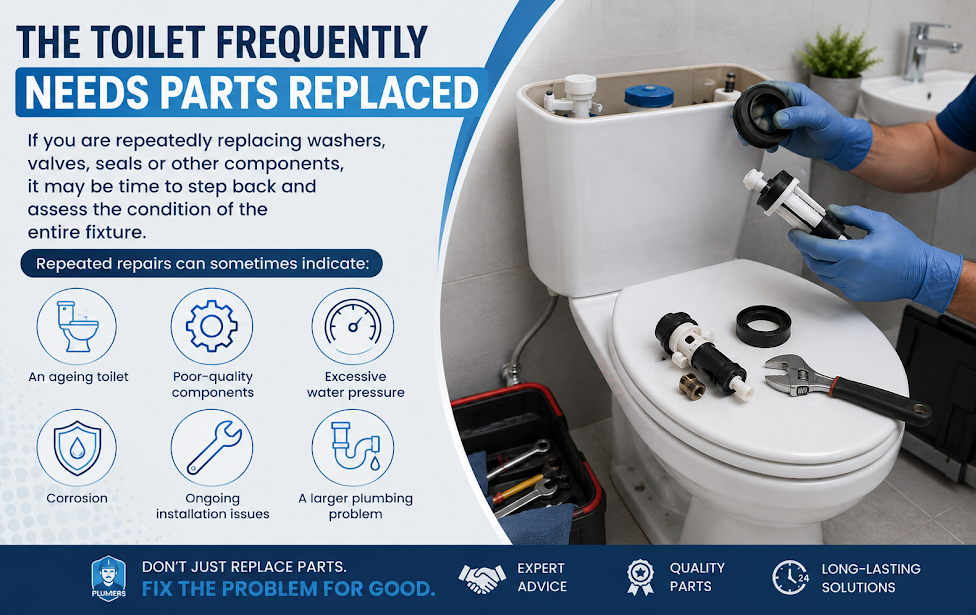
If you are repeatedly replacing washers, valves, seals or other components, it may be time to step back and assess the condition of the entire fixture.
Repeated repairs can sometimes indicate:
- An ageing toilet
- Poor-quality components
- Excessive water pressure
- Corrosion
- Ongoing installation issues
- A larger plumbing problem
Repair or replacement?
Repair is often practical when the toilet itself is in good condition and the problem involves an individual component.
Replacement may make more sense when the fixture has extensive damage, recurring faults or outdated components that are becoming difficult to maintain.
A plumber can assess the condition and explain the practical options rather than recommending replacement automatically.
What should you do when your toilet develops a problem?
Avoid repeatedly flushing a toilet that is already showing signs of blockage or overflow. If water is leaking, limit use until the source has been assessed.
For running toilets, listen to when the water starts and stops. For flushing problems, note whether the issue happens every time or only occasionally. These details can help the plumber identify the likely cause.
If wastewater is backing up or the toilet is overflowing, treat the situation as more urgent and avoid using connected fixtures until professional help is available.
Marvel Flow Plumbing provides professional plumbing services for toilet faults, leaks, blockages and other bathroom plumbing problems.
Getting toilet repairs in Broadway at the right time can help reduce water wastage and prevent a small fixture problem from developing into wider bathroom or drainage damage.
FAQs
Why does my toilet keep running after flushing?
A faulty inlet valve, flush valve, seal or incorrect component adjustment can cause a toilet to keep running. A plumber can identify which part is responsible.
When should I replace a toilet instead of repairing it?
Replacement may be worth considering when the toilet has repeated faults, significant damage, poor flushing performance or components that are becoming difficult to source. A professional assessment can help determine the better option.
Why does my toilet keep blocking?
Recurring blockages can result from unsuitable items being flushed, partial obstructions, drainage problems or issues further along the pipe. Repeated plunging may only provide temporary relief.
Is water around the base of a toilet serious?
It can be. Repeated moisture may indicate a damaged seal or connection and can eventually affect surrounding flooring. The source should be identified promptly.