
A blocked drain rarely starts as a dramatic plumbing emergency. It may begin with water taking slightly longer to disappear, a faint smell from the sink or an occasional gurgling sound. Because these signs can seem minor, it is easy to put off getting them checked.
The problem is that a developing blockage can become significantly harder to manage once water stops flowing altogether or starts backing up into your home.
If you live in Bexley, knowing the early warning signs can help you decide when a drain needs professional attention. Here are eight symptoms that should not be brushed aside.
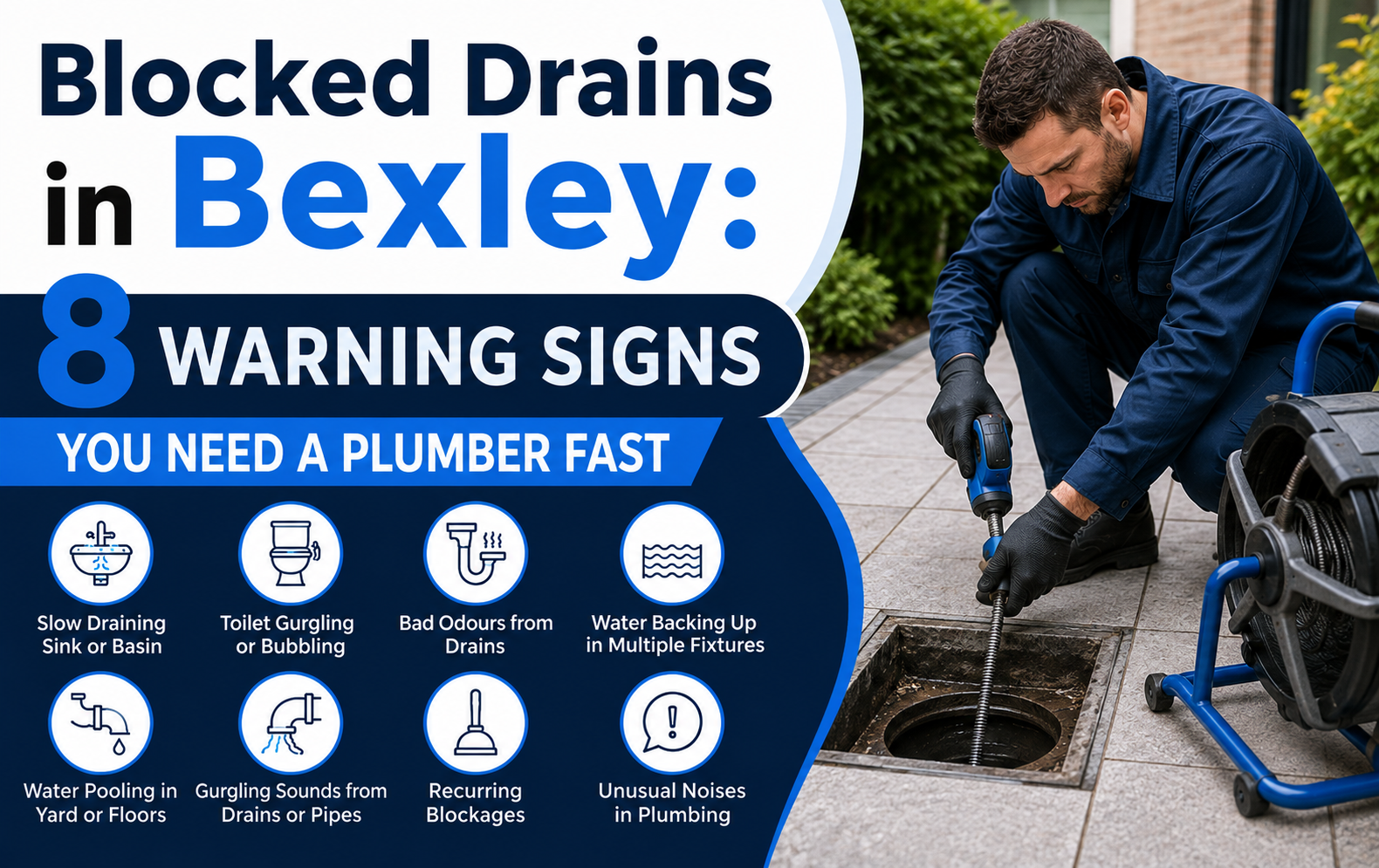
1. Water is draining noticeably slower
A sink, shower or floor drain that suddenly takes longer to empty is often the first clue that something is restricting the pipe.
Hair, soap residue, food particles, grease, dirt and other material can gradually build up inside drainage pipes. At first, water still passes through, but the opening becomes progressively narrower.
Do not wait until the drain stops completely. A slow drain can be an early opportunity to investigate the cause before the problem develops into a major blockage.
2. You hear gurgling from the drain
Gurgling sounds usually mean that air is moving through the drainage system in an unusual way.
You might hear bubbling or gurgling when:
- A toilet is flushed
- The shower is draining
- A washing machine empties
- A nearby tap is running
The sound may indicate a partial blockage or an issue affecting airflow within the drainage system.
Why the sound matters
A drain does not normally need to struggle to move wastewater. If gurgling becomes frequent, particularly across several fixtures, it is worth having the system assessed.
3. Unpleasant smells keep coming back
A persistent foul smell from a drain can indicate organic material, grease, stagnant water or other debris accumulating inside the pipe.
A drain that smells unpleasant once does not automatically mean it is blocked. However, recurring odours combined with slow drainage or gurgling are more significant.
Pouring household products down the drain may temporarily mask the smell without addressing the underlying problem.
4. Water starts backing up
This is one of the clearest signs that the problem has progressed.
If water rises in a sink, shower, bath or floor drain instead of flowing away, there may be a substantial restriction in the pipe.
Wastewater backing up through a floor drain is particularly concerning because it can indicate that the blockage is affecting a larger section of the drainage system.
At this stage, avoid adding more water to the system and contact a professional for blocked drains in Bexley.
5. Several fixtures are draining slowly
A blockage affecting one sink may be local to that fixture. When multiple drains start behaving strangely at around the same time, the problem may be further along the drainage system.
For example, you may notice:
| What you notice | What it may indicate |
| Kitchen sink draining slowly | Local buildup or pipe restriction |
| Shower and basin both slow | Possible shared drainage restriction |
| Toilet gurgling when shower drains | Drainage or airflow issue |
| Multiple fixtures backing up | Potential larger blockage |
These symptoms do not provide a diagnosis on their own, but they help a plumber determine where to investigate.
6. Your toilet starts behaving differently
Toilets can provide useful clues about drainage problems.
Watch for:
- Water rising unusually high after flushing
- Slow flushing
- Gurgling after another fixture is used
- Wastewater returning into the bowl
- Repeated toilet blockages
A toilet problem is not always caused by the toilet itself. If several fixtures are affected, the issue may involve the connected drainage line.
7. Your drains keep blocking after DIY clearing
A drain that appears clear after plunging but blocks again a few days later deserves further investigation.
Repeated blockages can occur when only part of the obstruction has been removed. Other possible causes include tree root intrusion, damaged pipes, heavy buildup or an issue with the drainage line.
Why recurring blockages matter
Repeatedly treating the symptom without identifying the cause can turn into a cycle of temporary fixes.
A professional plumber can investigate the drainage system and determine whether the problem is a simple obstruction or something more substantial.
8. Wastewater appears around floor drains
Wastewater coming back through a floor drain should never be treated as a minor inconvenience.
This can indicate that water has nowhere else to go because of a downstream blockage. If the wastewater is contaminated, avoid direct contact and keep children and pets away from the affected area.
Stop using showers, toilets, sinks and appliances that discharge into the affected drainage system until the issue has been assessed.
What causes blocked drains?
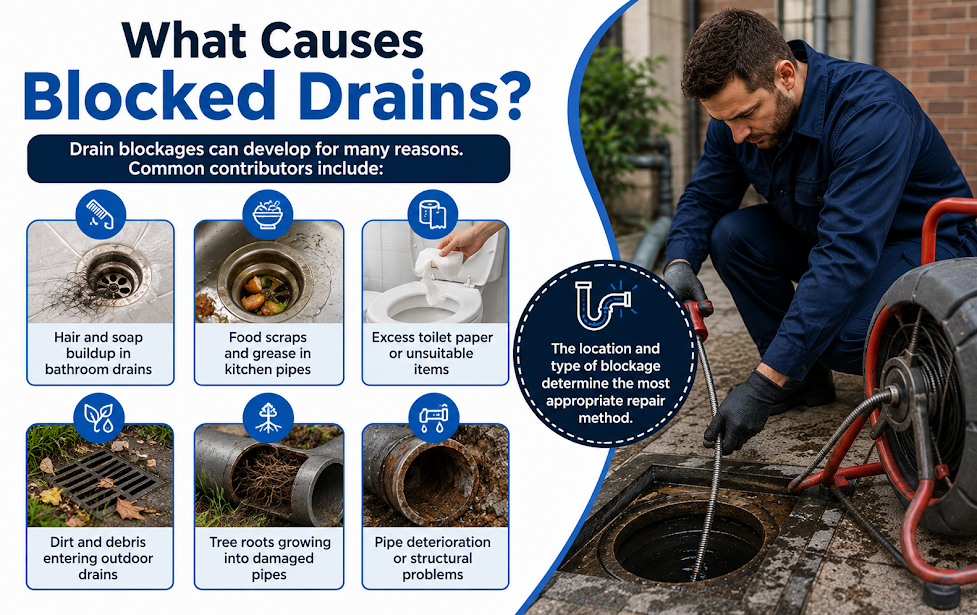
Drain blockages can develop for many reasons. Common contributors include:
- Hair and soap buildup in bathroom drains
- Food scraps and grease in kitchen pipes
- Excess toilet paper or unsuitable items
- Dirt and debris entering outdoor drains
- Tree roots growing into damaged pipes
- Pipe deterioration or structural problems
The location and type of blockage determine the most appropriate repair method.
When should you call a plumber?
A mildly slow drain may not require emergency assistance, but persistent or worsening symptoms should not be ignored.
Call a plumber promptly if water is backing up, several fixtures are affected, wastewater is present or the blockage keeps returning after temporary clearing.
Marvel Flow Plumbing can investigate drainage problems and identify the cause rather than simply treating the visible symptom.
Getting blocked drain repairs in Bexley at the right time can help reduce the risk of overflowing wastewater, property damage and increasingly difficult drainage problems.
FAQs
What is the first sign of a blocked drain?
Slow drainage is often the earliest sign. Gurgling sounds, recurring smells and water taking longer to disappear can follow as the restriction becomes worse.
Why do my drains keep blocking?
Recurring blockages may be caused by persistent buildup, tree roots, damaged pipes, incorrect pipe gradients or an obstruction that has not been completely removed.
Can I use drain cleaner for a blocked drain?
Chemical drain cleaners may not be suitable for every plumbing system and may not address the underlying cause of a recurring blockage. Professional assessment is preferable when the problem persists.
When is a blocked drain an emergency?
A blockage becomes more urgent when wastewater is backing up, several fixtures are affected, flooding is occurring or sewage is entering the property.