
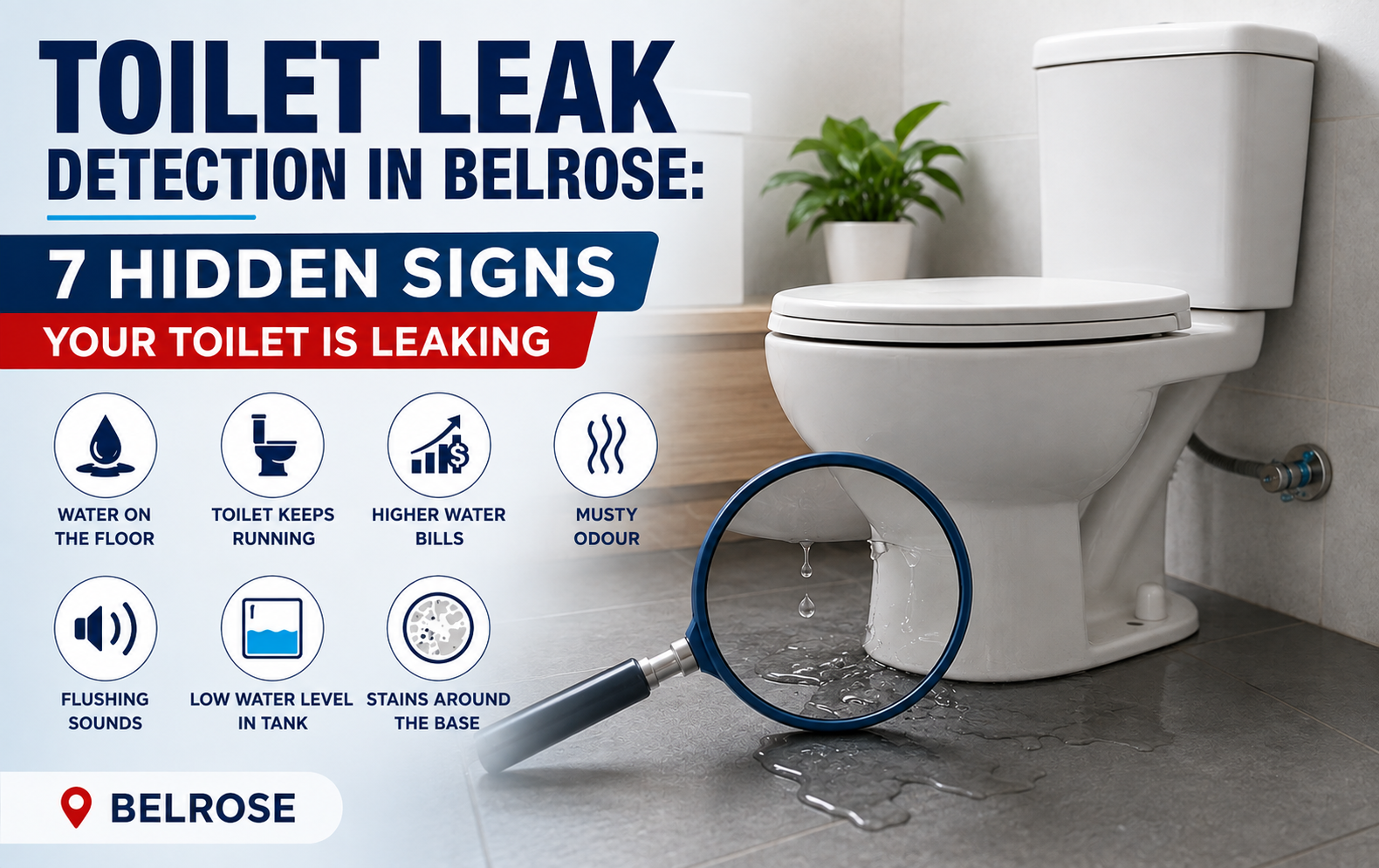
A toilet leak is not always obvious. You may not see water on the bathroom floor or hear a constant drip, yet a small leak can continue behind the scenes and waste water every day.
Some toilet leaks occur inside the cistern, while others develop around the base, supply connection or internal components. Because much of the water can disappear directly into the toilet bowl or surrounding structure, the first signs are often subtle.
For homeowners, recognising these clues early can help prevent unnecessary water loss and more serious bathroom damage. Here are seven signs that may indicate your toilet needs closer inspection.
1. You hear water running when nobody has flushed
A toilet that occasionally makes a brief refill sound after use is normal. Constant or intermittent running when the toilet has not been used is different.
The problem may involve a worn flapper, faulty inlet valve, damaged seal or another cistern component. Water can slowly escape into the bowl, causing the inlet valve to repeatedly activate to replace it.
You may hear:
- A faint hissing sound
- Water trickling into the bowl
- The cistern refilling without being flushed
- Short bursts of water at random times
These sounds are easy to overlook, particularly when the bathroom door is closed.
2. There is unexplained moisture around the toilet base
Water around the base of a toilet should not be ignored, even if the amount appears small.
Moisture may come from a supply connection, condensation or a leak around the toilet’s base. If the water appears repeatedly, the source needs to be identified rather than simply wiped away.
A leaking toilet base can potentially affect flooring and surrounding materials, particularly when moisture remains trapped beneath or around the fixture.
If you regularly find unexplained water near the toilet, professional toilet leak detection in Belrose can help determine where the water is coming from.
3. Your water bill has increased without an obvious reason
A sudden rise in water usage can sometimes point to a hidden plumbing leak.
Toilets are among the household fixtures that can waste significant amounts of water when they leak continuously. Because the water may flow directly into the bowl, there may be no visible puddle to alert you.
Of course, higher water usage can have other explanations, such as increased household activity or seasonal changes. But if your normal usage has not changed and the bill has risen unexpectedly, checking toilets and other fixtures is worthwhile.
A simple toilet leak check
Add a few drops of food colouring to the cistern and wait without flushing. If the colour appears in the bowl after a short period, water is likely passing through the cistern seal or another internal component.
This is only a basic indication. A professional inspection is more appropriate when the source is unclear or the issue keeps returning.
4. The toilet needs to be flushed more than once
A toilet that consistently requires multiple flushes may have a flushing problem rather than a leak. However, repeated flushing can also mask other faults within the cistern or pan.
If the toilet has recently changed from normal operation, pay attention to other symptoms such as running water, weak flushing, unusual sounds or changes in the water level.
Multiple toilet problems occurring together may indicate that the fixture needs more than a simple adjustment.
5. The water level in the bowl keeps changing
A noticeable change in the toilet bowl’s water level without flushing can be a useful warning sign.
The water may be slowly draining away or being affected by an issue within the trap or drainage system. In some cases, this can occur alongside gurgling, slow drainage or recurring blockages.
Do not assume every change in water level means the toilet itself is leaking. The symptoms need to be considered together to identify whether the problem involves the cistern, pan, seals or drainage system.
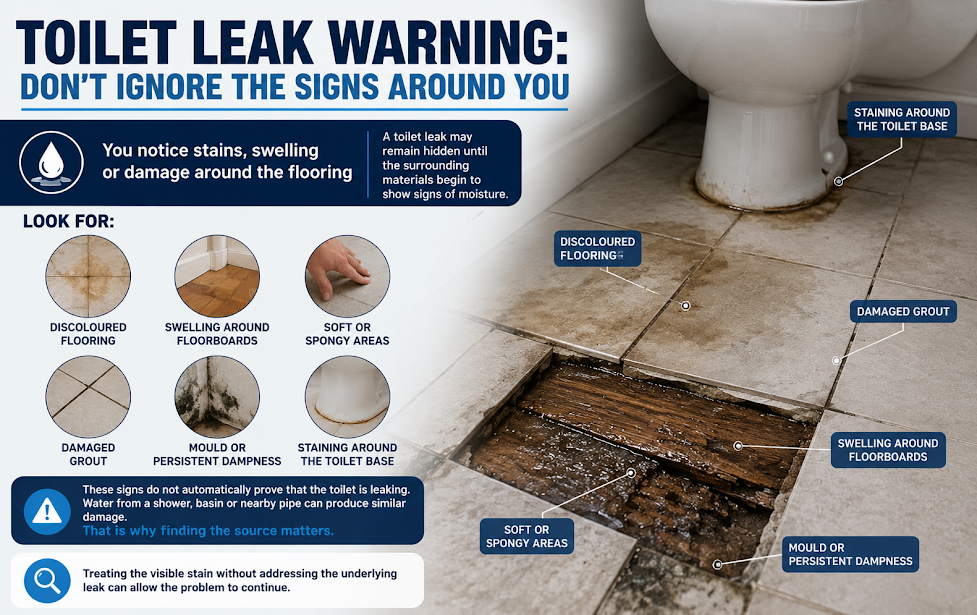
6. You notice stains, swelling or damage around the flooring
A toilet leak may remain hidden until the surrounding materials begin to show signs of moisture.
Look for:
- Discoloured flooring
- Swelling around floorboards
- Soft or spongy areas
- Damaged grout
- Mould or persistent dampness
- Staining around the toilet base
These signs do not automatically prove that the toilet is leaking. Water from a shower, basin or nearby pipe can produce similar damage.
That is why finding the source matters. Treating the visible stain without addressing the underlying leak can allow the problem to continue.
7. You can see movement when the toilet is used
A toilet should feel stable when someone sits on it. If the pan rocks, shifts or moves noticeably, there may be an issue with the installation, fixings or connection to the floor.
Movement can place additional stress on seals and connections. Over time, this may contribute to leaks around the base.
A loose toilet is therefore worth addressing even when there is no obvious water present. A plumber can inspect the fixture and determine whether it needs adjustment, resealing or another repair.
Why hidden toilet leaks deserve attention
A small toilet leak may not appear serious, but ongoing water loss can add up. More importantly, leaks around the base can allow moisture to affect flooring and surrounding materials.
Early detection can give homeowners more options. A worn valve or seal may be relatively straightforward to repair, while prolonged water damage can require more extensive work.
This is why toilet leak detection in Belrose is useful when a toilet is showing unusual symptoms but the source cannot be identified.
What should you do if you suspect a toilet leak?
Start by observing the toilet rather than repeatedly flushing it or attempting to dismantle the cistern without the right knowledge.
Check for visible moisture, listen for unexplained running water and consider whether your water usage has changed. If there is water around the base or signs of ongoing leakage, reduce use of the toilet until the problem can be assessed.
Marvel Flow Plumbing can inspect the fixture, identify the likely source and advise whether a repair, replacement component or further plumbing investigation is appropriate.
FAQs
How can I tell if my toilet is leaking internally?
Listen for unexplained running or hissing sounds and check whether water is continuously entering the bowl. A simple food-colouring test can also indicate whether water is escaping from the cistern into the bowl.
Can a leaking toilet increase my water bill?
Yes. A continuously running toilet can waste water over time, potentially contributing to an unexplained increase in household water usage.
Why is there water around the base of my toilet?
Possible causes include a leaking supply connection, damaged seal, condensation or another plumbing issue. The source needs to be identified before the correct repair can be selected.
Should a wobbly toilet be repaired?
Yes. Movement can place stress on seals and connections and may contribute to leaks. A plumber can assess why the toilet is unstable and recommend the appropriate repair.