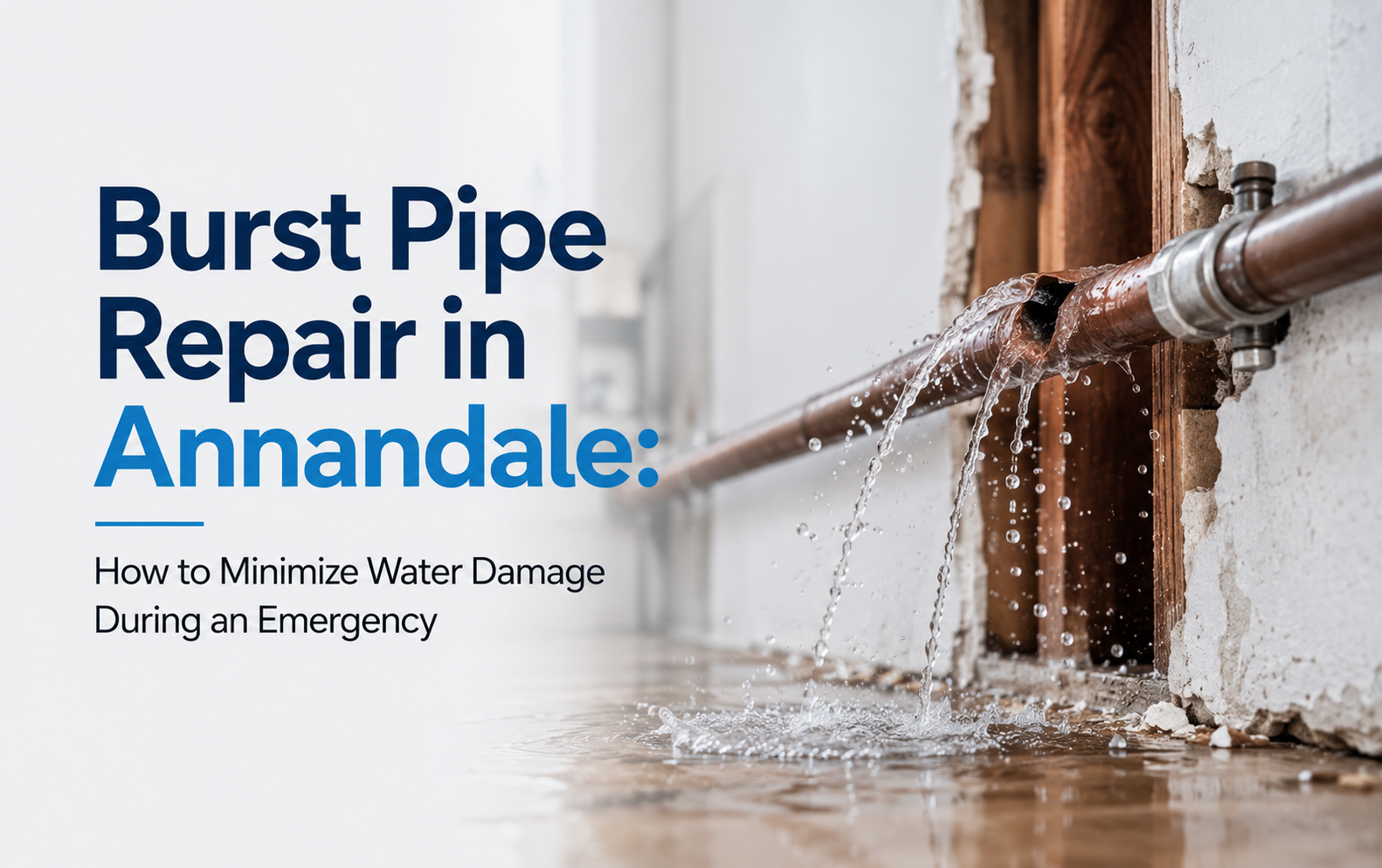
One moment everything seems normal, and the next, water is pouring from a burst pipe into your home. Whether it’s under the kitchen sink, inside a wall, or in the ceiling, a burst pipe can quickly turn into a costly emergency if you don’t act fast.
While calling for professional burst pipe repair in Annandale should always be your first priority, there are a few important steps you can take to reduce water damage before your plumber arrives. Acting quickly can help protect your home, belongings, and even lower the overall cost of repairs.
Why Burst Pipes Cause So Much Damage
A burst pipe can release hundreds of litres of water in a short period. Unlike a slow leak, this type of plumbing emergency spreads rapidly through walls, floors, insulation, and cabinetry.
If left unchecked, it can lead to:
- Damaged flooring and carpets
- Warped timber and cabinetry
- Ceiling and wall deterioration
- Electrical hazards
- Mould growth
- Expensive structural repairs
The faster you respond, the better your chances of limiting the damage.
Step 1: Turn Off the Main Water Supply
The first and most important action is to stop the flow of water.
Every homeowner should know where the property’s main water shut-off valve is located. Turning it off immediately prevents more water from escaping and gives you control of the situation.
If you’re unsure where the valve is, now is the perfect time to locate it before an emergency happens.
Step 2: Switch Off Electricity if Water Is Near Electrical Areas
Water and electricity are a dangerous combination.
If flooding is approaching electrical outlets, appliances, or your switchboard, turn off the electricity at the main switch only if it is safe to do so.
Never walk through standing water to reach electrical equipment.
If you cannot safely access the switchboard, wait for emergency assistance.
Step 3: Drain the Remaining Water from Your Pipes
Once the main water supply has been shut off, open your taps throughout the house.
This helps release any water still trapped inside the plumbing system and reduces pressure in the pipes.
Flush toilets once to empty any remaining water from the system where possible.
Step 4: Protect Your Furniture and Valuables
While waiting for the plumber, try to reduce further damage by moving items away from the affected area.
Prioritise:
- Electrical appliances
- Rugs and carpets
- Furniture
- Important documents
- Personal belongings
If moving larger furniture isn’t possible, place aluminium foil or wooden blocks beneath the legs to minimise water absorption.
Step 5: Remove Standing Water
The longer water remains inside your home, the greater the damage becomes.
Depending on the amount of water, you can use:
- Towels
- Mops
- Buckets
- A wet vacuum if available
Opening windows and using fans can also improve airflow and begin drying affected areas.
Common Causes of Burst Pipes
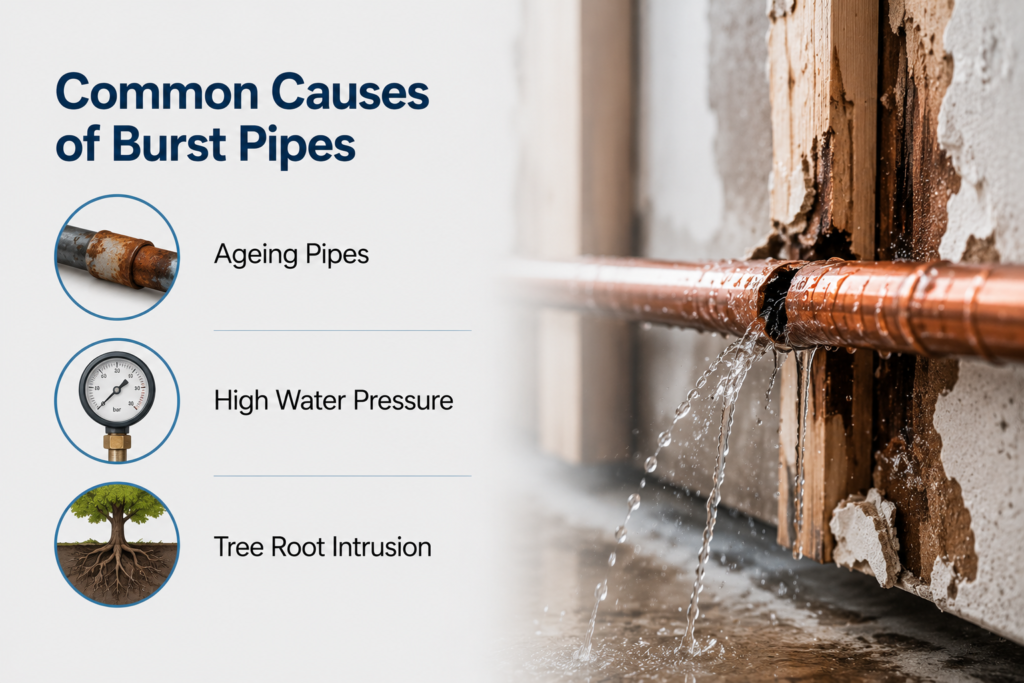
Understanding why pipes burst can help homeowners reduce the risk of future emergencies.
Some of the most common causes include:
Ageing Pipes
Older plumbing systems naturally weaken over time. Corrosion, wear, and material deterioration make pipes more vulnerable to splitting under pressure.
High Water Pressure
Excessive water pressure places constant stress on your plumbing system.
Over time, this pressure can weaken joints and eventually cause pipes to fail.
Tree Root Intrusion
Roots searching for moisture can enter underground pipes through tiny cracks.
As roots continue growing, they place pressure on the pipe until it fractures.
Accidental Damage
DIY renovations, landscaping work, or drilling into walls can unintentionally damage hidden plumbing pipes.
Signs a Pipe May Be About to Burst
Not every burst pipe happens without warning.
Watch for these early indicators:
- Unexplained drops in water pressure
- Damp patches on walls or ceilings
- Water stains
- Strange banging or rattling noises inside pipes
- Rust-coloured water
- Unexpected increases in your water bill
Addressing these warning signs early may prevent a complete pipe failure.
Why DIY Repairs Usually Make Things Worse
It may be tempting to wrap a leaking pipe with tape or attempt a quick repair yourself.
Temporary fixes rarely solve the underlying issue and often fail when water pressure is restored.
Professional plumbers use specialised equipment to locate the damaged section, assess surrounding pipework, and complete a lasting repair that restores the integrity of your plumbing system.
Preventing Future Pipe Emergencies
Although not every burst pipe can be avoided, regular maintenance greatly reduces the risk.
Consider these preventative measures:
- Schedule routine plumbing inspections.
- Replace ageing pipework when recommended.
- Monitor water pressure.
- Repair small leaks promptly.
- Know the location of your shut-off valve.
- Address unusual plumbing noises before they worsen.
Preventative maintenance is usually far more affordable than emergency repairs and water restoration.
Fast Action Makes All the Difference
A burst pipe is stressful, but your response during the first few minutes can significantly reduce the amount of damage to your property.
If you’re facing a plumbing emergency, Marvel Flow Plumbing provides reliable burst pipe repair in Annandale with prompt response times and professional workmanship. Our experienced plumbers quickly identify the source of the problem, carry out effective repairs, and help minimise further water damage so you can get your home back to normal as soon as possible.
Connect with our local plumbers today for quick response and reliable plumbing services.
Frequently Asked Questions
What should I do immediately after a pipe bursts?
Turn off your home’s main water supply, switch off electricity if it’s safe, move valuables away from the affected area, and contact an emergency plumber as soon as possible.
Can a burst pipe cause structural damage?
Yes. Water can weaken walls, ceilings, flooring, insulation, and timber structures if the leak is not addressed quickly.
How do I know if a pipe has burst inside a wall?
Signs include damp patches, peeling paint, mould growth, reduced water pressure, unusual water sounds, or an unexplained increase in your water bill.
Can burst pipes be prevented?
Regular plumbing inspections, replacing old pipes, monitoring water pressure, and repairing minor leaks early can significantly reduce the risk of a burst pipe.