There is nothing more frustrating than stepping into the shower expecting a relaxing start to the day, only to deal with weak water pressure, inconsistent temperature, or a shower head that keeps dripping long after the tap is turned off.
For many homeowners, these problems start gradually. The water pressure feels slightly weaker than normal one week. A small drip appears after showers. Then over time, the bathroom begins smelling damp, mould starts forming near corners, or the hot water suddenly becomes unreliable during busy mornings.
What makes shower problems difficult is that the visible symptom is often only part of the bigger issue. A leaking shower head may actually point to valve deterioration inside the wall. Low pressure may not be caused by the shower head at all. In many homes, the plumbing system behind the shower is where the real problem begins.
This guide explains the most common shower problems homeowners experience, what actually causes low pressure and leaks, what you can safely check yourself, and when professional shower repairs in Chatswood West become necessary before hidden bathroom damage becomes far more expensive.
Why Shower Problems Usually Get Worse Over Time
Most shower systems experience wear gradually rather than failing suddenly overnight. Because bathrooms are used constantly every day, internal plumbing components slowly deteriorate over time without homeowners noticing immediately.
Mineral buildup from hard water can restrict water flow through shower heads and pipework. Rubber seals begin wearing out. Shower valve issues develop behind walls. Pressure fluctuations place extra strain on ageing plumbing systems, especially in older Sydney homes and apartment buildings.
What starts as a small drip or slightly weaker spray often becomes more noticeable over time because the underlying plumbing problem continues progressing in the background.
In many cases, homeowners only act once the shower becomes frustrating to use or visible moisture damage begins appearing around the bathroom.
Common Shower Problems Homeowners Notice First
Shower issues often reveal themselves through small daily frustrations before larger plumbing problems appear.
Low Water Pressure
Low water pressure is one of the most common complaints homeowners experience. Some showers suddenly lose pressure during busy mornings, while others gradually become weaker over several months.
This may be caused by mineral buildup, pipe restrictions, hidden leaks, or pressure-balancing valve problems inside the plumbing system.
Leaking Shower Head
A leaking shower head that continues dripping after use often signals worn internal seals or valve deterioration behind the wall.
While the dripping may seem minor initially, ongoing water waste and hidden moisture can gradually create bigger plumbing concerns.
Inconsistent Water Temperature
Many homeowners notice the shower suddenly turning too hot or too cold without warning. This often points to mixer valve issues, pressure fluctuations, or ageing hot water plumbing components.
Water Dripping After Shower Use
A few drops immediately after use may be normal, but continuous dripping usually suggests pressure imbalance or worn valve seals requiring attention.
Damp Smells or Moisture Near Walls
Persistent damp smells near the shower area can indicate hidden moisture behind tiles or inside surrounding wall cavities where water is slowly escaping.
Weak Spray or Uneven Water Flow
Uneven spray patterns often happen because buildup restricts sections of the shower head or because hidden plumbing pressure issues are affecting water distribution.
What Actually Causes Shower Pressure Problems?
Many homeowners assume low water pressure always means the shower head is blocked. In reality, several plumbing issues may contribute to poor shower performance.
Blocked Shower Heads
Mineral deposits gradually restrict water flow through small spray openings, reducing pressure and creating uneven water distribution.
Shower Valve Issues
Shower valve issues are extremely common in older bathrooms. These valves regulate water pressure and temperature balance inside the wall. As components wear down, water flow often becomes inconsistent.
Pipe Pressure Problems
Pressure restrictions inside concealed plumbing systems may reduce water reaching the shower outlet properly.
Hidden Pipe Leaks
If water escapes from damaged pipes before reaching the shower head, overall pressure can drop noticeably while hidden moisture spreads behind walls.
Multiple Fixture Usage
In some homes, running several taps, washing machines, or dishwashers simultaneously temporarily reduces shower pressure during high-demand periods.
Understanding the full plumbing system behind the shower is important because the visible fixture itself is not always the real cause of the problem.
Can a Leaking Shower Cause Bigger Bathroom Damage?
Yes, and this is where many homeowners underestimate the seriousness of ongoing shower leaks.
A small leak behind tiles or inside wall cavities may continue spreading moisture quietly for months before obvious damage appears. Over time, trapped moisture can affect grout, plaster, flooring, and surrounding bathroom materials.
Long-term moisture exposure may eventually contribute to:
- Mould growth
- Grout deterioration
- Soft wall materials
- Flooring damage
- Peeling paint
- Higher water bills
The challenge is that much of this damage remains hidden until repairs become significantly larger and more expensive.
Quick Checks Homeowners Can Safely Try
There are a few simple checks homeowners can perform before arranging professional repairs.
Try the following:
- Clean the shower head to remove visible mineral buildup
- Check whether other taps in the house also have pressure problems
- Monitor whether dripping continues long after shut-off
- Inspect visible seals and fittings for moisture
- Pay attention to pressure changes at different times of day
These checks may help identify basic issues, but they do not always reveal hidden plumbing problems behind walls or inside concealed pipework.
Signs the Problem Is More Than a Simple Shower Head Issue
Some warning signs suggest the issue may involve hidden plumbing damage rather than a simple fixture problem.
Homeowners should pay attention to:
- Pressure problems affecting multiple fixtures
- Moisture smells near walls
- Repeated leaking after repairs
- Swollen wall materials
- Mould appearing near the shower areas
- Fluctuating hot water performance
These symptoms often indicate concealed plumbing issues requiring professional diagnosis before the damage spreads further.
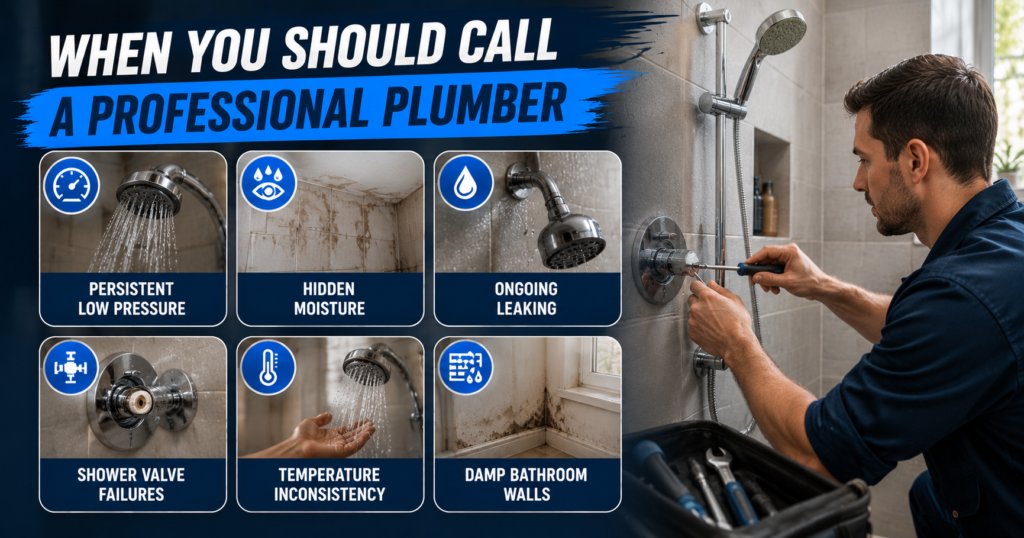
When You Should Call a Professional Plumber
A professional plumbing assessment becomes important once shower problems continue returning or begin affecting the surrounding bathroom areas.
At Marvel Flow Plumbing, we provide shower repairs in Dawes Point, shower repairs in Fairfield, shower repairs in Bradbury, and surrounding Sydney suburbs, where ageing bathroom plumbing systems commonly contribute to recurring shower issues.
Professional repairs are usually recommended when homeowners notice:
- Persistent low pressure
- Hidden moisture
- Ongoing leaking
- Shower valve failures
- Temperature inconsistency
- Damp bathroom walls
How Professional Shower Repairs Solve the Root Cause
At Marvel Flow Plumbing, we focus on identifying the actual plumbing issue rather than temporarily improving surface symptoms.
Professional shower repairs may include:
- Pressure testing
- Leak detection
- Valve inspections
- Pipe assessments
- Seal replacement
- Hidden moisture investigations
This approach helps prevent recurring leaks while improving long-term shower performance and plumbing efficiency.
Why Early Shower Repairs Save Money Long Term
Many bathroom repair costs become expensive because moisture problems continue spreading unnoticed behind walls and flooring.
Early shower leak repairs help reduce hidden moisture before larger restoration work becomes necessary. Professional pressure diagnostics also allow plumbers to identify plumbing restrictions accurately before damage worsens further.
Most importantly, fast repairs improve water efficiency, reduce unnecessary water waste, and help protect bathroom surfaces long term.
Conclusion
Most shower problems begin quietly. A little less pressure, a small drip after use, or slight moisture near the walls may not seem urgent initially, but these small warning signs often point to plumbing issues developing behind the surface.
Ignoring leaking showers and pressure problems can gradually lead to hidden moisture damage, mould growth, and more expensive bathroom repairs later.
If your shower pressure has become inconsistent, the shower head keeps dripping, or moisture is appearing around bathroom walls, early professional diagnosis can help prevent much larger plumbing problems in the future.
FAQs
Why is my shower pressure suddenly low?
Low pressure may be caused by mineral buildup, hidden pipe leaks, shower valve issues, or plumbing pressure restrictions within the home.
Can a leaking shower waste water?
Yes. Even small leaks can waste water continuously over time while also contributing to hidden moisture damage behind walls and tiles.
Is it a pipe issue or a showerhead problem?
It can be either. While blocked shower heads are common, many pressure and leak problems actually originate deeper inside the plumbing system.
Can plumbers fix shower pressure issues?
Yes. Professional plumbers can diagnose valve faults, hidden leaks, pressure problems, and plumbing restrictions affecting shower performance.
How long does shower repair take?
Simple repairs may be completed quickly, while hidden plumbing or moisture issues can require more detailed investigation and repair work.
Is low pressure a sign of bigger plumbing problems?
Sometimes. Persistent low pressure may indicate hidden leaks, valve failures, or broader plumbing system issues requiring professional assessment.