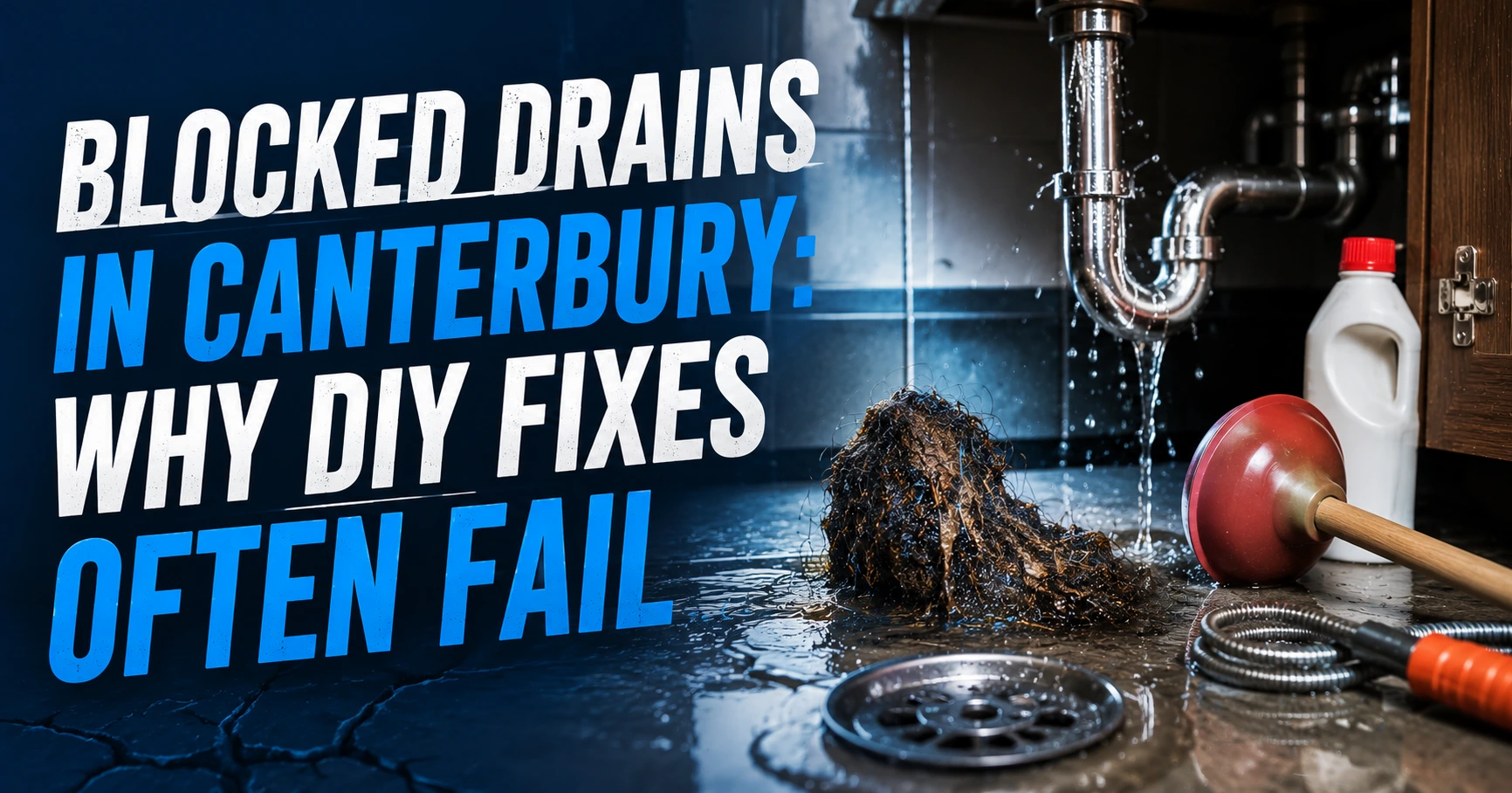
It usually starts with a sink draining a little slower than normal.
At first, most homeowners are not too concerned. A quick plunger, boiling water, or a bottle of drain cleaner seems like an easy fix. Sometimes the water starts flowing again straight away, which makes it feel like the problem has been solved.
Then a few days later, the sink blocks again. The smell returns. The bathroom drain starts gurgling. Water backs up unexpectedly after heavy rain, or the kitchen sink refuses to drain properly during dinner clean-up. Suddenly, what looked like a simple blockage becomes an ongoing frustration that keeps returning no matter what gets poured down the drain.
Read this blog to understand why blocked drains in Canterbury often keep returning, where common DIY methods fall short, and how professional drain clearing solves the actual cause instead of temporarily easing the symptoms.
Why Some Blocked Drains Never Fully Go Away
One of the biggest misconceptions about blocked drains is that improved water flow means the blockage is completely gone.
In reality, many DIY solutions only create a temporary opening through the clog. Water drains slightly better for a short period, but much of the buildup remains stuck to the inside of the pipe walls.
This is especially common with:
- Grease buildup in kitchen drains
- Hair and soap residue in bathroom pipes
- Tree roots inside underground drains
- Outdoor stormwater debris
- Older damaged pipe systems
Over time, debris quickly starts collecting again around the remaining blockage. That is why homeowners often find themselves repeating the same DIY methods every few weeks.
Recurring drain blockage usually means the original problem was never fully removed.
The DIY Drain Fixes Most Homeowners Try First
Most people naturally try solving blocked drains themselves before calling a plumber. Some methods can help with very minor clogs, but their limitations become obvious once deeper blockages develop.
Plungers
Plungers are useful for creating pressure that may loosen small nearby clogs. They can temporarily improve drainage in sinks, toilets, and shower drains.
However, they rarely clear deeper grease buildup or underground pipe obstructions.
Boiling Water
Hot water is commonly used to break down grease inside kitchen pipes. While it may soften fresh buildup near the drain opening, hardened grease further down the system usually remains untouched.
Baking Soda and Vinegar
This method is popular because it feels like a safer home remedy. It may help reduce mild odours and loosen soft organic buildup temporarily.
But larger pipe blockages generally require much stronger cleaning methods.
Store-Bought Drain Cleaners
Chemical drain cleaners are often marketed as quick solutions for blocked drains. They may create temporary pathways through soft clogs, improving water flow briefly.
The problem is that they rarely remove the entire blockage and may slowly damage older pipes with repeated use.
DIY Drain Snakes
Small hand augers can sometimes remove hair or debris close to the drain opening. But they cannot inspect the condition of the pipe or properly clear large underground blockages.
Why DIY Drain Fixes Often Fail Long Term
The biggest difference between DIY drain fixes and professional plumbing is the focus on symptom relief versus full blockage removal.
A blocked drain may appear better after plunging or chemical treatment because a small section of the clog has shifted. But if grease, roots, or debris remain deeper inside the pipe, the blockage simply reforms again.
Chemical cleaners create another issue in older Sydney homes. Many ageing pipe systems are already vulnerable due to years of wear, grease accumulation, and root intrusion. Repeated chemical exposure may gradually weaken certain pipe materials over time.
DIY methods also cannot detect hidden structural problems, such as:
- Cracked underground pipes
- Pipe collapses
- Tree root intrusion
- Misaligned drainage sections
- Stormwater drainage damage
Without proper inspection tools, these issues continue to worsen unnoticed beneath the surface.
Drain Cleaner vs Plumber: What’s the Real Difference?
Many homeowners compare drain cleaner vs plumber solutions based on convenience and cost. But the real difference is how thoroughly the blockage is handled.
Store-Bought Drain Cleaners
Drain cleaners may provide short-term improvement for minor clogs, particularly when the blockage is soft and close to the surface.
Their limitations include:
- Temporary results
- Limited effectiveness on larger blockages
- Potential pipe corrosion risks
- No ability to inspect pipe condition
- Poor performance against tree roots or heavy grease buildup
Professional Drain Clearing
Professional plumbers focus on diagnosing the actual source of the blockage and removing it completely.
This may involve:
- CCTV drain inspections
- High-pressure jetting
- Root removal
- Full pipe cleaning
- Pipe condition assessments
Instead of simply restoring temporary flow, professional clearing aims to reduce the chance of the blockage returning.
| DIY Method | Temporary Benefit | Main Limitation |
| Boiling water | Softens fresh grease | Buildup reforms quickly |
| Drain cleaner | Surface clearing | May damage older pipes |
| Plunger | Temporary pressure relief | Cannot reach deep blockages |
| DIY snake | Removes nearby debris | No pipe inspection |
| Professional jetting | Full pipe cleaning | Longer-lasting results |
The Real Causes of Blocked Drains in Canterbury Homes
Blocked drains rarely happen randomly. Most recurring drainage issues build gradually over time due to ongoing waste accumulation or hidden pipe damage.
Some of the most common causes include:
Grease Buildup
Kitchen grease sticks to pipe walls and slowly narrows the drainage pathway until water flow becomes restricted.
Hair and Soap Residue
Bathroom drains commonly collect hair, soap scum, and residue that hardens inside smaller pipes.
Wet Wipes and Hygiene Products
Even products labelled “flushable” can contribute to major drain blockages over time.
Tree Root Intrusion
Older underground pipes in Sydney suburbs are highly vulnerable to root intrusion, especially during wet weather periods.
Pipe Damage
Cracked or collapsed pipes trap debris more easily and create ongoing drainage problems.
Stormwater Debris
Outdoor drains often become blocked by leaves, dirt, and debris after heavy rainfall.
Signs Your Drain Problem Is Becoming More Serious
Some warning signs suggest the blockage may be affecting more than one section of the drainage system.
Homeowners should watch for:
- Repeated slow drainage
- Gurgling sounds after water use
- Bad smells near drains
- Water is backing up unexpectedly
- Overflowing outdoor drains
- Multiple fixtures are draining slowly at once
When several symptoms appear together, the blockage is often deeper than a simple surface clog.
How Professional Plumbers Properly Clear Blocked Drains
At Marvel Flow Plumbing, we focus on identifying why the blockage developed in the first place instead of simply restoring temporary water flow.
Professional drain clearing may include:
- CCTV inspections to locate hidden damage
- High-pressure jetting to remove grease and debris fully
- Root removal for underground pipe systems
- Pipe condition assessments for ageing drainage networks
This approach helps reduce recurring blockages and improves long-term drainage performance throughout the property.
We regularly assist homeowners dealing with blocked drains in Edgecliff, blocked drains in Condell Park, blocked drains in Bexley, and surrounding Sydney suburbs, where older drainage systems commonly contribute to recurring plumbing issues.
Why Early Drain Maintenance Matters
Drain problems rarely stay small for long. What begins as occasional slow drainage can gradually turn into serious overflow, pipe damage, or emergency plumbing repairs if ignored repeatedly.
Early maintenance helps:
- Reduce grease buildup pressure
- Improve overall drainage flow
- Detect hidden pipe problems earlier
- Lower long-term plumbing repair costs
- Reduce emergency blockage risks
For many homeowners, proper drain maintenance becomes far more affordable than repeated temporary fixes.
Conclusion
DIY drain fixes can sometimes improve blocked drains temporarily, but recurring blockages usually indicate a deeper problem inside the drainage system.
Grease buildup, tree roots, damaged pipes, and hidden underground obstructions often continue worsening when only the surface symptoms are treated. While plungers and chemical cleaners may offer short-term relief, they rarely provide lasting results for recurring drain problems.
If your drains keep blocking despite repeated DIY attempts, professional inspection and proper pipe cleaning can help solve the actual cause before the problem becomes more serious.
FAQs
Why do blocked drains keep coming back?
Recurring blocked drains usually mean that part of the blockage remains inside the pipe. Grease buildup, roots, or hidden pipe damage often continue causing restrictions after temporary DIY fixes.
Are store-bought drain cleaners effective?
They may help with minor soft clogs temporarily, but they usually cannot fully remove deeper blockages and may damage ageing pipes over time.
Can DIY methods damage pipes?
Yes. Repeated chemical cleaner use and improper DIY tools can weaken older pipes or push blockages deeper into the drainage system.
What is the safest way to clear a drain?
Minor clogs may improve with basic cleaning, but recurring drain problems are safest handled through professional inspection and proper pipe clearing equipment.
When should I stop trying DIY and call a plumber?
If blockages keep returning, multiple drains are affected, or water backs up repeatedly, a professional assessment is usually necessary.
How do professionals permanently fix blocked drains?
Professional plumbers use CCTV inspections, hydro jetting, root removal, and full pipe cleaning to properly remove blockages and identify underlying drainage issues.