
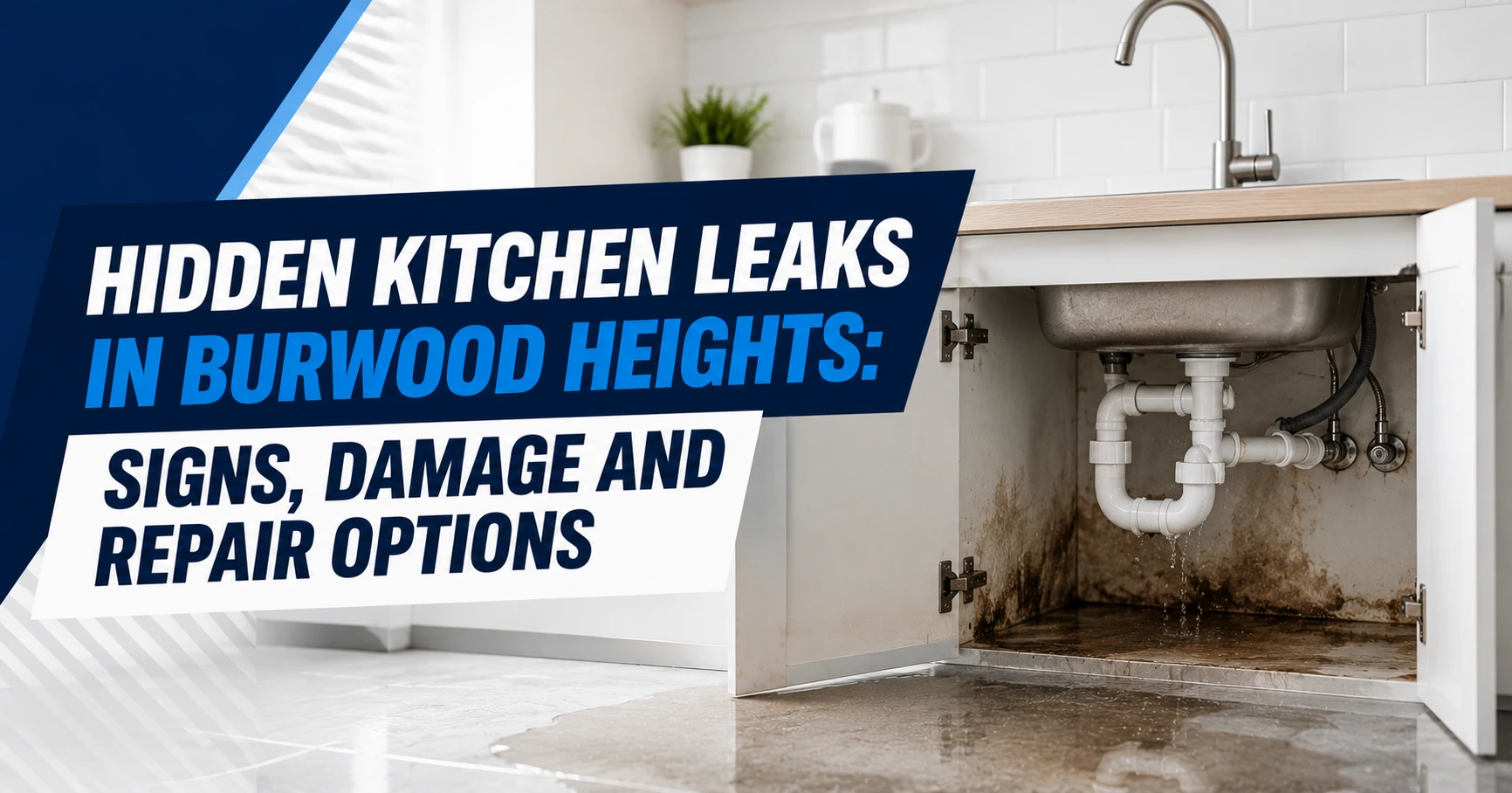
Most homeowners do not realise they have a hidden kitchen leak until the damage starts becoming frustrating and expensive to ignore.
It often begins with small problems that seem unrelated at first. A constant mould smell under the sink that keeps coming back, no matter how much cleaning gets done. Cabinet panels are starting to swell around the edges. The floor near the dishwasher is feeling slightly soft underfoot. Sometimes it is the stress of opening a higher water bill and not understanding where the extra usage is coming from.
The difficult part is that these leaks usually stay hidden behind cabinets, underneath sinks, or around appliance connections, where homeowners cannot easily see what is happening. While daily life continues normally, moisture quietly spreads through timber, flooring, and surrounding walls. By the time visible signs appear, the damage underneath is often far worse than expected.
In this guide, we explain the warning signs homeowners should never ignore, where hidden kitchen leaks usually begin, how the damage spreads over time, and when professional kitchen leak detection in Burwood Heights becomes necessary.
Why Kitchen Leaks Often Stay Hidden for So Long
Kitchen leaks behave differently from obvious plumbing emergencies. Instead of causing immediate flooding, many kitchen leaks begin as slow drips behind cabinetry or underneath appliances where homeowners rarely look.
A small leak under the sink may release only a few drops at a time. But because the moisture remains trapped in enclosed spaces, materials such as timber cabinetry, flooring, and plaster slowly absorb water over time.
Several factors make kitchen leaks harder to detect early:
- Plumbing is hidden behind cabinets
- Dishwasher and water filter connections stay concealed
- Moisture spreads behind surfaces before becoming visible
- Slow leaks rarely create obvious puddles immediately
- Daily kitchen activity masks subtle warning signs
By the time homeowners notice visible symptoms, hidden moisture may already be affecting surrounding materials.
Early Signs You May Have a Hidden Kitchen Leak
Many hidden kitchen leaks reveal themselves through changes in smell, texture, or moisture levels before visible water damage appears.
Musty Smell Under the Sink
One of the earliest warning signs is a persistent mould smell inside under-sink cabinets. This usually happens because trapped moisture creates damp conditions where mould and bacteria begin developing.
Swollen or Soft Kitchen Cabinets
Cabinet water damage often starts subtly. Homeowners may notice cabinet edges swelling, timber becoming soft, or surfaces warping slightly near plumbing areas.
Unexpected Increase in Water Bills
A hidden leak can waste water continuously without obvious flooding. Many homeowners first suspect a problem after receiving an unusually high water bill despite normal household usage.
Damp Flooring Near Cabinets
Flooring near sinks or dishwashers may feel slightly soft, damp, or uneven when moisture spreads beneath the surface over time.
Water Stains Around Kitchen Walls
Discoloured patches near splashbacks, walls, or cabinetry sometimes indicate concealed plumbing leaks behind the surface.
Moisture Around Pipe Connections
A water leak under the sink plumbing often appears around pipe joints, shut-off valves, or drainage connections where seals gradually loosen.
Mould or Peeling Materials Near Plumbing Areas
Peeling laminate, bubbling paint, or mould spots near plumbing areas may signal hidden moisture trapped inside surrounding materials.
Where Hidden Kitchen Leaks Usually Start
Kitchen leaks often begin in small connection points rather than major pipe failures. Even a tiny weakness in a fitting or seal can slowly release moisture for long periods.
Some of the most common leak locations include:
- Under-sink pipe joints
- Dishwasher hose connections
- Sink seal edges
- Water filter connections
- Concealed wall plumbing
- Drainage fittings behind cabinetry
In older Sydney homes, ageing kitchen plumbing and worn fittings make these hidden leaks increasingly common, especially in heavily used family kitchens.
How Small Kitchen Leaks Turn Into Bigger Problems
One of the biggest misconceptions homeowners have is that a small leak cannot cause serious damage. In reality, hidden kitchen leaks often become expensive because the moisture remains trapped for long periods.
This progression usually develops gradually:
Small hidden leak → trapped moisture → mould growth → cabinet deterioration → flooring damage
Over time, ongoing moisture exposure may lead to:
- Swollen cabinetry
- Warped flooring
- Mould spread
- Soft plaster surfaces
- Hidden wall deterioration
- Poor indoor air quality
| Early Leak Sign | Hidden Problem Developing | Potential Long-Term Damage |
| Musty smell | Trapped moisture | Mould growth |
| Damp cabinet base | Ongoing leakage | Cabinet swelling |
| High water bill | Continuous hidden leak | Water waste costs |
| Soft flooring | Moisture spread | Flooring deterioration |
| Wall staining | Concealed pipe leak | Structural repairs |
Many homeowners are surprised by how quickly relatively small leaks can affect surrounding kitchen materials when moisture remains trapped behind cabinetry.
Why DIY Leak Detection Often Misses the Real Problem
One of the most frustrating parts of hidden leaks is that the visible symptom is not always located near the actual source.
Water can travel behind walls, beneath flooring, and through cabinetry before becoming visible elsewhere in the kitchen. This often leads homeowners to inspect the wrong area while the leak continues spreading unseen.
Intermittent leaks are also difficult to identify because some fittings only leak under certain pressure conditions or when appliances are running.
At Marvel Flow Plumbing, we often find homeowners correctly noticed the symptoms early but struggled to locate the exact hidden pipe leak causing the issue.
How Professional Plumbers Detect Hidden Kitchen Leaks

Modern leak detection technology allows plumbers to locate hidden moisture more accurately without unnecessary demolition.
Thermal Imaging
Thermal imaging identifies temperature differences behind walls and cabinetry, helping detect hidden moisture without opening surfaces immediately.
Acoustic Leak Detection
Acoustic leak detection uses specialised listening equipment to locate concealed water movement inside walls and pipe systems.
Moisture Detection Equipment
Moisture meters help plumbers identify damp materials beneath cabinetry, flooring, and surrounding surfaces.
Pressure Testing
Pressure testing checks whether concealed plumbing systems are losing water through hidden leaks.
These methods allow plumbers to investigate problems in a far more targeted and minimally invasive way than traditional exploratory demolition.
Do Plumbers Need to Break Walls to Find Kitchen Leaks?
This is one of the biggest concerns homeowners have when they suspect concealed water damage.
In many situations, modern leak detection technology significantly reduces unnecessary wall or cabinet removal. Plumbers can often narrow down the leak location accurately before any access work becomes necessary.
However, once the exact leak source is confirmed, small access openings may still be required to complete the repair properly.
The good news is that accurate diagnostics usually help minimise unnecessary damage during the investigation process.
Repair Options for Hidden Kitchen Leaks
The right repair solution depends on where the leak is located and how much surrounding damage has already developed.
Common repair options include:
- Tightening loose fittings
- Replacing damaged seals
- Repairing leaking pipe sections
- Replacing appliance connections
- Repairing damaged drainage fittings
Fast repairs often prevent much larger restoration work later, especially when moisture problems are caught early.
When You Should Call a Leak Detection Plumber
Some kitchen leak problems should not be delayed because hidden moisture damage can continue spreading quietly behind surfaces.
Professional inspection is recommended when homeowners notice:
- Persistent damp smells
- Cabinet swelling
- Moisture returning repeatedly
- Unexplained high water bills
- Suspected concealed leaks
- Soft flooring near plumbing areas
At Marvel Flow Plumbing, we assist homeowners requiring kitchen leak detection in Seven Hills, kitchen leak detection in Claremont Meadows, kitchen leak detection in Gilead, and surrounding Sydney suburbs where concealed plumbing systems commonly contribute to hidden kitchen moisture issues.
How Marvel Flow Plumbing Helps Detect Hidden Kitchen Leaks
At Marvel Flow Plumbing, we focus on locating concealed leaks accurately while minimising unnecessary disruption to the home.
Our services include:
- Non-invasive leak detection
- Kitchen plumbing diagnostics
- Moisture investigations
- Concealed pipe inspections
- Kitchen plumbing repairs
Because we work extensively across Sydney homes and apartments, we understand how hidden kitchen leaks often develop gradually behind cabinetry and appliance areas.
Why Early Leak Detection Prevents Expensive Repairs
Early hidden leak detection can dramatically reduce repair costs later by preventing moisture from spreading deeper into surrounding materials.
Professional thermal diagnostics also help locate leaks more accurately, reducing unnecessary wall or cabinet removal during repairs.
Most importantly, fast kitchen leak repairs help minimise mould growth and create healthier indoor environments for households.
Conclusion
Hidden kitchen leaks rarely stay small for long. What begins as a slow drip behind cabinetry can gradually lead to mould growth, cabinet deterioration, flooring damage, and rising water costs if ignored.
The challenge is that many kitchen leaks reveal themselves through subtle signs long before visible water appears. Musty smells, swollen cabinetry, damp flooring, and unexplained moisture changes are often early warnings that hidden damage may already be developing behind the scenes.
Professional leak detection helps homeowners locate the real source of the problem accurately while reducing unnecessary disruption and long-term repair costs.
FAQs
How do I know if I have a hidden kitchen leak?
Common warning signs include musty smells, cabinet swelling, damp flooring, rising water bills, mould growth, or moisture around plumbing connections.
Why does it smell musty under my kitchen sink?
A mould smell often develops because hidden moisture becomes trapped inside enclosed cabinet areas where leaks may be occurring slowly over time.
Can a small leak damage kitchen cabinets?
Yes. Even slow leaks can gradually cause cabinet swelling, timber deterioration, mould growth, and surrounding moisture damage if left untreated.
Why has my water bill suddenly increased?
Hidden leaks can waste water continuously without obvious visible flooding, leading to unexpectedly higher water usage costs.
Do plumbers need to break walls to find leaks?
Not always. Modern leak detection technology often helps locate concealed leaks accurately while minimising unnecessary wall or cabinet removal.
Is kitchen leak detection urgent?
Yes, especially when moisture, mould smells, or cabinet damage are already appearing because hidden water damage tends to worsen gradually over time.