Most homeowners do not think much about their hot water system until the problems start becoming impossible to ignore.
It usually begins with small frustrations. The shower suddenly turns cold halfway through the morning. The water temperature keeps changing without warning. The system starts making strange noises at night, or the electricity bill climbs higher even though nothing in the house has changed.
At first, many people choose the cheaper option and arrange another repair. But after the second or third breakdown, the same question eventually comes up again: is it still worth repairing the system, or is replacement now the smarter long-term decision?
At Marvel Flow Plumbing, we regularly help Sydney homeowners facing this exact situation. Some systems only need a straightforward repair to continue performing well for years. Others become increasingly expensive to maintain as age, efficiency loss, and repeated faults begin adding up.
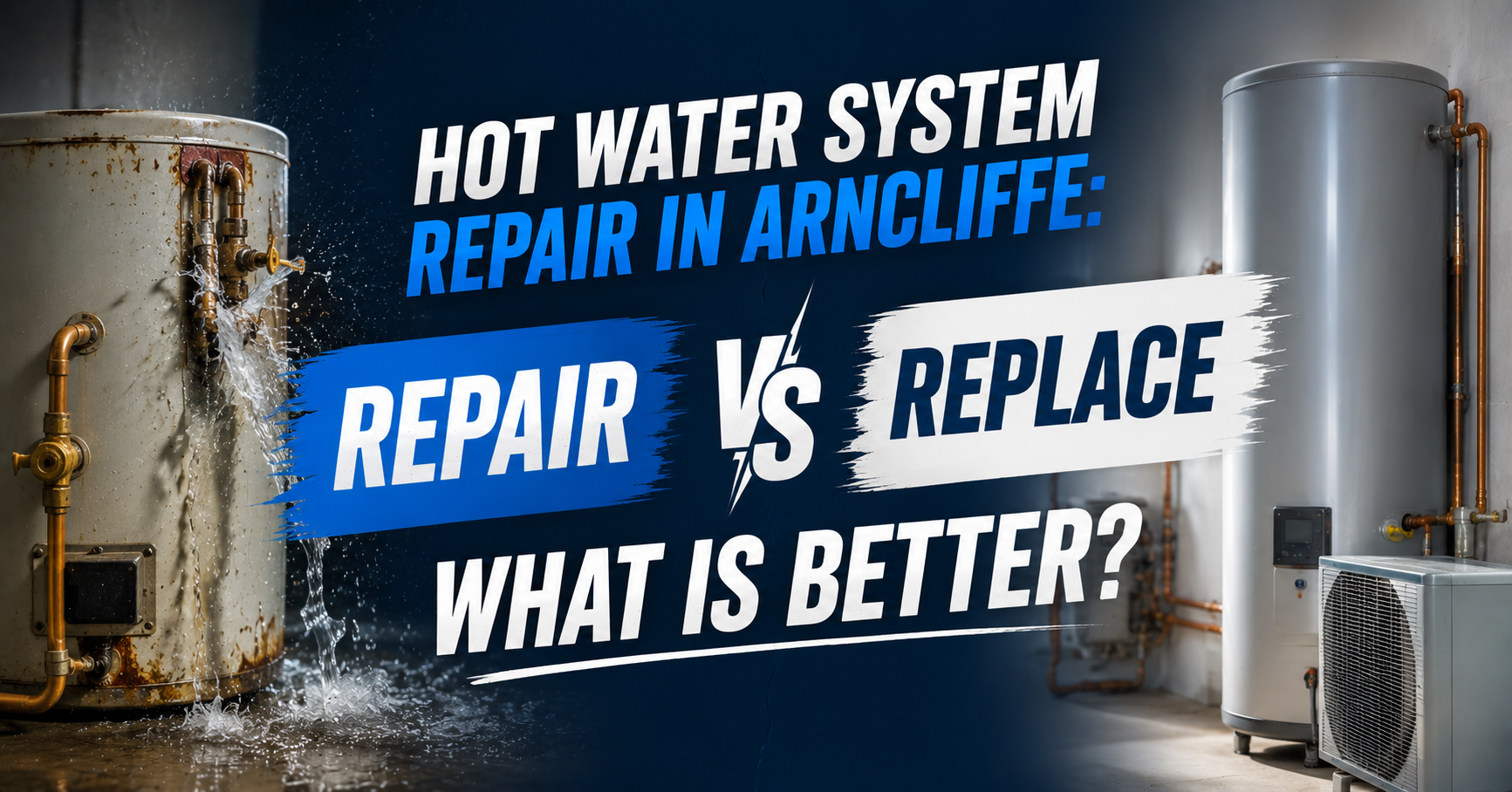
This guide explains when hot water system repair in Arncliffe still makes financial sense, when replacement becomes the better investment, and how homeowners can make a more confident long-term decision without unnecessary spending.
Why Hot Water Systems Usually Decline Gradually
Hot water systems rarely fail overnight. In most homes, performance slowly declines over time as internal components experience ongoing wear from daily usage.
Heating elements weaken, sediment builds up inside tanks, pressure places stress on valves, and ageing systems gradually lose efficiency. Many Sydney households only notice the problem once hot water becomes inconsistent or energy bills begin increasing noticeably.
In larger family homes, hot water systems often work harder during winter months when demand rises significantly. Over time, this additional pressure can shorten system reliability and increase repair frequency.
The important thing homeowners should understand is that declining performance often starts long before complete failure occurs.
The Most Common Hot Water Problems Homeowners Experience
Some hot water issues are relatively minor and repairable, while others may suggest the system is approaching the end of its usable lifespan.
No Hot Water
This is one of the most obvious signs that something is wrong. Common causes include faulty heating elements, thermostat issues, or electrical supply problems. In many cases, repairs are still possible if the system itself is not heavily deteriorated.
Inconsistent Water Temperature
Fluctuating temperatures usually point to thermostat issues, sediment buildup, or ageing heating components struggling to maintain consistent performance.
Leaking Hot Water System
Not all leaks mean full replacement is necessary. External valve or connection leaks are often repairable, while internal tank leaks usually signal more serious structural deterioration.
Rusty or Discoloured Water
Brown or rusty water may indicate corrosion developing inside the tank, especially in older systems approaching the end of their water heater lifespan.
Strange Tank Noises
Popping or rumbling sounds often happen because sediment buildup hardens inside the tank, reducing heating efficiency and forcing the system to work harder.
Rising Electricity or Gas Bills
Older systems often lose heating efficiency gradually, causing them to consume more energy to deliver the same level of hot water.
When Repairing a Hot Water System Still Makes Sense
Many homeowners assume replacement is automatically necessary once problems appear, but repairs are often the smarter option in the right circumstances.
The System Is Relatively New
If the hot water system is still fairly modern, repair costs are usually worthwhile because the unit may still have many years of reliable performance remaining.
The Problem Is Isolated
Some faults involve only one replaceable component rather than the entire system. Common repairable issues include:
- Thermostat replacement
- Heating element repairs
- Pressure valve replacement
- Minor electrical faults
The Tank Is Still Structurally Sound
This is one of the most important factors. A small external leak around fittings or valves is very different from an internal tank failure. If the tank itself remains in good condition, repairs often remain practical.
Repair Costs Are Still Reasonable
Occasional repairs that extend the usable life of the system can provide strong long-term value, particularly when replacement is not yet necessary.
When Replacing the System Is Usually the Better Option
There comes a point where ongoing repairs stop being financially sensible. In these situations, replacement often provides better long-term reliability and lower running costs.
Frequent Breakdowns
If the system requires repeated repairs every year, the ongoing costs can quickly outweigh the value of keeping the old unit running.
Ageing Water Heater Lifespan
Most hot water systems gradually become less reliable as they age. Once systems move well beyond their expected water heater lifespan, breakdown frequency usually increases.
Internal Tank Leaks
Internal tank corrosion is often a strong sign that the system is structurally deteriorating. Unlike external leaks, these issues are usually not economical to repair long-term.
Declining Energy Efficiency
Older systems generally consume more electricity or gas as heating efficiency weakens over time.
Reduced Hot Water Capacity
If the system can no longer meet household demand consistently, replacement may become the more practical solution for larger families.
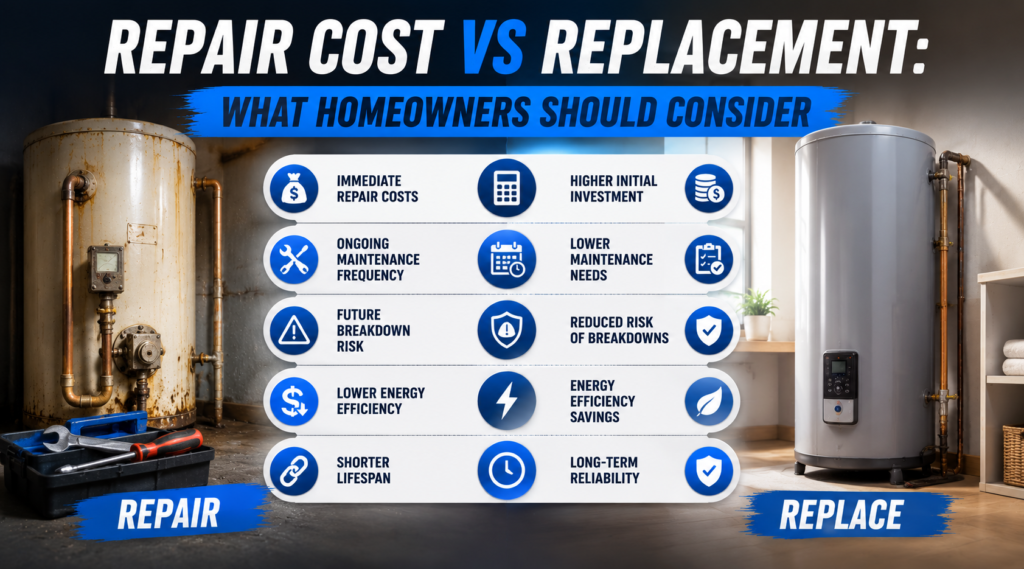
Repair Cost vs Replacement: What Homeowners Should Consider
The repair cost vs replacement decision is not only about today’s bill. It is about understanding the long-term value of the system moving forward.
Homeowners should compare:
- Immediate repair costs
- Ongoing maintenance frequency
- Future breakdown risk
- Energy efficiency savings
- Long-term reliability
Can Old Hot Water Systems Increase Electricity Bills?
Yes, and many homeowners do not realise how much efficiency declines as systems age.
Older hot water systems often:
- Work harder to heat water
- Lose heat more quickly
- Consume more electricity or gas
- Struggle during periods of high household demand
Modern energy-efficient systems are designed to heat water faster while using less energy overall. For households already dealing with rising electricity costs, upgrading an ageing system can significantly improve efficiency and reduce ongoing expenses.
Is Repairing a Leaking Hot Water System Worth It?
It depends entirely on where the leak is coming from.
Minor External Leaks
Leaks around fittings, valves, or pressure relief components are often repairable if the tank itself remains structurally sound.
Internal Tank Leaks
Leaks developing from inside the tank usually indicate significant internal corrosion. In these cases, replacement is generally the safer and more cost-effective option long term.
Understanding this difference is extremely important because not every leaking system automatically requires replacement.
How Professional Plumbers Properly Assess Repair vs Replacement
At Marvel Flow Plumbing, we focus on helping homeowners make practical long-term decisions rather than automatically recommending replacement.
Professional assessment may involve:
- System age evaluation
- Leak diagnosis
- Pressure testing
- Efficiency checks
- Heating performance assessment
- Future repair forecasting
This helps homeowners understand whether repairs are likely to remain reliable or whether ongoing breakdowns are becoming increasingly likely.
When You Should Call a Hot Water Plumber Immediately
Some hot water problems should never be delayed because they may involve safety risks or major system failure.
A professional plumbing assessment is recommended immediately if homeowners notice:
- Leaking tanks
- No hot water at all
- Electrical issues
- Gas smells
- Pressure valve discharge
- Sudden temperature fluctuations
At Marvel Flow Plumbing, we assist homeowners requiring hot water system repair in Emu Heights, hot water system repair in Blackett, and surrounding Sydney suburbs, where ageing systems commonly experience winter performance issues.
Why Early Hot Water Decisions Save Money Long Term
Early repairs can often extend system lifespan and reduce unnecessary strain on ageing components. On the other hand, delaying replacement too long may lead to repeated repair bills, rising energy costs, and unexpected breakdowns.
Professional replacement planning also allows homeowners to upgrade to more energy-efficient systems that improve long-term heating performance while lowering ongoing utility expenses.
Most importantly, early leak repairs help minimise water damage risks around flooring, cabinetry, and surrounding areas before larger restoration costs develop.
Conclusion
Not every hot water system needs immediate replacement the moment problems appear. In many cases, well-timed repairs can extend the life of a relatively modern system and avoid unnecessary upfront costs.
However, older systems eventually become less efficient, less reliable, and more expensive to maintain over time. When repeated repairs, rising energy bills, and declining performance start combining together, replacement often becomes the smarter long-term investment.
Professional assessment helps homeowners understand the real condition of the system before making a decision based purely on short-term repair costs.
FAQs
How long does a hot water system last?
Most hot water systems last between 8 and 15 years, depending on usage, maintenance, water quality, and system type.
When should I replace instead of repair?
Replacement is usually better when the system experiences repeated breakdowns, major tank leaks, or significant efficiency decline.
Is repairing a leaking system worth it?
Minor external leaks are often repairable. Internal tank leaks usually indicate more serious deterioration and may require replacement.
Which hot water system is most efficient?
Modern energy-efficient systems generally use less electricity or gas while delivering faster and more reliable heating performance.
Can old systems increase electricity bills?
Yes. Ageing systems often work harder to heat water, leading to higher energy usage and increased running costs.
How quickly can a system be replaced?
In many situations, professional plumbers can replace a hot water system within the same day, depending on the system type and installation requirements.