
A running toilet is one of those household problems many people learn to ignore. The sound becomes background noise after a while. You might hear the cistern randomly refilling late at night, notice water moving slightly inside the bowl, or realise the flush feels weaker during busy mornings before work.
At first, it did not seem serious. But what many homeowners do not realise is that a continuously running toilet can quietly waste water every single day while gradually damaging the internal parts inside the cistern. In older Sydney homes, especially, these problems often develop slowly over time rather than appearing suddenly.
This guide explains why toilets keep running, what commonly causes the issue, how toilet systems actually work, and when professional toilet repairs in Seven Hills become necessary before larger plumbing problems develop.
Why Toilets Usually Start Failing Gradually
Toilets are used constantly throughout the day, which means the internal components inside the cistern experience ongoing wear. Every flush relies on valves, seals, floats, and moving parts working together correctly to control water flow.
Over time, these components naturally begin deteriorating. Rubber seals become worn, mineral buildup affects valve movement, and older cistern systems may struggle to regulate water pressure efficiently. In many Sydney homes with ageing bathroom plumbing, this gradual wear is extremely common.
Most toilet issues actually begin with small performance changes. The toilet may take slightly longer to refill, flushing may feel inconsistent, or homeowners may hear occasional hissing sounds after flushing. Because the toilet still works, many people delay repairs without realising the internal problem is continuing to worsen.
The longer these issues remain unresolved, the more likely they are to cause continuous water waste and repeated plumbing repairs later.
Common Toilet Problems Homeowners Notice First
Many toilet problems begin with small warning signs that homeowners initially ignore. Over time, these issues usually become more noticeable as internal cistern components continue wearing down. Paying attention to these early symptoms can help prevent larger plumbing problems and unnecessary water waste later.
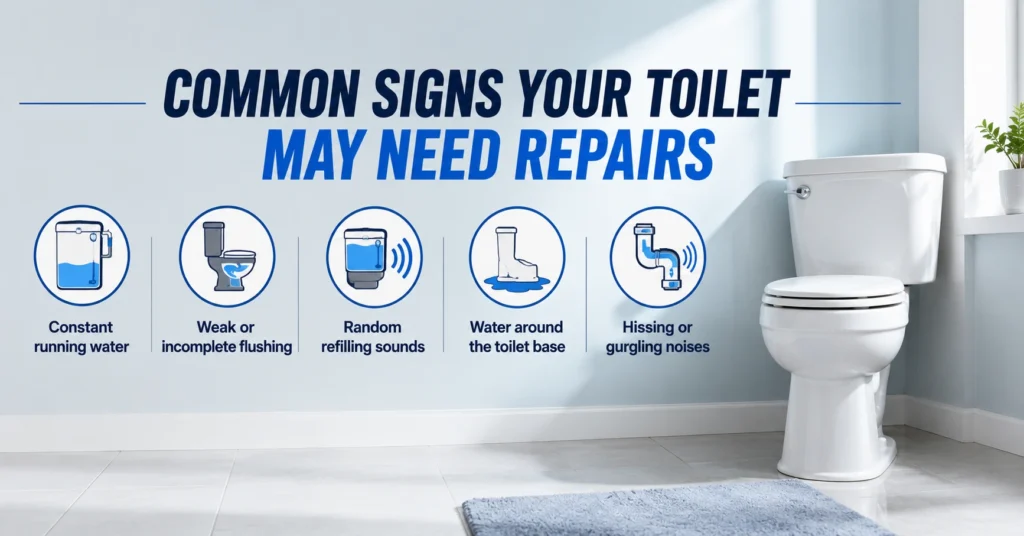
Common signs your toilet may need repairs include:
- Constant running water
Water may continue moving quietly inside the bowl even when the toilet is not being used. This often happens because water slowly leaks from the cistern, forcing the refill system to keep activating throughout the day. - Weak or incomplete flushing
Some toilets begin struggling to clear properly with one flush. This can point to problems with water levels, worn flush valves, or ageing internal cistern components affecting flushing performance. - Random refilling sounds
If the toilet suddenly refills during the night without being flushed, it usually means the cistern is slowly losing water through an internal leak. - Water around the toilet base
Moisture near the bottom of the toilet may indicate worn seals or hidden leaks underneath the fixture. Left unresolved, this can eventually damage flooring and the surrounding bathroom areas. - Hissing or gurgling noises
Ongoing noises after flushing often suggest water flow is not shutting off properly inside the cistern. These sounds commonly become worse as valves continue deteriorating over time.
How Toilet Cisterns Actually Work
Many plumbing blogs focus only on replacing parts without properly explaining why toilets keep running in the first place. Understanding how the cistern works helps homeowners recognise why these problems happen.
When the toilet is flushed, water stored inside the cistern is released into the bowl through the flush valve. Once the tank empties, the fill valve activates to refill the cistern with water. A float mechanism monitors the water level and stops the refill process once the tank reaches the correct height.
The flapper valve is one of the most important components because it seals water inside the cistern between flushes. When this seal becomes worn or damaged, water slowly leaks into the bowl continuously. That ongoing leak forces the refill system to keep turning back on repeatedly.
Because these parts are constantly exposed to water and daily use, wear gradually builds over time. In Sydney homes with older plumbing systems or hard water conditions, this deterioration can happen even faster.
Why Running Toilets Waste More Water Than Most People Realise
Many homeowners underestimate how much water a running toilet can waste because the leak often remains hidden inside the system. Unlike obvious pipe leaks, toilet water loss usually happens quietly in the background.
Even a small internal leak can create continuous water movement throughout the day and night. Over time, this unnecessary water usage can noticeably increase household utility bills.
| Toilet Issue | Daily Impact | Potential Long-Term Problem |
| Slow-running toilet | Ongoing water waste | Higher water bills |
| Weak flush | Repeated flushing | Increased component wear |
| Faulty fill valve | Constant refilling | Internal valve deterioration |
| Hidden base leak | Moisture buildup | Flooring damage |
Beyond higher water costs, ongoing leaks can also place additional strain on ageing plumbing systems and shorten the lifespan of toilet components further.
DIY Toilet Checks Homeowners Can Safely Try
Before arranging professional repairs, there are a few safe checks homeowners can perform themselves.
Start by removing the cistern lid and checking whether the water level appears too high. Listen carefully after flushing to see whether water continues running longer than normal. Watching for movement inside the toilet bowl while the toilet is not being used can also help identify hidden leaks.
Homeowners should also inspect around the toilet base for visible moisture or damp flooring and pay attention to whether flushing performance feels inconsistent.
While these checks may help identify basic symptoms, they do not always reveal the root cause. Temporary adjustments may improve the issue briefly without solving the actual internal problem.
When a Toilet Problem Becomes Serious
Toilet issues should not be ignored once problems become recurring. Continuous running water, repeated weak flushing, visible cracks, and ongoing leaks usually indicate worsening internal deterioration.
Water spreading around flooring areas is particularly serious because hidden moisture can gradually damage bathroom surfaces underneath the toilet.
At this stage, delaying repairs often leads to larger plumbing problems, higher water bills, and more expensive repair costs later.
When You Should Call a Professional Plumber
Professional repairs become necessary when toilet problems continue returning despite basic troubleshooting or when the cause is unclear.
At Marvel Flow Plumbing, we provide toilet repairs in Broadway, toilet repairs in Five Dock, toilet repairs in Denistone, and surrounding Sydney suburbs, where ageing bathroom plumbing commonly contributes to recurring toilet issues.
Professional assessment allows plumbers to properly diagnose leaking cisterns, faulty valves, flush performance problems, water pressure issues, and hidden leaks that homeowners may not easily detect themselves.
Repair or Replace? What Homeowners Should Consider
In many situations, repairs are the most practical option, especially if the toilet is relatively modern and the issue involves replaceable internal parts.
However, replacement may become more cost-effective when repairs continue recurring, the toilet develops cracks, or water efficiency becomes poor. Older toilets often experience multiple component failures over time, making repeated repairs less worthwhile long-term.
Modern water-efficient toilets can also help reduce water usage while improving overall flushing reliability.
How Professional Toilet Repairs Solve the Real Problem
Professional toilet repairs focus on identifying the actual source of the problem rather than applying temporary fixes. At Marvel Flow Plumbing, we carry out cistern inspections, valve replacement, flush testing, leak diagnosis, and water pressure assessments to ensure the issue is properly resolved.
By addressing the root cause early, homeowners can reduce ongoing water waste, improve flushing performance, and avoid recurring plumbing issues in the future.
Conclusion
A running toilet is rarely a harmless issue. In most cases, it is an early sign that internal cistern components are beginning to fail and allowing water to leak continuously through the system.
While the problem may seem small initially, ongoing water waste can gradually increase utility bills, damage bathroom flooring, and create larger plumbing problems over time.
If your toilet has started running constantly, refilling randomly, or flushing poorly, arranging professional repairs early can help prevent more expensive issues later while improving your home’s overall water efficiency.
FAQs
Why does my toilet keep running after I flush?
A toilet usually keeps running because water continues leaking from the cistern into the bowl after flushing. Worn flapper valves and faulty fill valves are among the most common causes.
Can a running toilet increase my water bill?
Yes. Even a small internal toilet leak can waste a significant amount of water every day, leading to gradually increasing utility costs over time.
Is a leaking toilet an urgent plumbing issue?
Leaking toilets should be repaired early because hidden moisture and ongoing water waste can eventually lead to flooring damage and larger plumbing problems.
What parts usually fail inside a toilet cistern?
The most common failing parts include flapper valves, fill valves, flush valves, and float mechanisms due to constant daily use and ageing.
Can a plumber fix a weak toilet flush?
Yes. Weak flushing is commonly caused by valve issues, incorrect water levels, or worn cistern components that can usually be professionally repaired.
Should I repair or replace an old toilet?
If the toilet is relatively modern, repairs are often worthwhile. However, replacement may be better when problems keep recurring, or water efficiency has become poor.